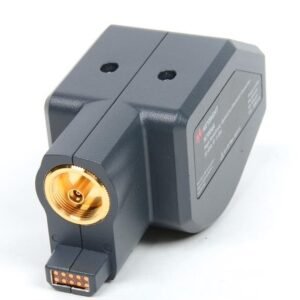
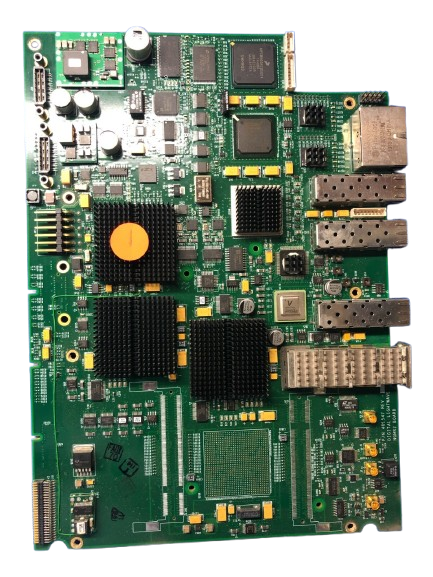

The 401547 REV A Digital Lightwave NGMR2 Board is a NextGeneration Multi-Rate module designed for integration into the Digital Lightwave NIC NXG chassis. This hot-swappable card enables protocol analysis, network emulation, and service assurance across optical and IP network testing environments. The NGMR2 board supports SONET/SDH at rates from 51 Mbps to 10 Gbps, OTN protocols (OTU-1, OTU-2), Gigabit and 10 Gigabit Ethernet with FEC, and advanced features including VCAT, LCAS, and GFP. Its modular architecture allows deployment within the NIC or NIC+ chassis platform, which operates from 90–264 VAC, 50–60 Hz input and dissipates 150 W (NIC) or 350 W (NIC+). The board connects via standard Ethernet and protocol-specific interfaces supported by the NIC platform.
Technical Specifications
• System Compatibility: Digital Lightwave NIC NXG chassis
• Module Type: NextGeneration Multi-Rate (NGMR)
• Protocol Support: SONET/SDH (51 Mbps, 155 Mbps, 622 Mbps, 2.5 Gbps, 10 Gbps); OTN (OTU-1, OTU-2); Gigabit Ethernet; 10 Gigabit Ethernet LAN/WAN with FEC; ODU-1 to ODU-2 multiplexing
• Input Voltage (Chassis): 90–264 VAC, 50–60 Hz
• Power Dissipation: 150 W (NIC chassis), 350 W (NIC+ chassis)
• Operating Temperature: 0°C to +40°C
• Storage Temperature: −40°C to +85°C
• Humidity: 5% to 95%, non-condensing
• Chassis Dimensions: 257 mm H × 312 mm W × 120 mm D
• Chassis Weight: 5.0–5.6 kg
– Key Features
• Hot-swappable design for field replacement and continuous operation
• Advanced feature set including VCAT, LCAS, and GFP
• Supports multiple interface types: Ethernet, OTN, SONET/SDH, and PDH/DSn via module ecosystem
• Scalable platform compatible with various optional modules for custom configurations
– Typical Applications
• Protocol analysis across optical and IP networks
• Network emulation and condition modeling
• Service assurance and performance validation
– Compatibility & Integration
The NGMR2 board integrates into the NIC NXG platform, which supports multiple module options including PDH/T-Carrier and optical jitter and wander analysis. The modular design enables growth with network advancement and deployment flexibility across demanding telecommunications infrastructure.