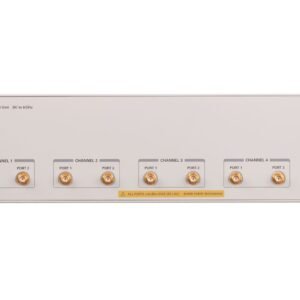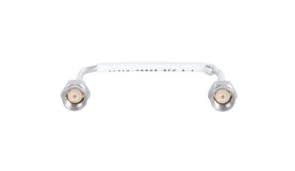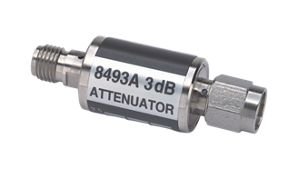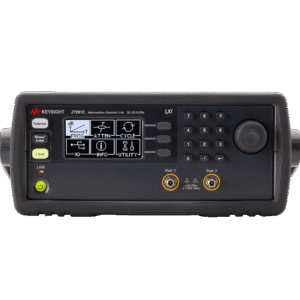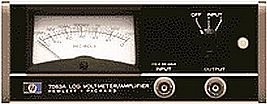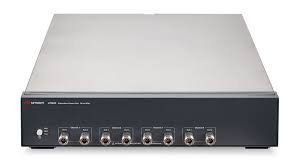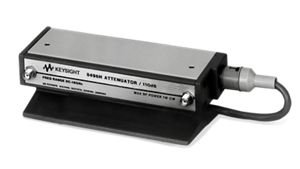
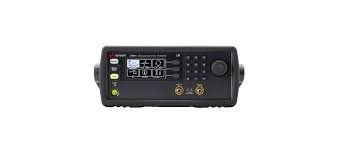

The Keysight J7201A is a precision attenuation control unit delivering 0 to 121 dB of attenuation in 1 dB steps across DC to 6 GHz. Engineered for R&D and production testing in wireless communications, aerospace, and defense sectors, it serves applications from WiMAX and WLAN component characterization to mobile handset BTS handover validation. The unit combines benchtop simplicity with ATE integration through GPIB, USB, and LAN interfaces (LXI Class C compliant). Its attenuation sweep function enables user-defined start/stop levels, step sizes, dwell times, and cycle counts (1 to 1,000), with sweep timing from 50 ms to 10 s in 50 ms increments. Relative attenuation stepping allows reference-point flexibility. The J7201A delivers insertion loss repeatability better than 0.03 dB typical per section over its 5 million cycle operational life, reducing calibration frequency and total cost of ownership. Housed in a compact half-rack, 2-unit high form factor, the unit operates from 100 to 240 VAC (±10% nominal) at 50/60 Hz. Environmental specifications support 0 to 50 °C operation with up to 95% RH at 40 °C, declining linearly to 45% RH at 50 °C under non-condensing conditions.
Technical Specifications
• Frequency Range: DC to 6 GHz
• Attenuation Range: 0 to 121 dB
• Attenuation Step Size: 1 dB
• Insertion Loss Repeatability: < 0.03 dB typical per section over 5 million cycles
• Attenuation Sweep Time: 50 ms to 10 s in 50 ms increments
• Supply Voltage: 100 to 240 VAC (±10%)
• Supply Frequency: 50/60 Hz
• Operating Temperature: 0 °C to +50 °C
• Storage Temperature: -40 °C to +70 °C
• Operating Humidity: 95% RH at 40 °C (linear to 45% RH at 50 °C), non-condensing
– Key Features
• User-configurable attenuation sweep with 1 to 1,000 cycle control
• Relative attenuation stepping referenced to any baseline value
• Three interface options: GPIB, USB, LAN with LXI Class C compliance
• Compact half-rack, 2-unit high packaging
• Sub-0.03 dB repeatability across operational lifetime
– Typical Applications
• WiMAX and WLAN component testing
• Mobile handset base transceiver station handover validation
• Network component characterization
• Wireless system R&D and manufacturing validation
– Compatibility & Integration
• GPIB, USB, and LAN connectivity
• LXI Class C compliant for remote control and triggering