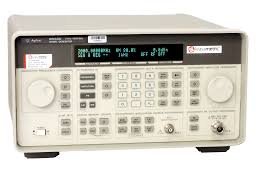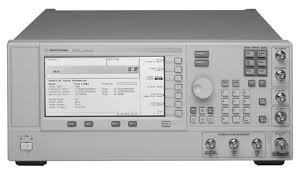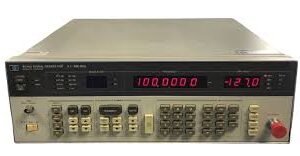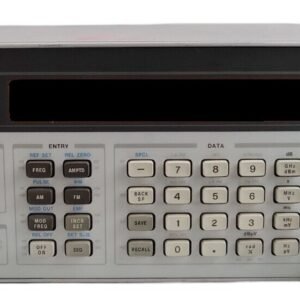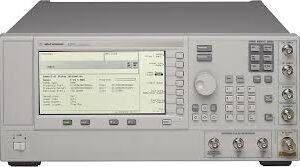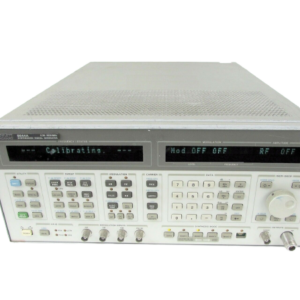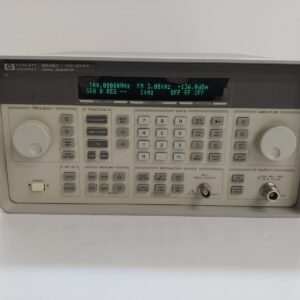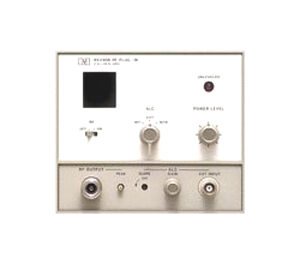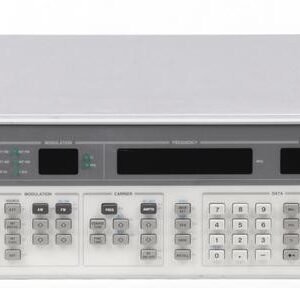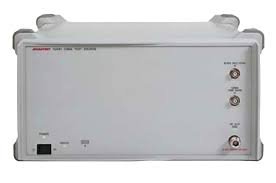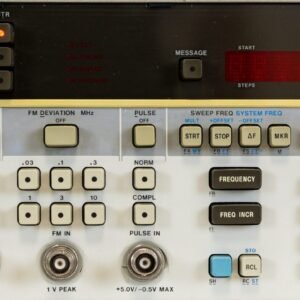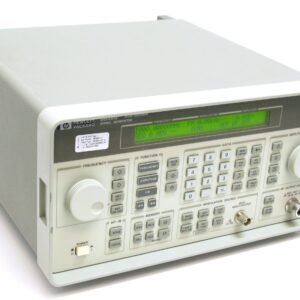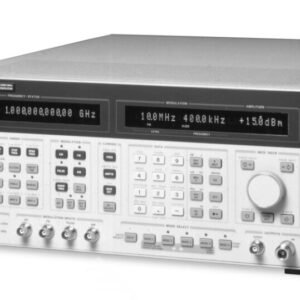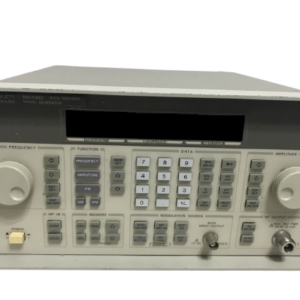
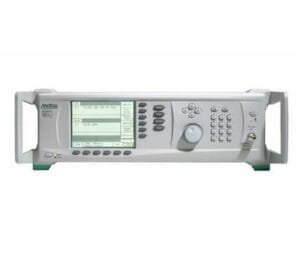

The Anritsu 68169B Synthesized Sweep Generator delivers precision RF and microwave signal generation across 0.01 to 40.0 GHz, with optional waveguide extensions to 110 GHz. Built for R&D, production, and ATE environments, it combines ultra-low phase noise, programmable sweep modes, and integrated modulation for component characterization and system validation.
Technical Specifications
Frequency Range
• 0.01 to 40.0 GHz (coaxial output)
• Extendable to 65 GHz with specific configurations
• Waveguide extensions available to 110 GHz
• Minimum sweep width: 1 kHz (0.1 Hz with Option 11)
Output Power
• Maximum: +13 dBm standard; +17 dBm with Option 15 (High Power)
• Minimum: −15 dBm or −125 dBm
• Resolution: 0.01 dB
• Accuracy: ±2 dB
• Output impedance: 50 Ohm
• User-configurable level flatness correction
Phase Noise
• SSB phase noise: −100 dBc at 10 kHz offset from 10 GHz
• Range: −96 dBc/Hz (minimum) to −60 dBc/Hz (maximum)
Switching Performance
• Output level switching: 20 ms
• Step switching: <15 ms + 1 ms/GHz or <40 ms typical maximum
• Alternate/manual sweep switching: <40 ms
Spurious Signals
• Harmonics: −40 dBc
• Non-harmonics: −40 dBc
– Key Features
Modulation Capability
• Internal AM, FM, phase, and pulse modulation
• External or internal signal sources for AM/FM
• Seven internal waveforms including Gaussian noise and user-defined arbitrary waveforms
• Pulse modes: doublet, triplet, quadruplet configurations
• User-downloadable complex modulation support
Sweep Modes
• Step, analog, power, alternate, and master/slave sweep modes
• CW or step sweep operation
• Manual mode with phase-locked frequency adjustment
• Programmable frequency agility: up to 1000 non-sequential frequencies via GPIB
• Step sweep: 1 to 10,000 steps; 1 kHz minimum step size (0.1 Hz with Option 11)
• Dwell time per step: 1 ms to 99 seconds
– Typical Applications
Component and subsystem testing, automated production test, receiver/transmitter characterization, phase noise measurement, modulation fidelity assessment.
– Compatibility & Integration
IEEE-488 GPIB interface enables remote instrument control and integration into automated test systems.