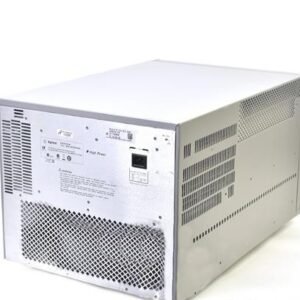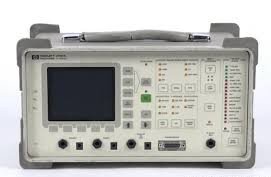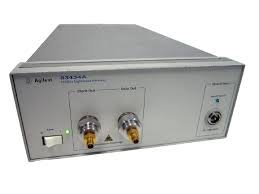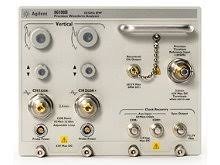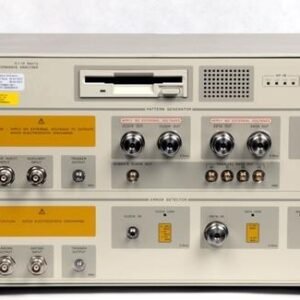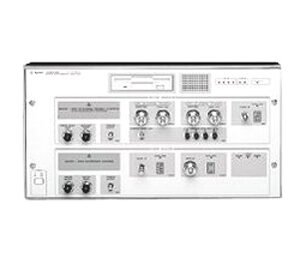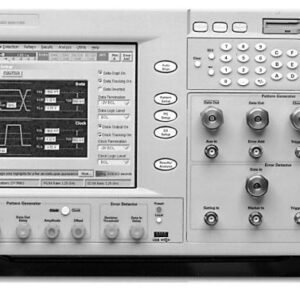
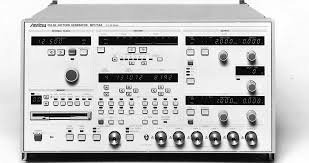

The Anritsu MP1763B Error Detector with Option 01 is a specialized instrument for bit error rate (BER) testing across the 5 to 12 GHz frequency spectrum. It quantifies signal integrity in high-speed digital communication systems by detecting and counting bit errors in real time. This device serves telecommunications, satellite communications, and radar system development environments where verification of signal quality and reliability is critical.
Technical Specifications
Frequency Range: 5 GHz to 12 GHz
Error Detection Capabilities:
• Bit error rate (BER) measurement with real-time calculation and display
• Support for various standard and user-defined test patterns
• Multiple error detection modes for high-speed digital interfaces
Performance Characteristics:
• Optimized sensitivity for low-level error signal detection in high-frequency bands
• Wide operational bandwidth across the 5–12 GHz range
• High measurement accuracy and repeatability
Interfaces:
• RF input: High-frequency coaxial connector rated for 5–12 GHz operation
• Data input for receiving test data streams
• Reference clock input for external synchronization
• Control interface for remote operation and automation
• Data and error output interfaces for measured results
Physical Form:
• Standard rack-mount or benchtop configuration
– Key Features
• Real-time BER calculation and measurement display
• Flexible test pattern capability (standard and custom patterns)
• Multiple error detection schemes for diverse digital interface standards
• High-frequency RF connectivity optimized for 5–12 GHz signals
• External clock synchronization for precision timing
• Automated measurement and data reporting
– Typical Applications
• Microwave and millimeter-wave transceiver validation
• Satellite communication link integrity assessment
• Radar system signal quality verification
• High-speed digital interface characterization
• RF component and subsystem testing
– Compatibility & Integration
The MP1763B integrates with standard laboratory and production test environments through multiple control and data interfaces, supporting both manual operation and automated test sequences.