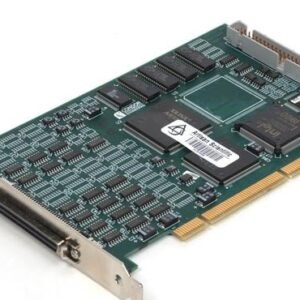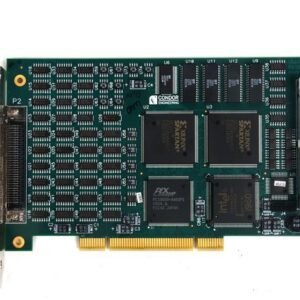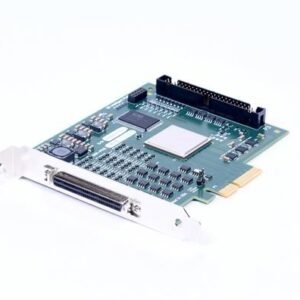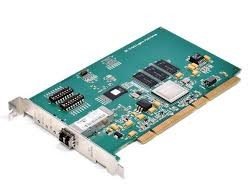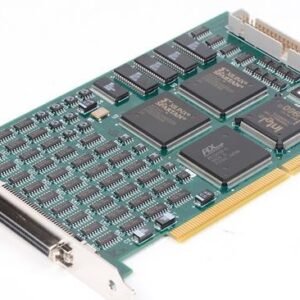
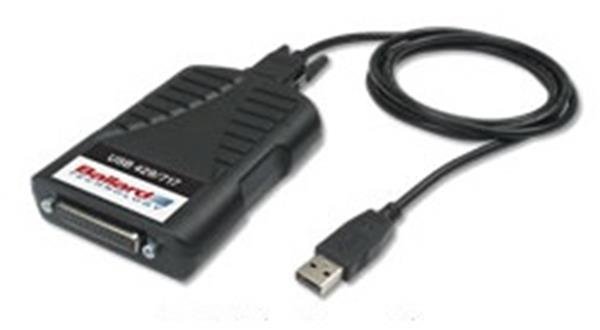

The Astronics/Ballard Technology USB 429 is a portable USB interface for avionics databus testing and simulation. It connects PCs, laptops, tablets, and netbooks to ARINC 429, ARINC 717, and ARINC 575 systems via USB 2.0, enabling real-time communication, monitoring, and protocol validation. The device offloads protocol processing—message transmission, reception, error checking, time-tagging, and buffering—to dedicated onboard hardware, freeing host software for application logic.
## Technical Specifications
**Protocols & Channels**
• ARINC 429, ARINC 717, ARINC 575
• Channel configurations range from single-channel to 12R4T (12 Rx / 4 Tx ARINC 429 channels); models support up to 16 ARINC 429 Rx/Tx and up to 4 ARINC 717 channels in mixed configurations
**Data Rates**
• Standard rates: 12.5 kb/s, 100 kb/s
• Configurable per channel with custom bit rates supported
• Software-selectable parity: odd, even, or data
**Memory & Timing**
• 32 MB onboard data memory
• 48-bit hardware time-tag with 1 µs resolution
• IRIG A/B PWM and AM time synchronization/generation
**Discrete I/O**
• Eight avionics-level programmable input/output discretes
**Error Management**
• Hardware-based error detection and selective injection
• Message filtering and scheduling
• Transmit control: automatic or explicit with configurable repetition rates, gaps, pause/halt/pulse outputs
• Internal self-test bus
**Power & Interface**
• USB 2.0 bus-powered, single port
• Maximum power consumption: 325 mA
• LED indicators for bus traffic and error status
## Key Features
• Plug and Play and Hot Swap installation
• Supports periodic and transfer protocols
• Multiple message buffering schemes
• Syncs and triggers for test synchronization
• Handles maximum data throughput on all ARINC channels simultaneously
## Typical Applications
Avionics system development, integration testing, protocol validation, databus monitoring, equipment simulation, and bench-level troubleshooting of ARINC 429/717 networks.
## Compatibility & Integration
Compatible with Windows, macOS, and Linux environments via standard USB 2.0 drivers. Works with modern PC laptops, desktops, tablets, and netbooks without external power supply.