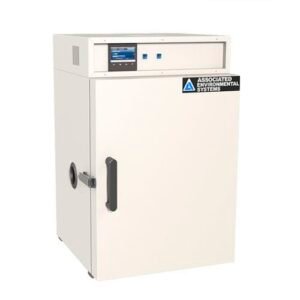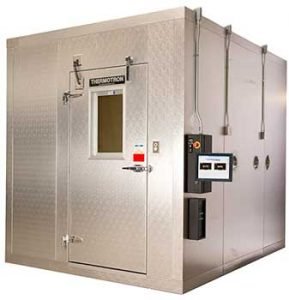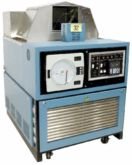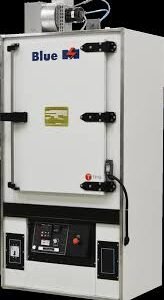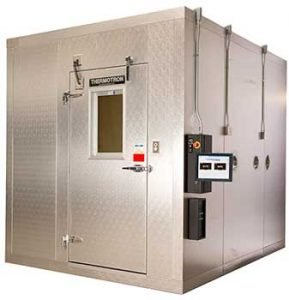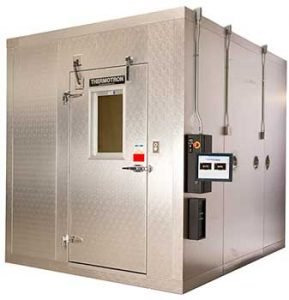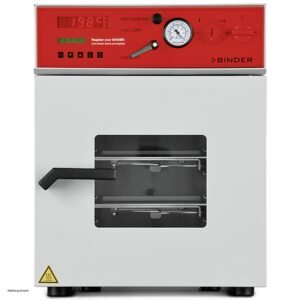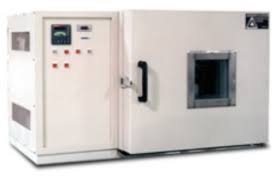
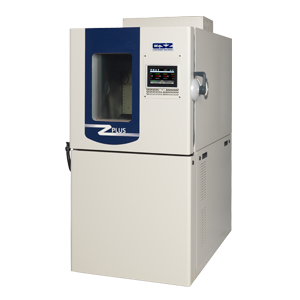

The Cincinnati Sub-Zero Z-16-2-H/AC is a benchtop environmental test chamber engineered for precise temperature and humidity control across material characterization, component reliability assessment, and product validation workflows. This compact unit simulates climatic conditions from -70°C to +180°C and 10% to 95% RH, delivering ±0.1°C accuracy and ±0.5°C uniformity at steady state. Cooling transitions reach 3.5°C/min and heating transitions reach 4.0°C/min, enabling accelerated testing protocols without sacrificing control stability.
## Technical Specifications
• **Temperature Range:** -70°C to +180°C (-94°F to +356°F)
• **Humidity Range:** 10% to 95% RH
• **Temperature Accuracy:** ±0.1°C
• **Temperature Uniformity:** ±0.5°C at steady state
• **Cooling Rate:** 3.5°C/min typical (from +85°C to -40°C)
• **Heating Rate:** 4.0°C/min typical (from +30°C to +180°C)
• **Chamber Volume:** 1.6 cubic feet
• **Interior Dimensions:** 12″ W × 12″ H × 16″ D
• **Exterior Dimensions:** 38″ W × 59″ H × 32″ D
• **Power Requirements:** 208-230V AC, single-phase, 60 Hz, 15 A typical
• **Electrical Connector:** NEMA 5-15P
## Key Features
• Touch-screen LCD controller with 100 programmable sets, 1000 steps, 100 ramps, and 50 soaks
• Stainless steel interior with high-density polyurethane insulation
• Hermetically sealed, air-cooled refrigeration system
• Forced air circulation for uniform distribution
• Automatic defrost cycle
• 2-inch diameter port for sensor and cable routing
• One included shelf with capacity for additional shelves (sold separately)
• LED interior lighting with left-hand hinged door and viewing window
• USB data logging and remote monitoring
• Audible and visual alarm system for deviations and cycle completion
## Typical Applications
Component and finished goods testing, material property evaluation, accelerated life testing, thermal shock simulation, and climatic compliance validation across aerospace, electronics, automotive, and pharmaceutical sectors.
## Compatibility & Integration
Deionized or distilled water required for humidity generation. USB connectivity enables data acquisition and external system integration.