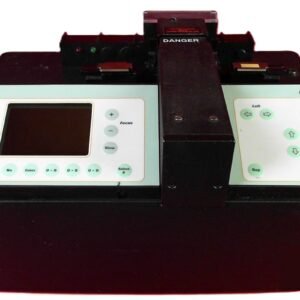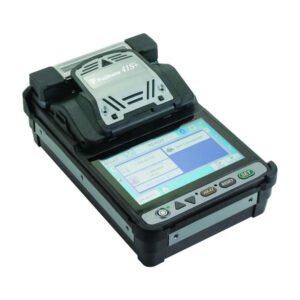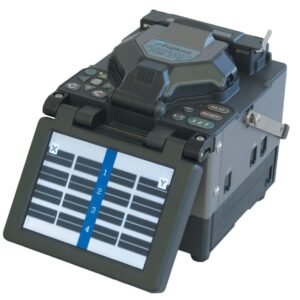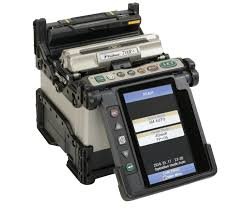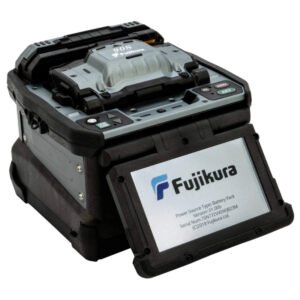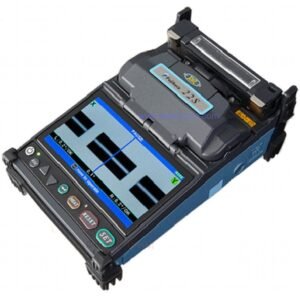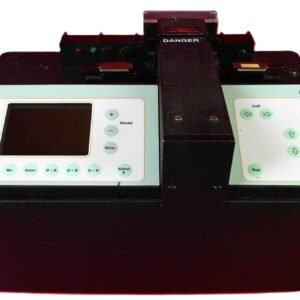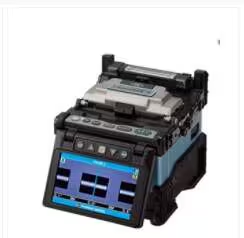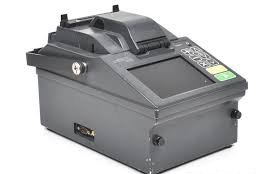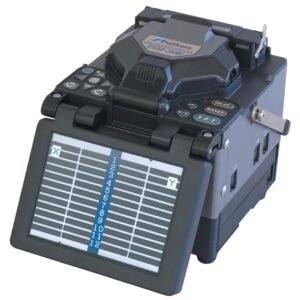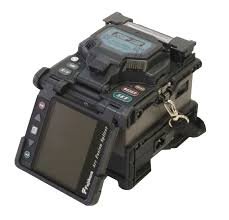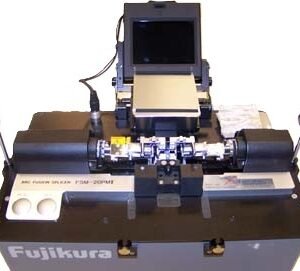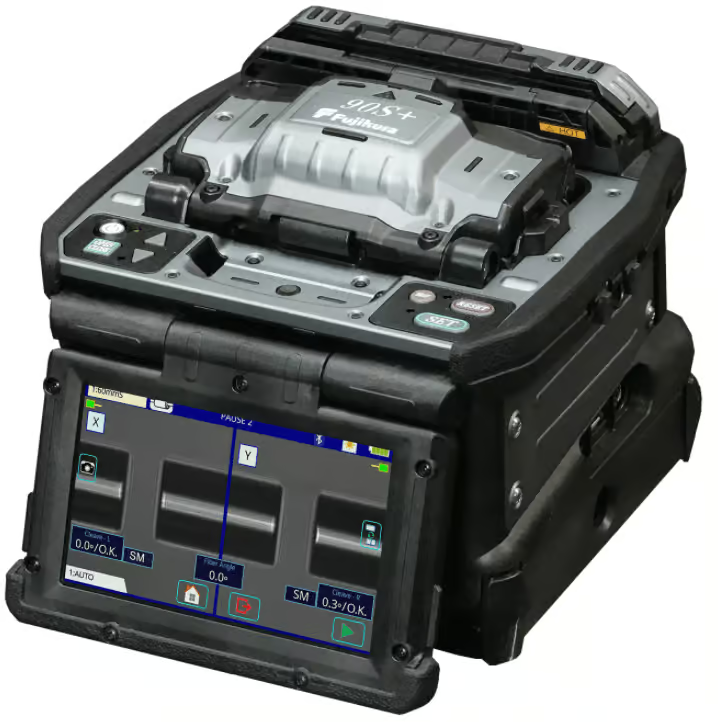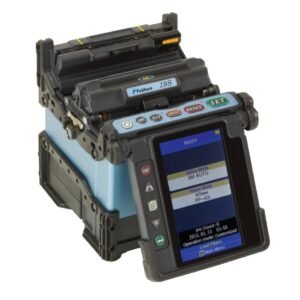
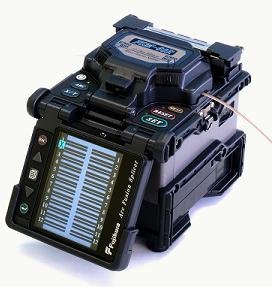

The Fujikura FSM-60R is an arc fusion splicer engineered for high-precision splicing of ribbon fiber optic cables with up to 12 fibers per ribbon. The system delivers exceptional performance across single-mode, multimode, and specialty fiber types through automated cladding alignment, real-time arc calibration, and dual-camera monitoring. Typical splice losses measure 0.05 dB for single-mode, 0.02 dB for multimode, and 0.08 dB for dispersion-shifted and non-zero dispersion-shifted fibers, with completion times as fast as 9 seconds. Return loss exceeds 60 dB across all configurations.
## Technical Specifications
**Fiber Compatibility**
• Single-mode (ITU-T G.652), multimode (ITU-T G.651), dispersion-shifted (ITU-T G.653), non-zero dispersion-shifted (ITU-T G.655)
• Ribbon fiber counts: 1, 2, 4, 5, 6, 8, 10, 12
• Cladding diameter: 125 μm (ribbon and single fiber)
• Ribbon thickness: 0.25 to 0.4 mm
• Single-fiber coating diameter: 250 μm and 900 μm
**Splicing Performance**
• Fiber cleaved length: 10 mm
• Typical splice loss: 0.05 dB (SM), 0.02 dB (MM), 0.08 dB (DS/NZDS)
• Return loss: Greater than 60 dB
• Splicing time: 9 seconds typical; 20 seconds with standard single-mode fiber
• Arc discharge capacity: 1000 discharges
• Splice loss estimate: Displayed per core using dual-camera cladding alignment data
• Operating modes: 100 preset plus user-programmable
**Heating & Protection**
• Tube heater: 30 modes, 40 seconds (Fujikura FP-04T), 50 seconds (Fujikura FP-05)
• Applicable sleeves: 60 mm, 40 mm, Fujikura FPS01 series
## Key Features
• Calibration-free operation with automatic, real-time arc calibration
• Automatic ribbon fiber identification
• Fixed V-groove cladding alignment
• 4.1″ or 5.6″ TFT color LCD with anti-reflective coating
• Magnification: 35X standard, adjustable to 90X; simultaneous X and Y viewing
• Dual directional operation; user-selectable monitor position (front or top) with automatic image orientation
• Auto-start splicing, heater, and arc calibration functions
• Last 2000 splice results stored internally
• USB 1.1 (Mini-B) data download to PC
## Typical Applications
Telecommunications networks, data center infrastructure, and high-density fiber deployments requiring sub-0.1 dB insertion loss and rapid field splicing.