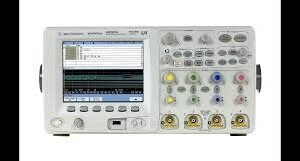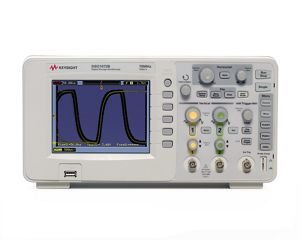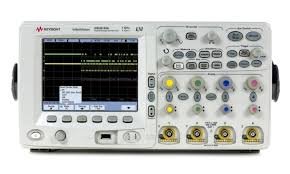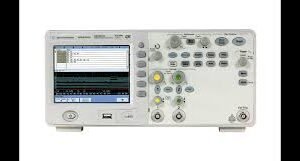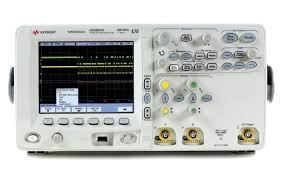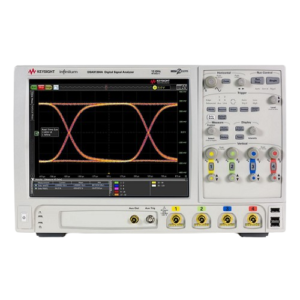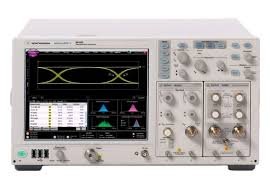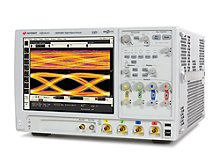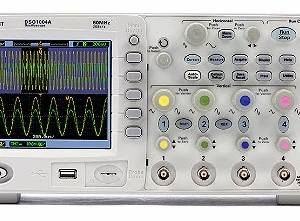

The LeCroy 9370 is a digital storage oscilloscope engineered for high-performance signal acquisition and analysis across diverse electronic testing environments. It delivers 1 GHz bandwidth at 50 Ohms input and simultaneous 500 MS/s sampling across multiple channels, supported by up to 2,000,000 points per channel of acquisition memory. The instrument combines advanced triggering capabilities—including edge, pulse width, video, delay, and pattern detection—with peak detection that captures transients as brief as 2.5 ns. Its SMARTMemory™ management system automatically optimizes sample rate and record length to maximize signal detail over extended capture windows.
Technical Specifications
Acquisition Performance
• Bandwidth: DC to 1 GHz (50 Ohms, ≥10 mV/div); DC to 500 MHz (1 MΩ with standard PP004 probe)
• Sampling: 500 MS/s simultaneous (2/4-channel); 2 GS/s single-channel (9374); 10 GS/s equivalent (repetitive); 1 GS/s combined channels
• Memory: Standard 50k points/channel; optional up to 2,000,000 points/channel; 8 million sample points combined
• Vertical resolution: 8 bits
• Peak detect: 2.5 ns minimum event capture
• Bandwidth limiter: 20 MHz and 200 MHz selectable
Vertical System
• Sensitivity: 2 mV/div to 1 V/div (50 Ohms); 2 mV/div to 10 V/div (1 MΩ)
• DC accuracy: ±1% typical (gain and offset at 0V)
• Offset range: ±400 mV (2–4.99 mV/div); ±1 V (5–99 mV/div); ±10 V (0.1–1.0 V/div); ±100 V (1–10 V/div, 1 MΩ only)
• Coupling: AC, DC, GND
Timebase & Triggering
• Time/div: 1 ns/div to 1,000 s/div; roll mode 500 ms/div to 1,000 s/div
• Clock accuracy: ≤10 ppm
• Interpolator resolution: 10 ps
• Trigger types: Edge, pulse width, video, delay, pattern
• Pre-trigger: 0–100% adjustable; post-trigger delay: 0–10,000 divisions
• Holdoff: 10 ns to 20 s (time); 0–99,999,999 events
– Key Features
• Sequence mode for segmented multi-event capture
• Pattern trigger logic AND of specified inputs
• Vertical Find auto-sets sensitivity and offset
• Selectable probe attenuation factors
– Typical Applications
Complex signal debugging, high-speed transient analysis, multi-channel simultaneous acquisition, extended time-window capture.