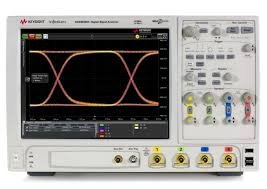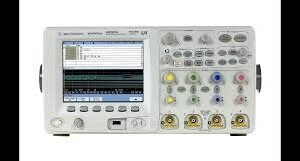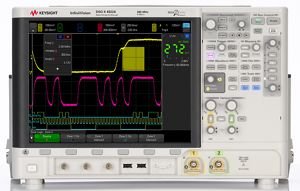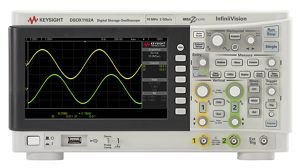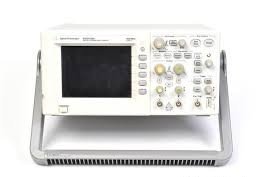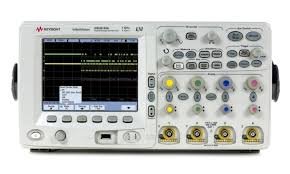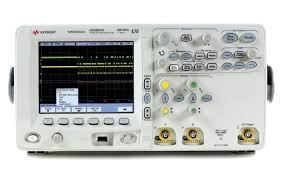

The LeCroy LC534AM is a four-channel, 1 GHz digital oscilloscope built for detailed signal analysis across diverse engineering applications. With a maximum sampling rate of 2 GS/s, 8-bit ADC resolution, and up to 5 Mpts memory per channel, this instrument captures complex waveforms with precision. The 8.4″ color TFT LCD display provides enhanced visibility with configurable persistence modes and color-graded rendering. Advanced triggering—including Edge, Glitch, Runt, Pattern, Video, and Dropout modes—enables isolation of intermittent faults through exclusion triggering on Glitch, Interval, Runt, and Slew-Rate events. Vertical sensitivity spans 2 mV/div to 10 V/div with input impedance of 1 MΩ || 15 pF and maximum input of 400 Vrms CAT II. Horizontal timebase ranges from 1 ns/div to 1000 s/div with support for main and four zoom traces. SMARTMemory dynamically allocates processor power, acquisition memory, and processing RAM for optimal resource utilization. Rise time of 350 ps ensures accurate capture of fast transients.
Technical Specifications
• Channels: 4
• Bandwidth: 1 GHz
• Sample Rate: Up to 2 GS/s
• ADC Resolution: 8-bit
• Memory Depth: 5 Mpts per channel
• Single-Shot Window: 4 ms @ 2 GS/s
• Vertical Sensitivity: 2 mV/div to 10 V/div
• Input Impedance: 1 MΩ || 15 pF
• Maximum Input Voltage: 400 Vrms CAT II
• Vertical Offset Range: ±100 V (1.0–10 V/div); ±24 V (0.2–5.0 V/div); ±120 mV (2.00–9.99 mV/div)
• Rise Time: 350 ps
• Timebase Range: 1 ns/div to 1000 s/div
• Display: 8.4″ color TFT LCD
• Power: 100–240 VAC, 50/60 Hz
• Dimensions: 13.3″ × 5.8″ × 8.7″
• Weight: 10.4 lbs
– Key Features
• Multi-mode triggering: Edge, Glitch, Runt, Width, Pattern, Video, Pulse Width, Dropout, and Interval
• Exclusion triggering for intermittent fault detection
• Color-graded and analog persistence display modes
• Full Screen and Zoom trace capabilities (up to 4 zoom traces)
• SMARTMemory resource optimization
– Typical Applications
• Signal characterization and waveform analysis
• Fault isolation and intermittent defect detection
• Digital and mixed-signal circuit debugging
• Timing and protocol analysis
– Compatibility & Integration
• USB, LAN, GPIB (optional), RS232, and Parallel port interfaces
• VGA display output for external monitoring