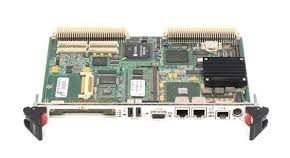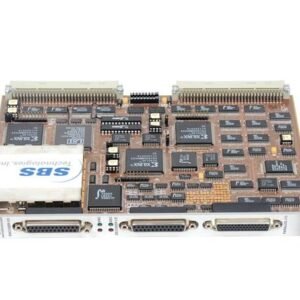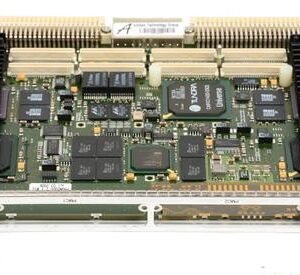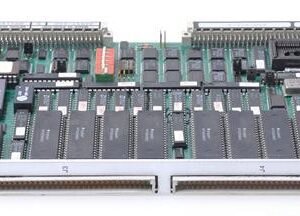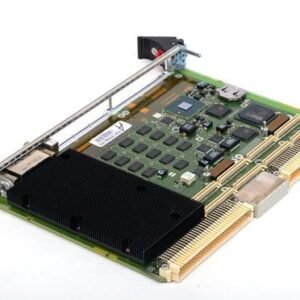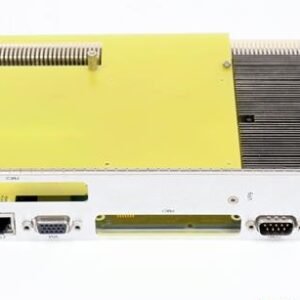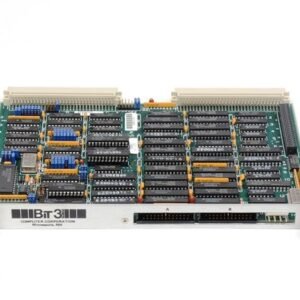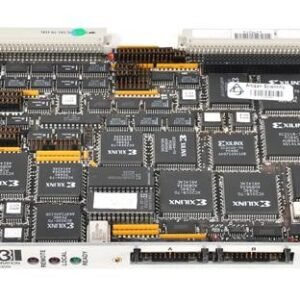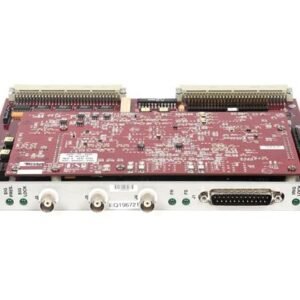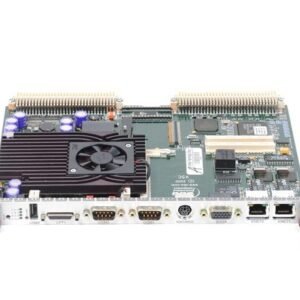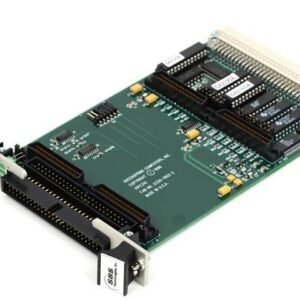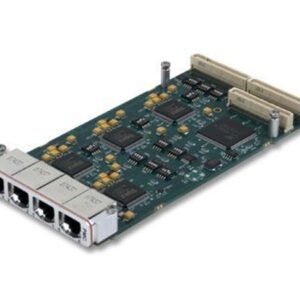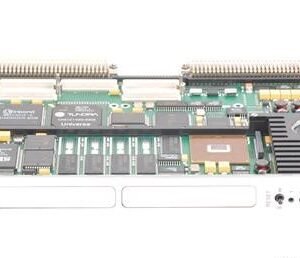

The Mercury Computer Systems RACE MCJ9 is a 9U VME motherboard engineered as a scalable, high-performance embedded computing platform. Built on RACE++ switched-fabric architecture, it supports up to 18 compute nodes across nine daughtercard locations, delivering over 1 GB/s peak bandwidth and 2.4 GB/s bisection bandwidth for 18 nodes. The MCJ9 integrates two RACE++ Interlink ports operating concurrently with a full VME64x interface, enabling demanding real-time sensor acquisition and signal processing applications.
Technical Specifications
• Form Factor: 9U VME, 14.44 × 15.75 inches, 0.8 inch slot-to-slot spacing
• Architecture: RACE++ switched-fabric with adaptive routing across seven crossbars
• Daughtercard Support: Nine locations—seven for compute nodes (CNs) or I/O, one for SHARC/PowerPC or I/O, one for I/O only
• Compute Nodes: Up to 18 nodes supported via daughtercards
• Crossbar Performance: 66.66 MHz per crossbar; 267 MB/s peak per crossbar; over 1 GB/s aggregate; 2.4 GB/s bisection bandwidth (18 nodes)
• Latency: 75 ns connection establishment; 15 ns per hop post-connection
• Interlink Ports: Two RACE++ ports at 533 MB/s (dual-ported configuration), operating concurrent with VME
• VME Interface: VME64x (VITA 1.1-1997), 160-pin connectors, 5V supply from backplane; compatible with 96-pin backplanes
• Power Conversion: ≥85% efficiency, 5V to 3.3V for daughtercards
• Weight: 3.0 lbs (motherboard only)
• Power Consumption: Configuration-dependent
– Key Features
• Adaptive routing automatically circumvents network congestion
• Concurrent VME and Interlink operation eliminates serialized communication bottlenecks
• High bisection bandwidth supports balanced multi-node data flow
• Low-latency crossbar interconnect optimized for deterministic real-time systems
• DC-to-DC conversion eliminates external 3.3V supply requirements
– Environmental
• Operating: 0°C to 40°C, up to 10,000 ft elevation
• Storage: −40°C to +85°C
• Humidity: 10% to 90% non-condensing
• Minimum airflow: 24 CFM per slot
– Typical Applications
Real-time embedded signal processing, multi-sensor data acquisition systems, distributed computing platforms requiring deterministic latency and high bisection bandwidth.