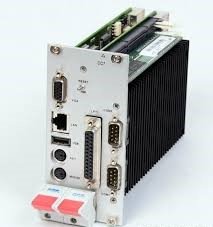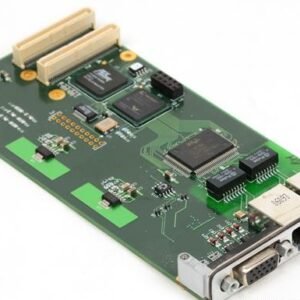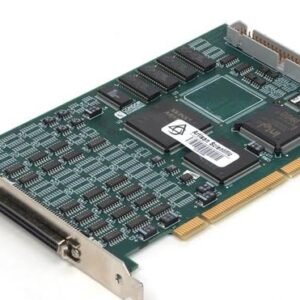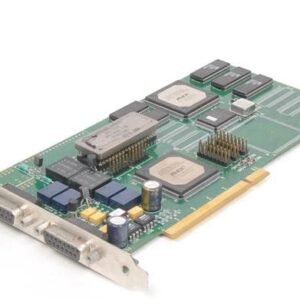

The NI PXIe-8130 is a high-performance embedded controller purpose-built for PXI Express modular instrumentation systems. It combines a 2.3 GHz dual-core AMD Turion 64 X2 processor with an NVIDIA MCP55 Pro chipset to deliver the computational power and data throughput required for demanding measurement, signal processing, and control applications. The controller integrates into PXI Express chassis, leveraging hybrid slot compatibility to support both PCI and PCI Express signaling.
Technical Specifications
Processor & Memory
• AMD Turion 64 X2 dual-core processor at 2.3 GHz
• 800 MHz HyperTransport Front Side Bus
• On-die L2 cache
• Dual-channel DDR2 SDRAM at 667 MHz (PC2-5300)
• 2 × SO-DIMM sockets supporting up to 2 GB per slot (maximum 2 GB total)
• Standard configuration: 1 GB DDR2 SDRAM
Storage & I/O
• Integrated 40 GB or 120 GB hard drive
• System bandwidth up to 4 GB/s
• Per-slot bandwidth up to 1 GB/s
• Gigabit Ethernet (10/100/1000BASE-TX)
• 4 × Hi-Speed USB 2.0 ports
• 1 × RS-232 serial port (COM1)
• 1 × parallel port
• 1 × DVI-I video output
• 1 × PCI-based GPIB controller (IEEE 488.2)
• 1 × ExpressCard/34 expansion slot
• Integrated PXI trigger with SMB connector support
Physical & Environmental
• 3U PXI Express form factor: 1.715 in. height × 3.341 in. width × 3.714 in. depth
• Weight: 2.15 lb
• Operating temperature: 5 to 50 °C
• Storage temperature: –40 to 65 °C
• Relative humidity: 10% to 90%, noncondensing
• Maximum operating altitude: 2,000 m
– Key Features
• Dual-core architecture with 800 MHz HyperTransport interconnect
• 4 GB/s system bandwidth for high-speed data acquisition and processing
• Multiple connectivity options including Gigabit Ethernet and USB 2.0
• Windows operating system support (7, Vista, XP, 2000) with LabVIEW Real-Time compatibility
• Included NI-VISA and NI-488.2 drivers for instrument control
• Hard-drive-based recovery image for system integrity
– Compatibility & Integration
The PXIe-8130 operates as a controller within PXI Express chassis, utilizing hybrid slot architecture for both conventional PCI and PCI Express modules. Full software support includes Windows-based development environments and real-time operating systems, enabling integration into complex test and measurement platforms.