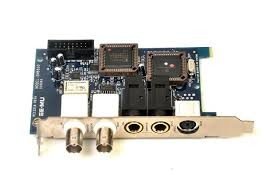
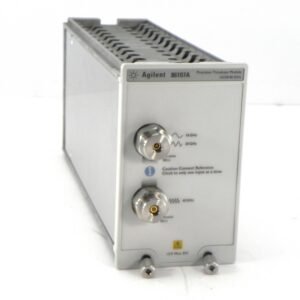
The Orolia/Odetics/KSI AITG-VME is a VME slave module that functions as a synchronizable timecode generator and precision clock for distributed timing applications. It automatically locks to external time references, captures time-tagged events via FIFO memory, and delivers IRIG-B modulated timecode and TTL pulse outputs to the VME backplane and front panel connectors. The module enables precise time tagging, multi-device synchronization, and frequency generation across VME-based data acquisition, recording, and analysis systems.
Technical Specifications
VME Bus Interface
• A16 short supervisory/non-privileged addressing with D08 transfers
• D16 transfers supported (high byte ignored)
• Configurable base address in 64-byte steps
• Software-selectable interrupt level and vector registers
• Status, command, internal event, and FIFO read registers
Time Capture & FIFO
• 10-byte time resolution from days to microseconds
• Capture initiated by external logic pulse or host command
• FIFO-buffered data transfer to host via VME interface
• OUTPUT READY handshaking via status register
Synchronization
• Locks to IRIG-B modulated timecode or 1PPS TTL reference
• Optional external high-stability oscillator input
• Optional GPS receiver synchronization input
• Convergence time < 20 seconds to ±1 µS accuracy
Timing Outputs
• IRIG-B modulated timecode
• On-time TTL pulses with 1 µS pulse width minimum
• Optional 8-digit LED front-panel display (0.15" characters)
Clock Range & Precision
• 1 µS through 366 days, 23 hours, 59 minutes, 59.999999 seconds
• Propagation delay correction: −1000 µS to +8999 µS (host-configurable)
Inputs
• Modulated timecode or 1PPS reference via J1 (20-pin) or J6 (BNC)
• External event pulses up to 2000 events/second
Power
• +5 VDC (±5%) at 3.5 A maximum
• +12 VDC (±5%) at 150 mA maximum
• −12 VDC (±5%) at 100 mA maximum
– Key Features
• Automatic external time synchronization with sub-microsecond accuracy
• Dual input connectors for flexible reference signal integration
• FIFO-based time capture eliminates polling overhead
• Host-configurable propagation delay correction
• VME slave architecture for direct host integration
– Typical Applications
• Multi-instrument time synchronization in test benches
• Precision event logging and data correlation
• GPS-disciplined timing distribution
• Distributed measurement systems requiring time-tagged samples
– Compatibility & Integration
The AITG-VME operates as a VME slave requiring standard VME backplane power (+5 V, ±12 V) and A16/D08 addressing capability. Host software controls synchronization, capture timing, and propagation delay via command sequences.