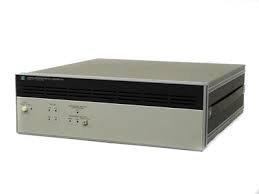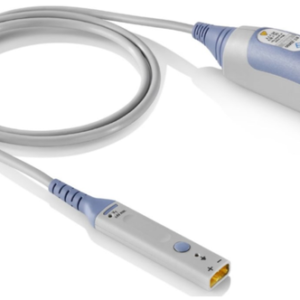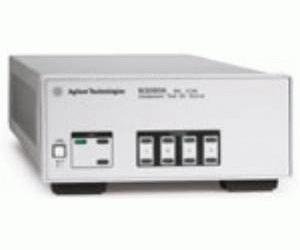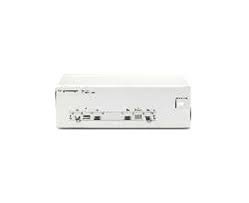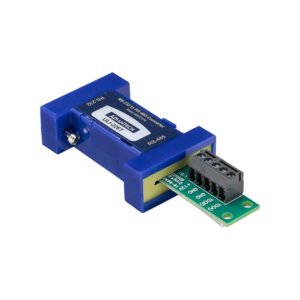
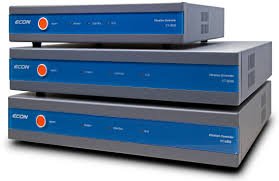

The Premax (FB) VT-9008-4 is a 4-channel vibration controller delivering precision environmental testing for electronic devices and mechanical systems. Built on 32-bit floating-point DSP processing, it executes real-time vibration control across multiple test profiles including Random, Sine, RSTD, Classical Shock, Sine on Random, Random on Random, and Sine and Random on Random modes. The unit also supports Fatigue Damage Spectrum, Rand simulation, and Blade Fatigue Test protocols.
Technical Specifications
Signal Processing & Accuracy
• 24-bit ADC/DAC resolution
• Input dynamic range >120 dB
• Random control dynamic range >90 dB
• Overall dynamic range >95 dB
• SNR >100 dB (typical, 1 kHz, 1 V input)
• Harmonic distortion <−95 dB (real-time)
• Amplitude accuracy: 0.1%
• Frequency accuracy: 0.001%
• Overall control accuracy: ±1 dB
• 48,000 Hz maximum sampling frequency
Input/Output Configuration
• 4 voltage/IEPE/charge/TEDS input channels (expandable to 8 maximum)
• Integrated IEPE sensor power and charge amplifier
• 1 drive output channel and 1 COLA channel
• 1 Digital I/O port with DB37 connectivity
• Analog antialiasing filter per channel
• 160 dB/Oct digital filter per channel
Control Range
• Sine sweep: 0.1 Hz minimum
• Random vibration: up to 18,750 Hz
Power & Connectivity
• Input voltage: ±0.1 V, ±1 V, ±10 V
• Maximum current: ±100 mA
• Universal AC supply: 88–264 V, 47–63 Hz
• Power consumption: 40 W
• USB 2.0 interface
Physical
• Steel/aluminum case with shock guards
• Dimensions: 362×278×79 mm (14.3×10.9×3.1 in.)
• Weight: 2.9 kg (6.4 lb)
• Integrated manual abort button
– Key Features
• Seven distinct vibration control modes plus fatigue and simulation protocols
• Sub-hertz sine sweep capability for low-frequency structural testing
• Extended input channel capacity via modular expansion
• Integrated sensor excitation and signal conditioning
– Typical Applications
• Environmental stress screening of avionics and automotive electronics
• Component durability and fatigue assessment
• Resonance identification and tracking during product development
– Compatibility & Integration
USB 2.0 connectivity enables direct computer control and data logging. DB37 digital I/O supports external trigger and synchronization requirements in multi-axis test configurations.