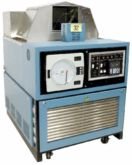
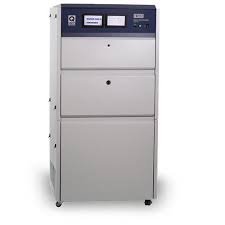

The Q-Lab Q-SUN XE-3-HS is a full-sized xenon arc chamber for accelerated weathering and light stability testing. Three 1800 W ozone-free xenon arc lamps deliver full-spectrum illumination that replicates outdoor sunlight exposure. The patented SOLAR EYE® Irradiance Control System automatically maintains programmed light intensity at 340 nm, 420 nm, or TUV (300–400 nm) wavelengths. By combining controlled irradiance, temperature, and humidity, the chamber compresses months or years of environmental degradation into days or weeks, enabling rapid material durability assessment without natural weathering timelines.
Technical Specifications
Light Source & Control
• Three 1800 W full-spectrum xenon arc lamps, ozone-free
• SOLAR EYE® automatic irradiance control at 340 nm, 420 nm, or TUV (300–400 nm)
• Irradiance: 0.25–0.68 W/m² @ 340 nm; 0.45–1.50 W/m² @ 420 nm (varies by filter type)
• Optical filter selection: Daylight-Q, Daylight-F, Daylight-B/B, Window-Q, Window-B/SL, Window-IR, Extended UV-Q/B, Extended UV-Quartz
Temperature Control
• Black Panel Temperature: 45–110 °C (irradiation), 40–90 °C (dark phase)
• Chamber Air Temperature: 35–65 °C (irradiation), 25–50 °C (dark phase)
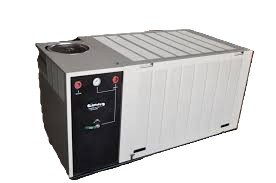
• Optional chiller supports low-temperature operation down to 31 °C black panel temperature at 50% RH
• Independent simultaneous control of Chamber Air Temperature and Black Panel/Black Standard Temperature
Humidity Control
• Relative Humidity range: 20–95% RH
• Electronic disposable sensor monitors and controls RH and CAT; purified water required
Specimen Capacity
• Slide-out tray: 451 mm × 718 mm (17.75 × 28.25 in)
• Holds up to 55 specimens at 51 mm × 102 mm (2 × 4 in) each
• Specimen orientation: 10° from horizontal
• Accepts large three-dimensional parts directly on tray; holders available for specialized applications
– Key Features
• Dual-parameter temperature control enables precise simulation of real-world thermal stress
• Wide humidity range captures tropical, temperate, and arid exposure conditions
• Multiple filter options simulate service environments from direct sunlight to window-transmitted light
• High specimen capacity reduces test cycles for material batches
– Typical Applications
• Coatings, polymers, and composite durability assessment
• Automotive and aerospace material qualification
• Consumer product fade and degradation testing
• Building materials and window glass performance validation
– Compatibility & Integration
Optional chiller module expands thermal envelope for low-temperature weathering studies. Disposable RH sensor design minimizes maintenance intervals.