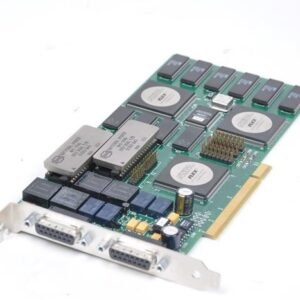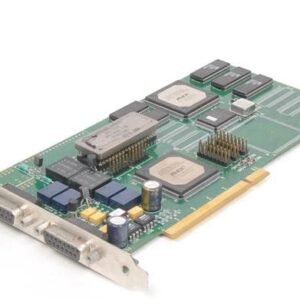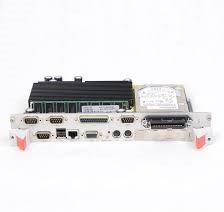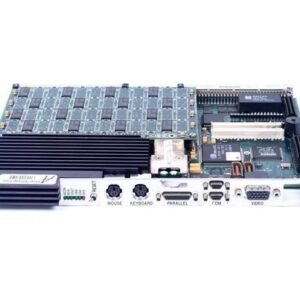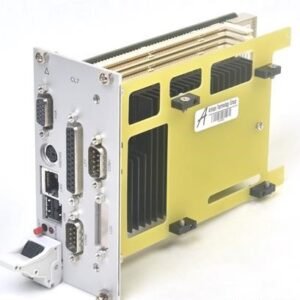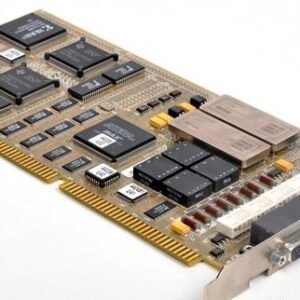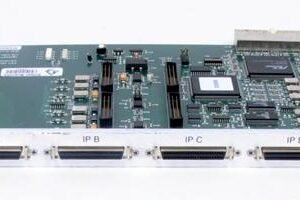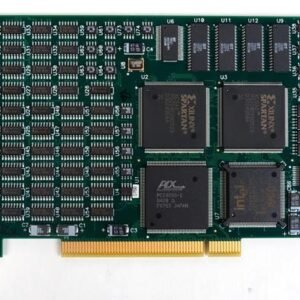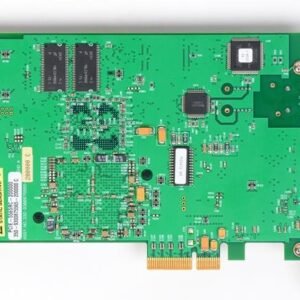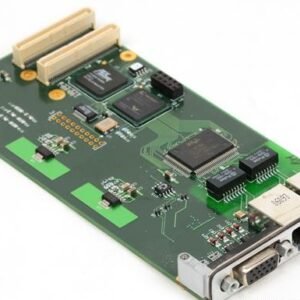
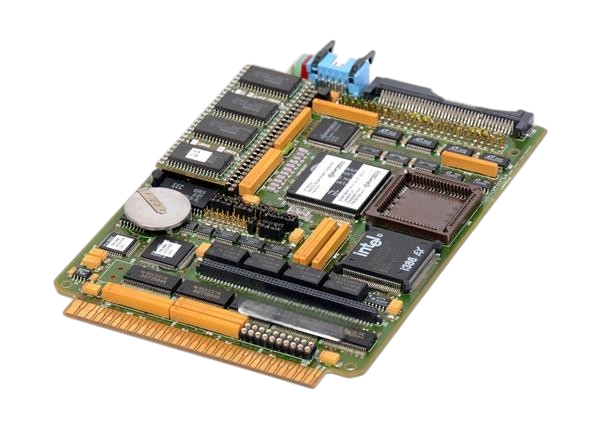

The Ziatech ZT 8904 is a 386EX single-board computer for embedded and industrial control applications. Built around the Intel 386EX processor running at 25 MHz, it integrates core system functions on a single STD 32 format board. The design supports real-time control, data acquisition, and communication in demanding field environments. An extended-temperature variant (ZT 89CT04) operates from -40°C to +85°C for harsh industrial conditions.
Technical Specifications
Processor & Memory
• Intel 386EX CPU at 25 MHz with optional math coprocessor socket
• 1 to 5 Mbytes Pseudo Static RAM (expandable)
• 1, 2, or 4 Mbytes Flash PROM for DOS, BIOS, and application code
• 128 Kbytes battery-backed static RAM (RAM disk / configuration storage)
• 16 Mbytes total addressable memory
Serial & Parallel I/O
• Two RS-232/485 serial ports (16450 UART) with DMA and J1708 capability
• Two RS-232 serial ports (16550 UART) with FIFO buffers
• IEEE 1284-compliant parallel port (Centronics, ECP, EPP modes)
• 24 bi-directional digital I/O lines with event sensing and programmable debounce
Peripheral Controllers
• Two Intel 8259 interrupt controllers
• Two DMA channels
• Three 16-bit timers (Intel 8254)
• Two-stage watchdog timer
• Battery-backed real-time clock
• Integrated IDE subsystem (optional)
• Optional local bus video module
Power & Reliability
• +5V operation; ±12V not required
• AC/DC power-fail detection circuitry
– Key Features
• STD 32 and STD bus compatibility for single-slot or multi-processor configurations
• STD 32 multiprocessing support with permanent or temporary master operation
• Compact 4.5″ × 6.5″ board format
• Integrated peripherals minimize external component count
• Battery backup for system clock and configuration memory
– Typical Applications
Real-time process control, distributed data acquisition systems, industrial networking nodes, vehicular embedded systems (J1708 compatibility), and ruggedized field instrumentation.
– Compatibility & Integration
The ZT 8904 interfaces with STD 32 and STD bus backplanes, enabling it to function in standalone or multi-board systems. Software-programmable parallel port control and DMA-capable serial channels support diverse peripheral integration.