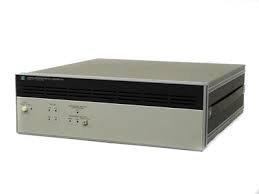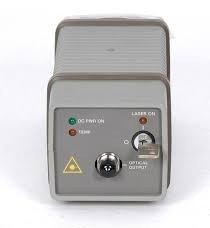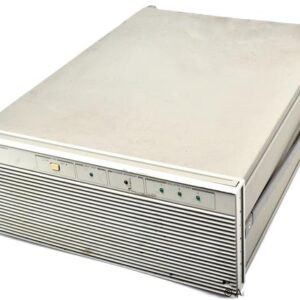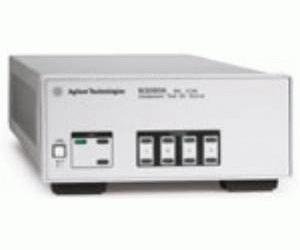

The Dunegan 4501A Particle Impact Noise Detector Controller is a microprocessor-based system engineered to detect loose particles within sealed electronic components through ultrasonic acoustic analysis. Operating at 155 kHz, the system’s ultrasensitive sensor detects particles as small as 1 mil impacting package cavities, converting impact energy into measurable acoustic signals. The controller manages programmable shock and vibration sequences with precise shaker armature displacement control, meeting MIL-STD-883C Method 2020 and MIL-STD-750C Method 2052 requirements.
Technical Specifications
• Detection Method: Particle Impact Noise Detection (PIND)
• Sensor Frequency: 155 kHz ultrasonic
• Particle Detection Sensitivity: 1 mil minimum
• Standards Compliance: MIL-STD-883C Method 2020, MIL-STD-750C Method 2052
• Programmable Test Steps: Up to 29
• Shock Delay Timing: 25–250 milliseconds (adjustable)
• Dual switchable adjustable thresholds
• Surface Impact Sensor Diameter: 22 mm (0.875 in)
• Sensor Weight: 60 grams
• Accelerometer Sensitivity: 2.1 pc/G ±10% at 100 Hz
• Shaker Payload (M230): 0.66 lb (0.30 kg)
– Key Features
• Keyboard-programmable shock and vibration sequences
• Microprocessor control of pre-test and co-test shocks
• Adjustable vibration frequencies
• Feedback control circuits for repeatable shock levels
• Shaker head velocity control prior to impact
• Vibration amplitude automatic adjustments
• Dual threshold capability for detection optimization
– Typical Applications
Designed for high-reliability testing of integrated circuits, hybrid circuits, transistors, relays, and switches where loose particle contamination could cause short circuits and system failures. Suitable for aerospace, defense, and mission-critical electronics requiring stringent particle-free component validation.
– Compatibility & Integration
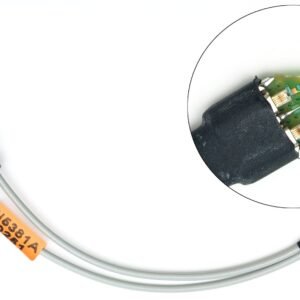
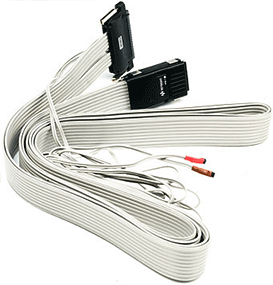
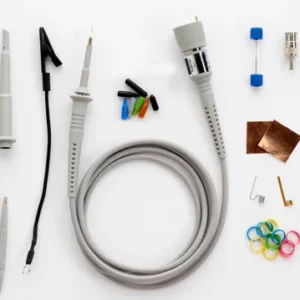
System operates with high-resolution X-Y monitor oscilloscope, PIND vibration and shock shakers (M120, 4501-M230), surface impact sensors and accelerometers, sensitivity test units, and external STU Pulsar boxes. Interconnection via low-noise BNC-Microdot cables with dedicated shaker drive, accelerometer, and controller-to-monitor cabling.