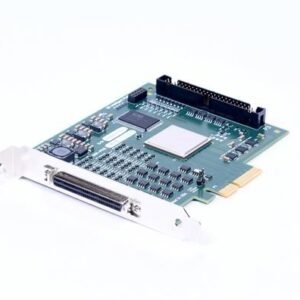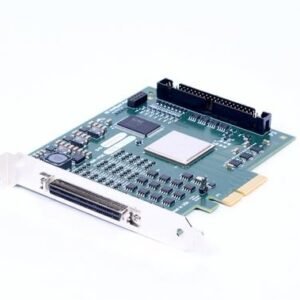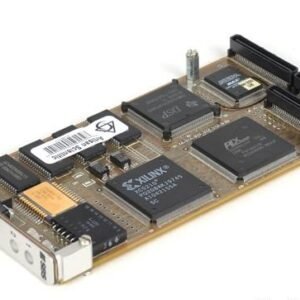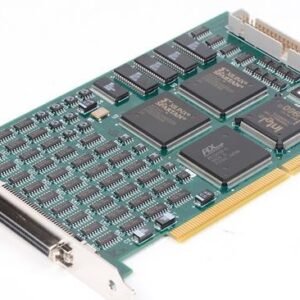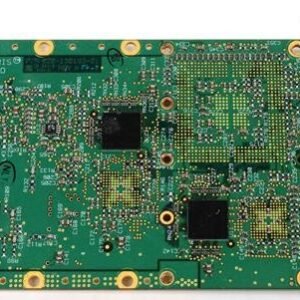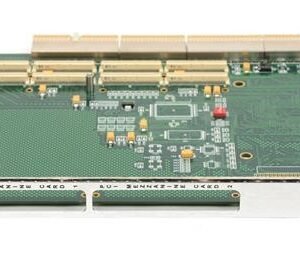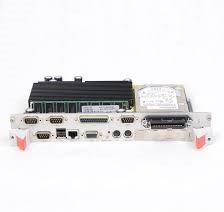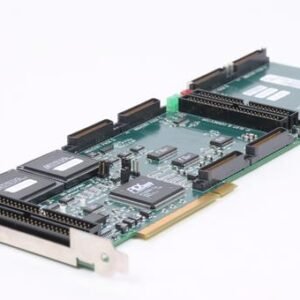

The Spectrum Digital TMS320C6713 DSK is a standalone development platform for evaluating and prototyping DSP-based signal processing applications. Built around the Texas Instruments TMS320C6713 operating at 225 MHz, it delivers 1800 MIPS and 1350 MFLOPS of processing power. The board integrates 16 Mbytes of SDRAM, 512 Kbytes of Flash memory, and a TLV320AIC23 stereo audio codec, making it immediately suitable for real-world audio and voice applications without external components.
Technical Specifications
• Digital Signal Processor: Texas Instruments TMS320C6713
• Clock Speed: 225 MHz
• Processing Performance: 1800 MIPS, 1350 MFLOPS
• Memory: 16 Mbytes SDRAM (2M x 32), 512 Kbytes Flash (256 Kbytes usable default)
• Audio Codec: Texas Instruments TLV320AIC23 stereo codec
• Programmable Logic: Altera EPM3128TC100-10 CPLD
• Power Supply: +5V external (on-board regulators: +1.26V DSP core, +3.3V I/O)
• Power Connector: 2.5 mm barrel-type plug
• Board Dimensions: 8.25″ x 4.5″ (210 x 115 mm), 6-layer, 0.062″ thickness
– Key Features
• 32-bit External Memory Interface (EMIF) with expansion connector access
• On-board JTAG emulator with USB host interface for direct PC connection
• External JTAG connector for third-party emulators
• IEEE 1149.1 JTAG support
• Four 3.5 mm audio jacks: microphone input, line input, speaker output, line output
• McBSP0 and McBSP1 serial ports for codec control and digital audio data
• Software-configurable routing of audio interfaces to expansion connectors
• Real-Time Data Exchange (RTDX) for host-target communications
• Three expansion connectors supporting Memory, Peripheral, and Host Port interfaces
– Typical Applications
• Speech compression and decompression
• Speech recognition and text-to-speech synthesis
• Fax and data conversion
• Modem design and protocol conversion
• Tone generation and detection
• Echo cancellation
– Compatibility & Integration
The DSK provides hardware reference designs and evaluation pathways for TMS320C6713-based products. Expansion connectors enable third-party add-in boards, while the on-board CPLD manages glue logic and board-level control functions.