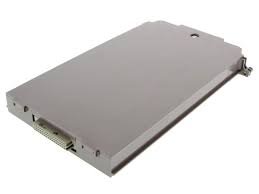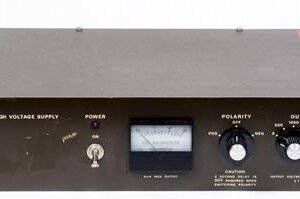

The Spellman RMP3PN500 is a high-voltage power supply module designed for OEM integration into analytical and scientific instruments. It delivers adjustable output voltage and current with precision voltage and current regulation, making it suitable for applications requiring stable, regulated high-voltage outputs. The module incorporates comprehensive protection features and achieves excellent load and line regulation performance across demanding operational environments.
Technical Specifications
Voltage Regulation
• Load Regulation: 0.01% of full voltage (no-load to full-load) or 0.005% of full voltage + 500mV for full load change
• Line Regulation: ±0.01% for ±10% input change, or ±0.005% of full voltage + 500mV over specified input range
Current Regulation
• Load Regulation: 0.01% of output current (0 to rated voltage) or 0.05% of full current ±100µA for any voltage change
• Line Regulation: ±0.01% of rated current over input range, or ±0.005% of maximum current for ±10% input line change
Output Stability & Ripple
• Ripple: 0.1% peak-to-peak of maximum output voltage (0.001% p-p optional)
• Stability: 0.02% per 8 hours after 30-minute warm-up (0.05% per 8 hours or <0.007%/hr variants available)
• Temperature Coefficient: 100ppm/°C typical (50ppm/°C or better than 25ppm/°C options available)
Input Specifications
Input voltage options include +24Vdc, 115Vac, 220Vac, or universal AC input (85–265Vac). Efficiency typically exceeds 80–85% for AC input modules.
– Key Features
• Adjustable output voltage and current
• Precision load and line regulation
• Low output ripple characteristics
• Temperature-compensated operation
• Long-term output stability after warm-up
• Integrated protection for demanding environments
– Typical Applications
• Analytical instrumentation
• Scientific equipment integration
• X-ray tube power systems (with optional filament supply)
• Laboratory test systems requiring stable high voltage
– Compatibility & Integration
The RMP3PN500 integrates into OEM systems via standard module interface. Multiple input voltage options accommodate diverse system architectures.