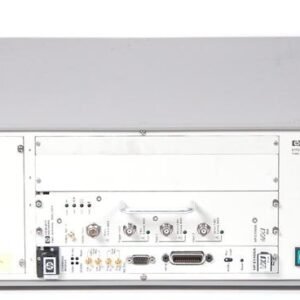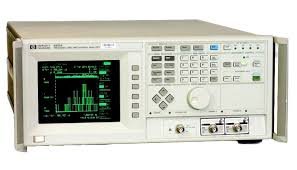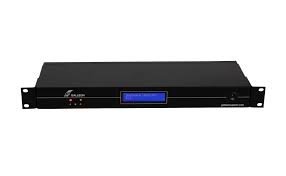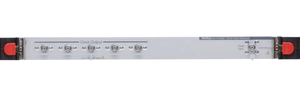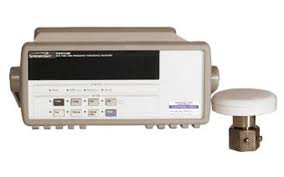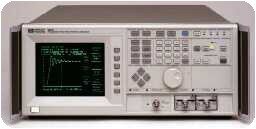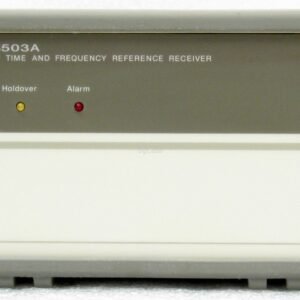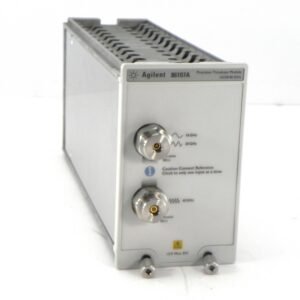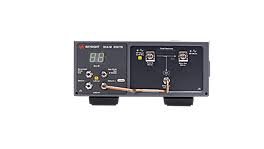

The Spirent AT9155s is a high-performance synchronization and timing verification platform engineered for network infrastructure validation in data center environments. It monitors PTP (IEEE 1588) and NTP performance across Ethernet and clock signals, delivering independent verification of synchronization accuracy 24/7. The platform supports testing at rates from 100 Mbps to 100 Gbps across two measurement channels with multiple interface options. An integrated 12-channel GNSS receiver (GPS, GLONASS, Beidou, Galileo) and onboard Rubidium oscillator enable continuous monitoring even during external time reference loss, with time error measurement accuracy of ±75 ns relative to GNSS. Real-time API integration delivers time error data directly to network management systems for trend analysis and preemptive issue identification.
Technical Specifications
• Phase, Time, and Frequency Synchronization Verification: Validates synchronization accuracy across all three parameters
• PTP Support: Layer 2 Multicast; Layer 3 UDP/IPv4 and UDP/IPv6 Multicast/Unicast
• NTP Support: Layer 3 UDP/IPv4/IPv6 Multicast/Unicast
• Time Error Measurement Accuracy: ±75 ns (constant TE, referenced to GNSS)
• Relative Time Error (rTE): ≤5 ns specification
• 1 PPS Monitoring: Up to 5 simultaneous clock signals including 1 PPS
• GNSS Time Accuracy: ±15 ns at 1σ after 24 hours of lock
• GNSS Frequency Accuracy: 2 × 10⁻¹² averaged over 24 hours
• GNSS Disciplining Modes: Always disciplining, always in holdover, disciplining only between measurements
• Re-disciplining Time: 6 hours (disconnection 1 week); 1 hour (with Cs quality 1 PPS)
• Reference Clock: Built-in Rubidium oscillator for holdover stability
• Testing Rates: 100 Mbps to 100 Gbps
• Measurement Channels: Maximum 2 channels (one active line rate per channel)
• Ethernet Interfaces: RJ45 (100/1000 Base-T); SFP/SFP+ (100M/1G/10G optical); QSFP28 (100G optical); SFP28 (25G optical with QSFP28 adapter)
– Key Features
• Simultaneous monitoring of multiple PTP, 1PPS, and NTP signals
• Trend analysis for preemptive synchronization issue identification
• API integration for network management system deployment
• Holdover mode operation via onboard Rubidium oscillator
• Multi-constellation GNSS receiver with high sensitivity
– Typical Applications
• Data center synchronization validation and verification
• PTP/NTP performance diagnostics
• Timing accuracy monitoring in mission-critical infrastructure
• Holdover performance characterization
– Compatibility & Integration
API-based integration enables direct connection to network management systems for automated monitoring and reporting. Multiple interface options support diverse Ethernet deployments from legacy to 100 GbE infrastructure.