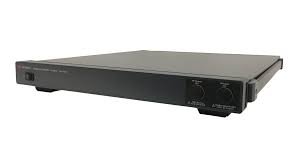

The Stanford Research CG643 is a synthesized clock generator delivering PECL (+5Vcc) signals up to 2050 MHz for high-speed digital systems, communication networks, and test and measurement applications. This instrument combines exceptional frequency stability with flexible programmability, enabling precise clock edge positioning and dynamic timing control in demanding research and engineering environments.
Technical Specifications
Output Performance
• Output signal type: PECL (+5Vcc)
• Maximum output frequency: 2050 MHz
• Complementary square wave outputs
• Jitter (rms): Less than 1 ps across operational frequency range
• Transition time (rise/fall): 80 ps (20% to 80%)
• Frequency resolution: 16 digits
Timing and Control
• Phase resolution: 1° for frequencies above 200 MHz
• Time modulation range: ±5 ns via rear-panel input
• Modulation sensitivity: 1 ns/V
• Modulation bandwidth: DC to over 10 kHz
• Configuration memory: 10 non-volatile storage slots
Connectivity and References
• 10 MHz reference input (rear panel)
• 10 MHz reference output (rear panel)
• Accessory power: +5 V and −5 V (rear panel)
• Control interfaces: GPIB and RS-232
Power Supply
• Universal input AC power for worldwide operation
– Key Features
• High-precision PECL differential signaling for noise-immune clock distribution
• Sub-picosecond jitter performance for timing-critical applications
• Phase adjustment with 1° resolution above 200 MHz for exact clock edge positioning
• Dynamic time modulation capability enabling real-time timing adjustments
• Instant configuration recall from ten stored presets via memory function
• Accessory power outputs supporting remote clock receiver modules via Category-6 cable
– Optional Accessories
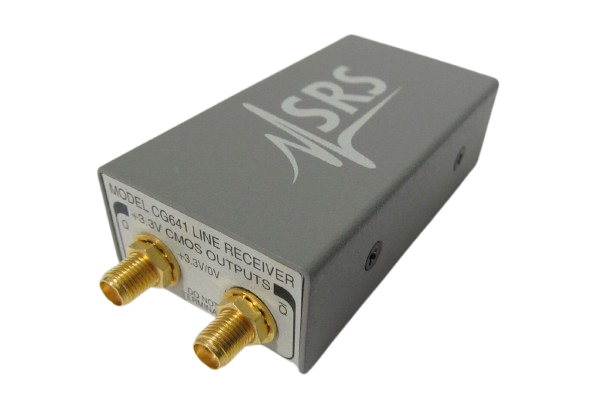
• Clock receiver modules for complementary high-speed transitions at standard logic levels on SMA connectors
• PRBS generator for random data pattern generation
• Multiple output types available including CMOS, ECL, LVDS, and RF through accessory modules
– Typical Applications
High-speed digital system synchronization, precision timing for communication networks, test and measurement instrument synchronization, and phase-coherent multi-channel signal generation in research laboratories.