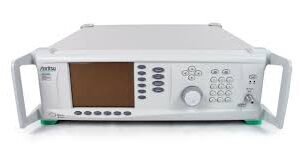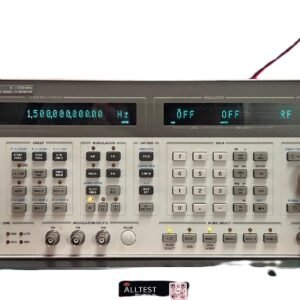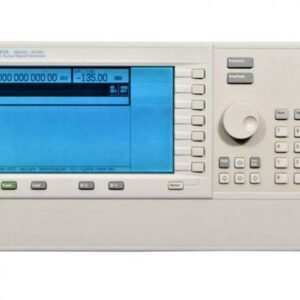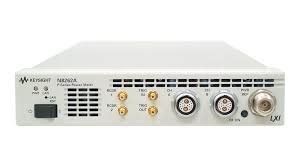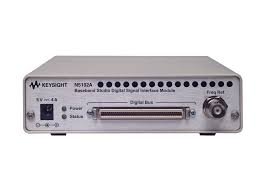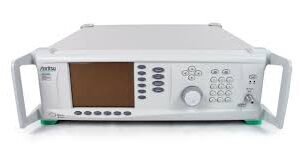

The Stanford Research CG649 is a high-performance LVDS clock and data generator engineered for applications demanding signal integrity up to 2050 MHz. It delivers stable, low-jitter differential outputs via rear-panel RJ-45 connectors on twisted pairs, with 100 Ω source impedance matched to standard CAT-6 terminations. The instrument provides precise frequency, amplitude, and timing control essential for characterizing high-speed digital systems and validating complex electronic designs.
Technical Specifications
Clock Generation
• Maximum Output Frequency: 2050 MHz
• Output Signal Type: LVDS (Low-Voltage Differential Signaling)
• Output Connectors: Rear-panel RJ-45 for differential square wave clocks on twisted pairs
• Output Impedance: 100 Ω source impedance
• Cable Compatibility: Shielded CAT-6 cable with 100 Ω terminations
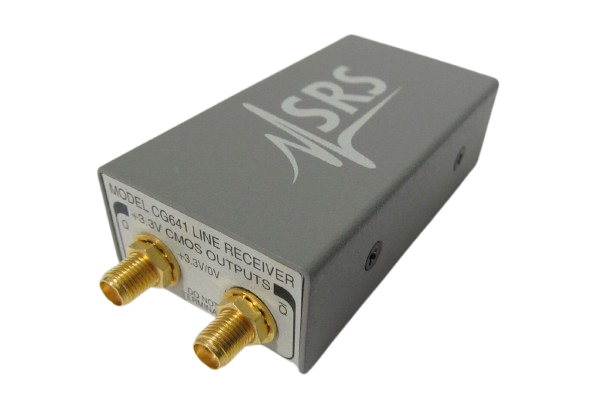
• Auxiliary Output: ±5 VDC power available on RJ-45 connector for optional line receivers
Timing Performance
• Jitter (RMS): Less than 1 ps RMS
• Rise/Fall Time: Typically 80 ps
• Phase Adjustment: High-precision control with resolutions to one nanodegree
• Time Modulation: ±5 ns modulation range via rear-panel input; 1 ns/V sensitivity; DC to >10 kHz bandwidth
Interfaces & Power
• Rear-Panel Connectivity: RJ-45 for LVDS and RS-485 signals
• Auxiliary Power: ±5 VDC for optional line receivers providing complementary logic on SMA connectors
– Key Features
• Sub-picosecond jitter performance for demanding timing applications
• Fast signal edges enabling high-fidelity differential transmission
• Nanodegree-resolution phase control for precision synchronization
• Low-frequency modulation capability via analog input
• Integrated power supply for optional receiver modules
– Typical Applications
• High-speed digital system testing and characterization
• LVDS clock distribution and synchronization
• Differential signaling validation
• Advanced electronics development and validation
– Compatibility & Integration
Works with optional line receivers to convert LVDS outputs to complementary logic levels on SMA connectors. Designed for CAT-6 twisted-pair cabling with matched 100 Ω termination networks.