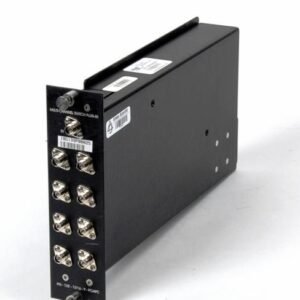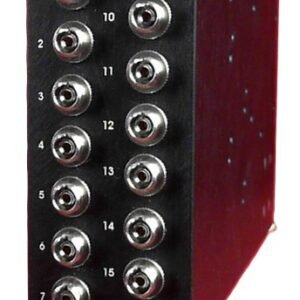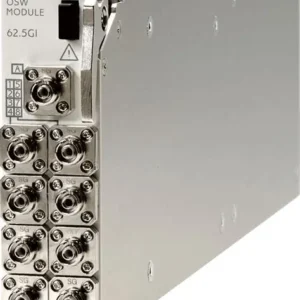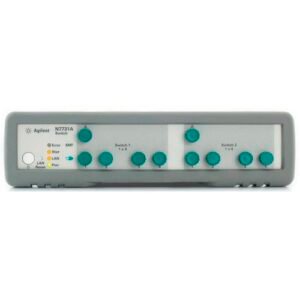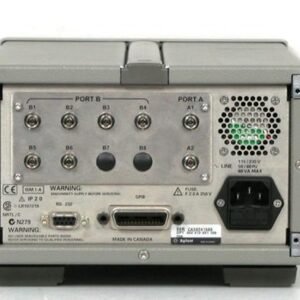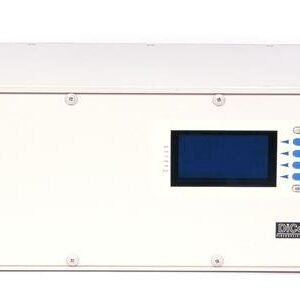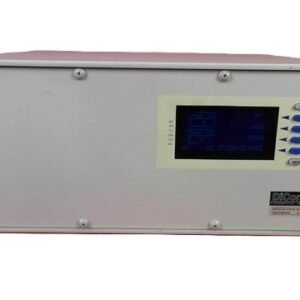
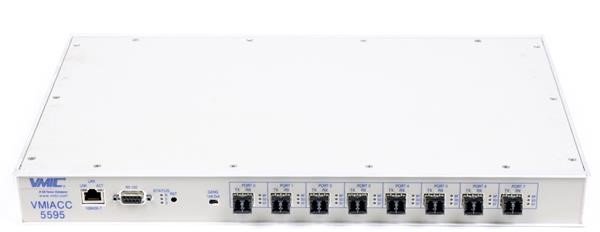

The Abaco Systems / VMIC ACC-5595-208 is a 2 Gb/s Reflective Memory Hub Assembly that converts daisy-chained loop topologies into resilient star configurations. This managed hub automatically bypasses defective or disconnected nodes, maintaining network operability without single-point failures. The architecture supports up to 256 nodes through cascading and regenerates serial optical signals at each port to mitigate insertion loss, cable attenuation, and jitter.
Technical Specifications
Performance
• Data rate: 2 Gb/s
• Node capacity: up to 256 nodes (cascaded)
• Signal regeneration on all ports
• Cable length: configurable up to 10 km
Interfaces
• Eight Reflective Memory ports supporting Small Form Factor Pluggable (SFP) transceivers
• 10BaseT Ethernet TCP/IP port for remote access and control
• RS232 port (9-pin female D-subminiature) for local access and control
Physical
• Enclosure options: 19-inch 1U rack mount or desktop
• Desktop dimensions: 16.73 inches wide × 10.0 inches deep × 1.72 inches high
• Rack mount: standard 19-inch brackets (1U)
• Weight: 3 kg
• Internal universal power supply
• Fuse: 4A/250V
• Status indicators: three LEDs per port
– Key Features
• Automatic node bypass controlled by loss of signal or loss of synchronization pattern
• Manual per-port control: individual ports can be forced active or bypassed independently
• Gang select switch configures ports as one 8-port loop or two 4-port loops
• Dark on Dark option available (firmware v02.00+) to disable transmitter when receiver detects no signal
• Supports multimode (short distance) and single-mode (long distance) SFP transceivers in any combination
– Typical Applications
Reflective Memory networks requiring fault-tolerant topologies, distributed avionics systems, and mission-critical real-time data distribution across dispersed platforms.
– Compatibility & Integration
All eight SFP transceiver receptacles are equipped with EMI dust plugs when unpopulated. The 10BaseT Ethernet controller enables integration into network management systems. Manual and automatic bypass mechanisms ensure operation during node failures without network reconfiguration.