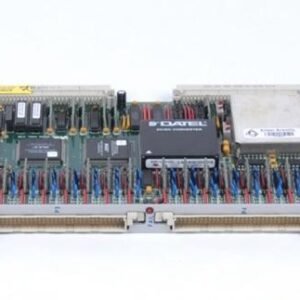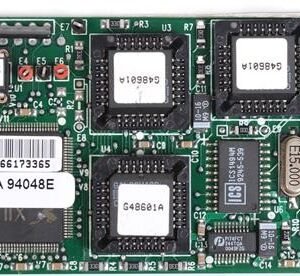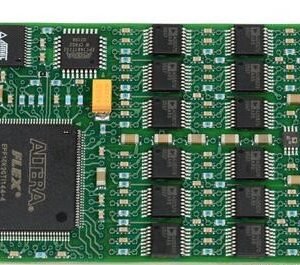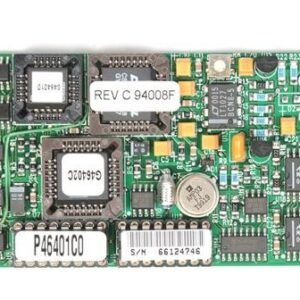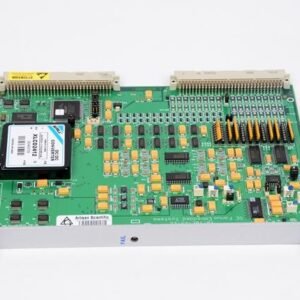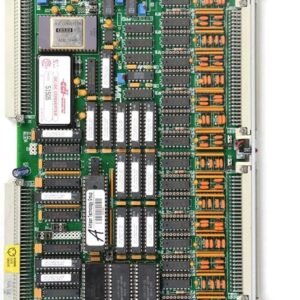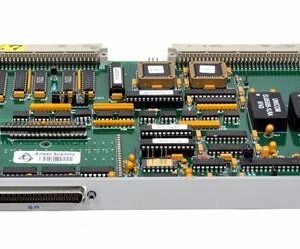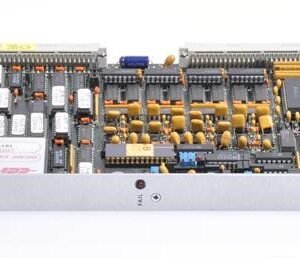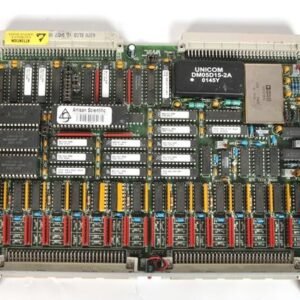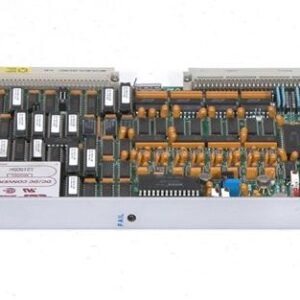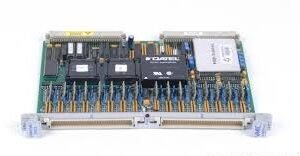
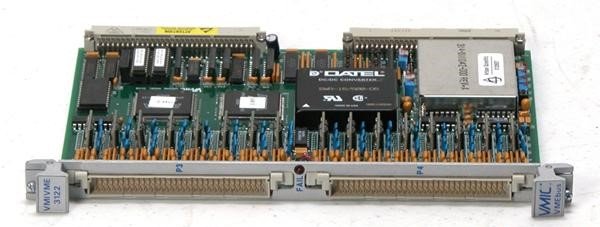

The Abaco Systems / VMIC VMIVME-3122-200 is a 16-bit analog-to-digital converter (ADC) VME card engineered for precision data acquisition in demanding signal digitization applications. This module delivers software-selectable conversion rates up to 100 kSPS with support for up to 64 differential or single-ended input channels, dual-port data buffering, and programmable gain control—making it suitable for systems requiring high-fidelity analog signal measurement within VME-based architectures.
Technical Specifications
• Resolution: 16-bit
• Conversion Rate: Software-selectable, up to 100 kSPS maximum (100 kHz); standard performance option at 50 kSPS
• Input Channels: Up to 64 differential or single-ended inputs
• Input Bandwidth: High-performance option: 40 kHz typical (20 Vp-p, no filter); standard performance option: 5 kHz typical (20 Vp-p)
• Data Registers: 1024 dual-port registers for continuous scanning and VMEbus read access
• Gain Control: Software-controlled, selectable x1 or x10 per channel
• Access Time: Non-scanning 600 ns maximum; scanning 600 ns typical, 1.2 µs maximum
• Input Filters: Low-pass filters available with ±25% cutoff frequency tolerance
• Common-Mode Protection: 22 MΩ pull-down resistor to ground (high-performance option)
– Key Features
• Programmable channel scanning (1, 8, 16, 32, 48, or 64 channels selectable)
• Automatic continuous digitization of selected channels with dual-port buffering
• Three trigger modes: software trigger, external TTL trigger via P2 connector, and external synchronization
• Multi-board synchronization capability supporting up to 15 boards via P2 trigger output
• Full VMEbus read access to data registers during continuous operation
– Typical Applications
High-speed test and measurement systems, avionics instrumentation, industrial process monitoring, and defense telemetry requiring synchronized multi-channel analog signal acquisition within VME environments.
– Compatibility & Integration
Designed as a VME Analog I/O Input Board compatible with VMEbus system architecture and supporting concurrent board synchronization through external trigger signaling.