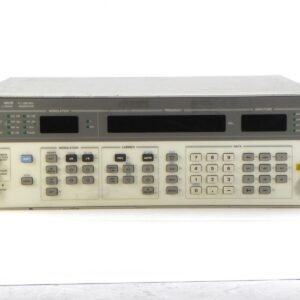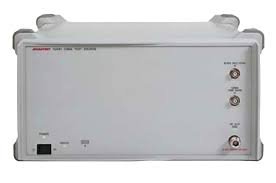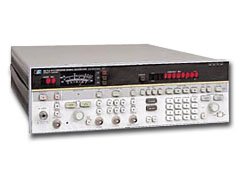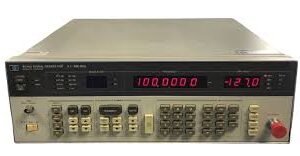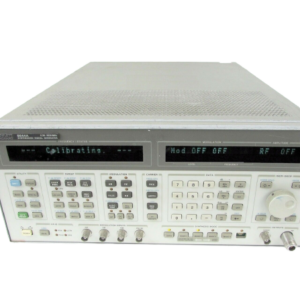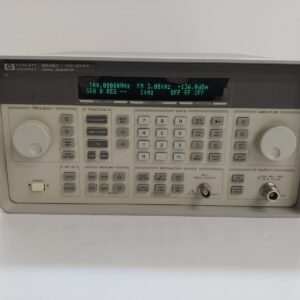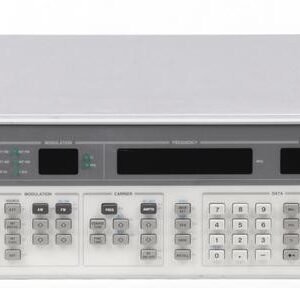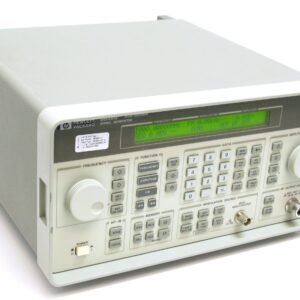
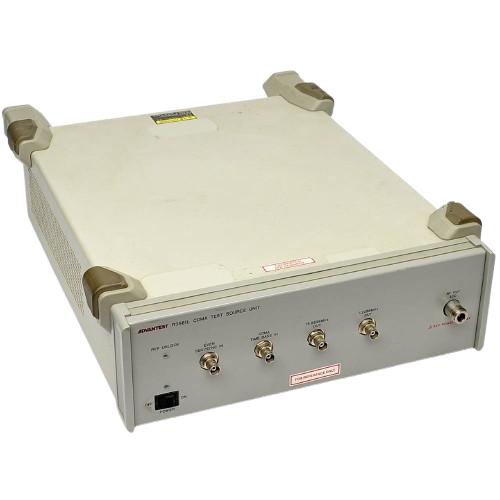

The Advantest R3562 is a receiver test source designed for precise signal generation and comprehensive evaluation of communication receiver performance. This instrument delivers accurate and stable outputs across multiple standard-compliant channels, enabling engineers to validate receiver sensitivity, power control behavior, and signal acquisition across diverse wireless communication systems. Built for laboratory and development environments, the R3562 supports remote programming and integrates with complementary test instruments for expanded measurement capabilities.
Technical Specifications
Signal Generation & Channels
• Outputs reference measurement channels compliant with 3GPP standards
• Supports Primary CPICH, Primary SCH, Secondary SCH, P_CCPCH, and single DPCH channel generation
• Generates signals with TPC (Transmit Power Control) information
• I/Q signal processing capable
Measurement Capability
• Receiver sensitivity measurement utilizing built-in bit error counters
Physical Characteristics
• Compact dimensions approximately 424 (W) × 177 (H) × 300 (D) mm
• Weight: 14–15 kg
• Horizontal operating position required
• Panel cover included for transport protection
Environmental Requirements
• Minimum 10 cm clearance required around air vents
• Operation prohibited in areas with sudden temperature changes, shock, vibrations, moisture, dirt, dust, or magnetic fields
• Equipped with active cooling fan
– Key Features
• GPIB remote programming interface for system integration
• Built-in bit error detection for sensitivity validation
• Multi-channel signal generation from single instrument
• Stable reference signal output for repeatable measurements
– Typical Applications
• 3GPP receiver performance validation
• WCDMA receiver sensitivity characterization
• Transmit power control behavior assessment
• Radio frequency device development and qualification
• Wireless communication system testing
– Compatibility & Integration
The R3562 integrates with complementary instruments such as the R3267 and R3273 for enhanced multi-parameter testing configurations. GPIB connectivity enables automated test sequences and remote control within larger measurement systems.