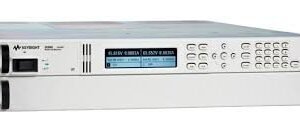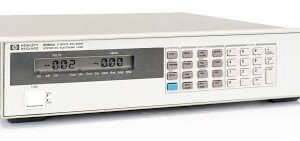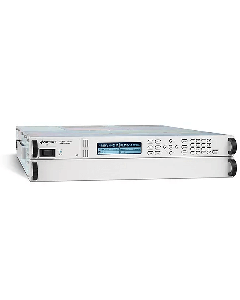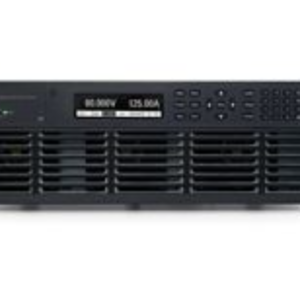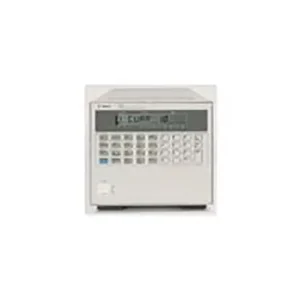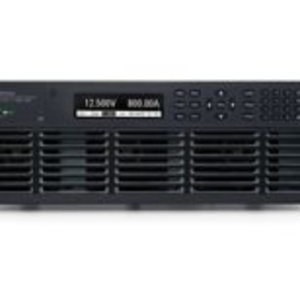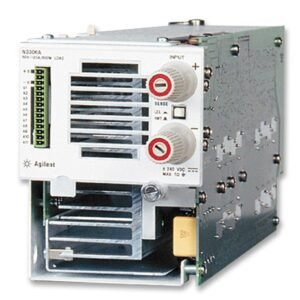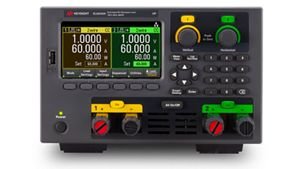
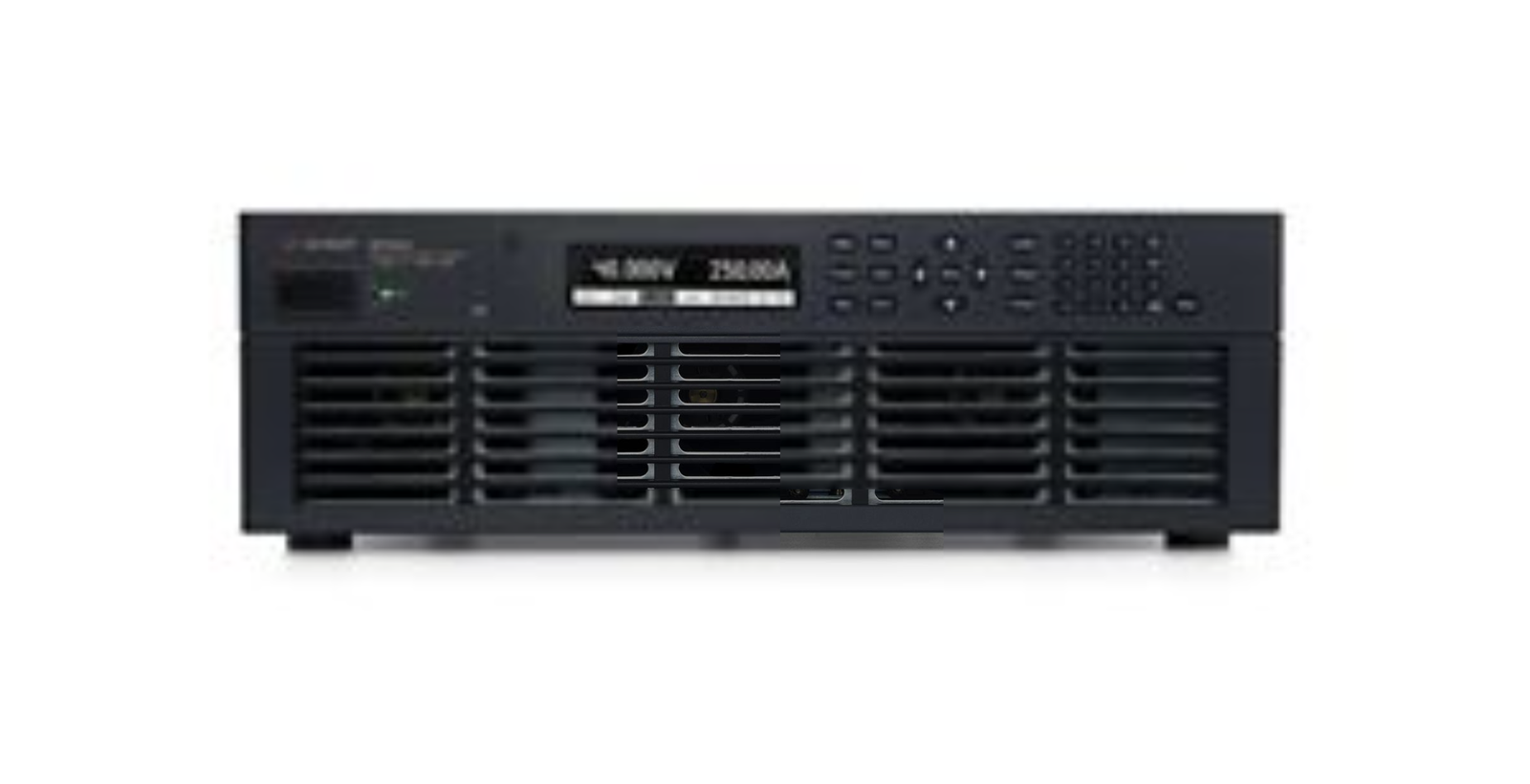

The Keysight RP7935A is a bidirectional regenerative power system that sources and sinks current with seamless transitions between modes. This two-quadrant DC power supply and electronic load delivers 10 kW maximum output power across 0–80 V and ±250 A, making it essential for testing energy storage devices, power converters, and high-speed digital systems. The regenerative design returns up to 90% of power to the grid, reducing energy consumption and cooling requirements. Sub-millisecond command processing and fast output speed enable responsive testing, while autoranging output characteristics expand the voltage and current combinations available in a single 3U rack unit.
Technical Specifications
• Output Voltage: 0–80 V
• Output Current: ±250 A
• Maximum Output Power: 10 kW
• Efficiency: >80% typical (sourcing and sinking)
• Regeneration Efficiency: Up to 90% of power returned to grid
• Harmonic Distortion: <2% typical at full load when regenerating
• AC Input: 200/208 VAC, 3-phase; 35 A per phase (200 VAC); 11.5 kVA apparent power
• Command Processing Time: Sub-millisecond
• Form Factor: 3U rack unit
– Key Features
• Two-quadrant operation (source and regenerative load modes)
• Autoranging output for extended voltage/current combinations
• List programming: up to 512 steps with independent dwell times or trigger pacing
• Arbitrary waveform generation (ARB): up to 65,535 data points; dwell from 10.24 μs to 0.30 seconds
• Step functionality for trigger-based voltage or current transitions
• Battery emulation with configurable internal resistance (up to 50 Ω, model dependent)
– Typical Applications
• Energy storage device testing
• DC-DC and AC-DC converter validation
• High-speed digital system power simulation
• Battery state-of-charge emulation
• Regenerative load testing with minimal grid impact
– Compatibility & Integration
• LAN (LXI Core compliant), USB, GPIB connectivity
• Built-in web interface for browser-based remote control
• Compatible with PathWave BenchVue software
• Compatible with Keysight N7900 Series Advanced Power Systems programming