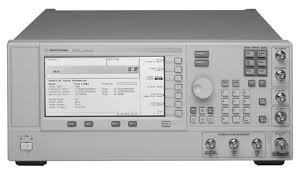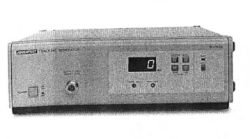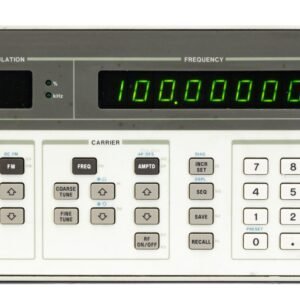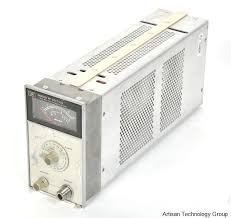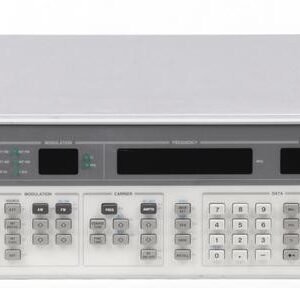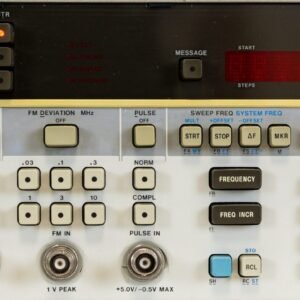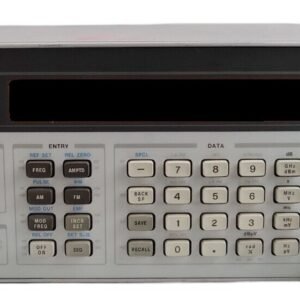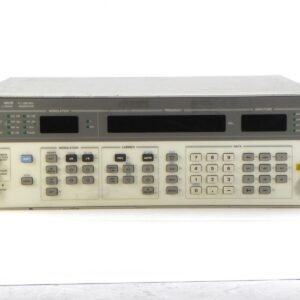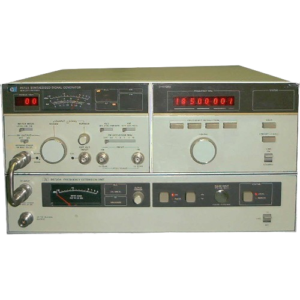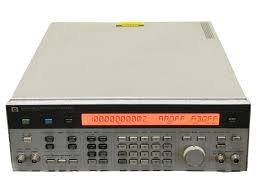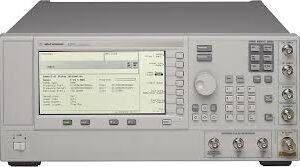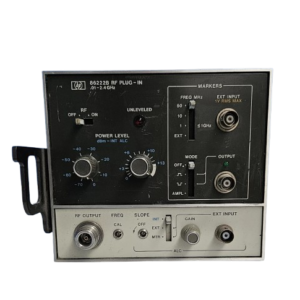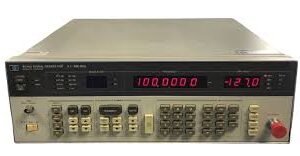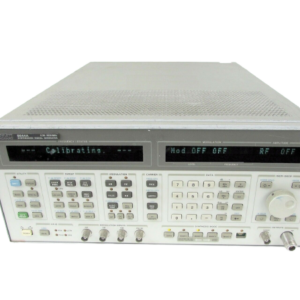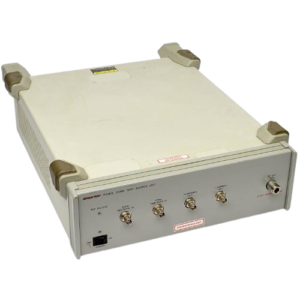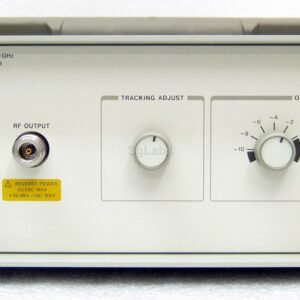
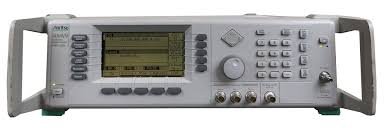

The Anritsu 69075A Synthesized CW Generator delivers phase-locked continuous wave signal generation across 0.5–50 GHz with precise frequency control and exceptional stability. Built for RF and microwave system characterization, it supports twenty independent presettable frequencies (F0–F9, M0–M9) and multiple sweep modes, enabling rapid frequency switching and sophisticated test automation.
Technical Specifications
Frequency Control & Time Base
• Frequency range: 0.5–50 GHz
• Standard resolution: 1 kHz (Option 11: 0.1 Hz)
• Frequency accuracy: Tied to internal or external 10 MHz time base
• Internal time base aging: <2 × 10⁻⁸/day (Option 16: <5 × 10⁻¹⁰/day)
• Internal time base temperature stability: <2 × 10⁻⁸/°C (0–55°C); Option 16: <2 × 10⁻¹⁰/°C
• External 10 MHz reference input: 0 to +10 dBm, 50 Ω, BNC connector
• 10 MHz reference output: 0.5 V p-p into 50 Ω, AC coupled, rear panel BNC
• Frequency switching time: <40 ms typical maximum to within 1 kHz
Sweep Capabilities
• Phase-locked step sweep: 1 kHz to full range sweep width; 1–10,000 steps
• Step dwell time: 1 ms to 99 seconds
• Sweep step switching: <15 ms + 1 ms/GHz of step size, or <40 ms (whichever is less)
• Alternate sweep mode: Two independent sweep ranges with selectable power levels
• Manual sweep mode: User-defined stepped, phase-locked frequency adjustments
– Key Features
• Twenty independent CW frequency presets for rapid test sequence execution
• Phase-locked frequency switching ensures signal coherence across test points
• Selectable 1 kHz or 0.1 Hz resolution for fine frequency tuning
• Optional ultra-stable time base (Option 16) for long-duration measurements
• External 10 MHz reference input for synchronization with external standards
– Typical Applications
• Component and subsystem RF characterization
• Frequency response measurements across microwave bands
• Phase-coherent multi-frequency testing
• Automated test sequences with preset frequency switching
– Compatibility & Integration
The 69075A accepts external 10 MHz reference signals (0 to +10 dBm) on a rear panel BNC connector, enabling integration with atomic clocks and precision timing systems. External reference input automatically overrides internal time base when applied.