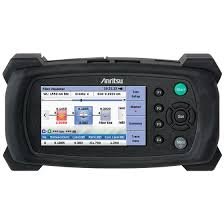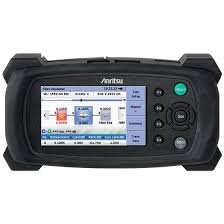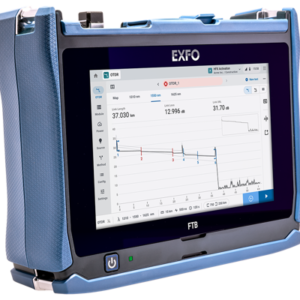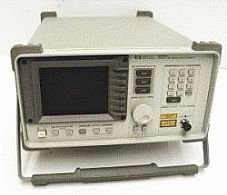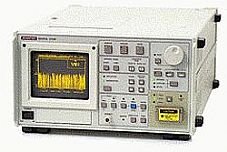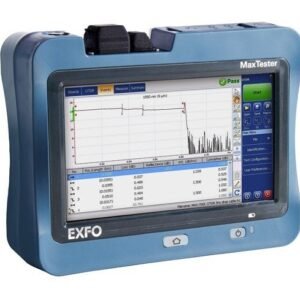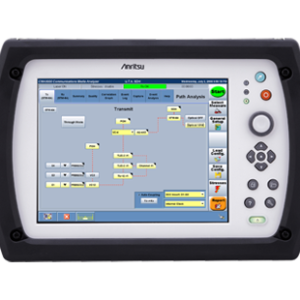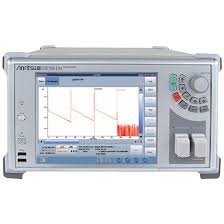
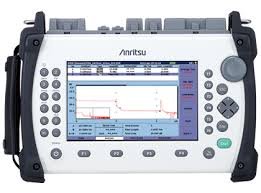

The Anritsu MT9083A ACCESS Master is a compact Optical Time Domain Reflectometer designed for precise fault location and optical reflectometry in FTTx and access network environments. It delivers detailed measurement results with rapid analysis through an intuitive operator interface, enabling field technicians and network engineers to characterize fiber links across diverse deployment scenarios with high accuracy.
Technical Specifications
Optical Measurements
• Wavelengths configurable by module selection
• Dynamic range available across multiple module configurations for varying fiber lengths and link losses
• Event dead zone optimized for detection of closely spaced events
• Attenuation dead zone engineered for minimal values
• Pulse widths selectable to optimize distance measurement, resolution, and dead zone performance
• Measurement range suitable for access networks and FTTx deployments; maximum distances dependent on module and fiber type
• Refractive index user-configurable for installed fiber type accuracy
• Averaging time adjustable to improve signal-to-noise ratio
• Internal memory for trace data storage with external storage via standard interfaces
Performance Characteristics
• High sampling resolution for detailed trace analysis
• High distance accuracy for precise fault localization
• Accurate optical signal loss measurement across fiber links
• Configurable reflection threshold for reflective event characterization
• Large data point acquisition per trace for high-resolution analysis
– Key Features
• Automatic event detection and reporting for splices, connectors, and breaks with associated loss and reflection values
• Comprehensive trace analysis including end-to-end loss, ORL (Optical Return Loss), and splice loss estimation
• Pass/fail analysis capability
– Typical Applications
• FTTx network deployment verification
• Access network characterization and troubleshooting
• Fiber event identification and loss quantification
• Link acceptance testing and commissioning
– Compatibility & Integration
Module-based architecture allows wavelength and performance configuration selection. Trace data exports via standard interfaces support integration with network documentation systems.