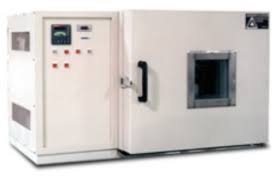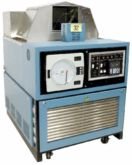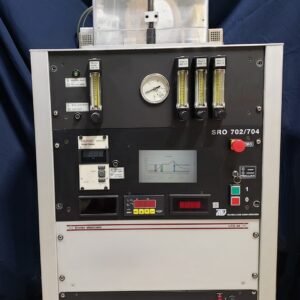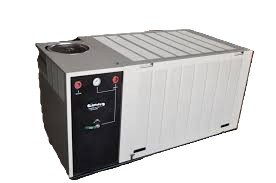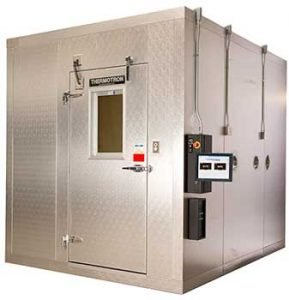
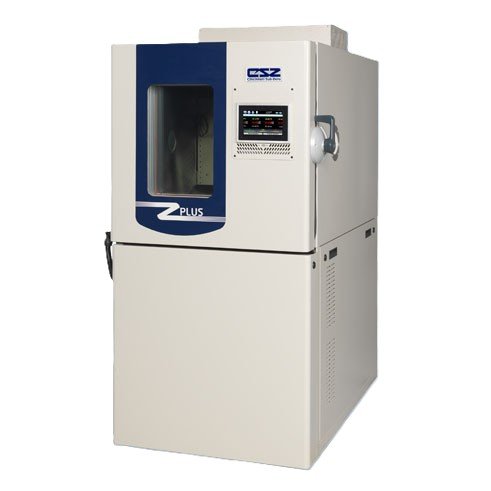

The Cincinnati Sub-Zero USD-10 is an environmental test chamber engineered to simulate sand and dust conditions for validating seal integrity and ingress protection in automotive and electronic components. The system operates by pulsing compressed air through a bottom manifold, directing dust upward and across the test specimen in a controlled chamber environment. Air pulse cycles—both on and off intervals—are programmable to meet specific test requirements. Dust concentration is adjusted by varying air pressure and blowing duration, enabling precise exposure control across the full test sequence.
## Technical Specifications
• Workspace volume: 10 cubic feet (280 liters)
• Workspace dimensions: 24 inches (H) × 30 inches (W) × 24 inches (D) — 61 cm × 76 cm × 61 cm
• Exterior dimensions: 60 inches (H) × 55 inches (W) × 35 inches (D) — 152 cm × 140 cm × 89 cm
• Dust exposure method: Compressed air pulse manifold at chamber base
• Dust concentration control: Variable via air pressure and programmed blowing time
• Approved dust types: Arizona Dust, Portland Cement Dust, 213 Silica Sand
## Test Standards Compliance
• SAE J575, subparagraph G
• J.I.S. D-0207-1977
• ASTM C-150-77
## Key Features
• Time-programmable pulse cycles for repeatable test conditions
• Dust collection trough with integral air distribution manifold
• Adjustable dust concentration via pressure and cycle duration control
• Accommodates industry-standard test dust materials
## Typical Applications
The USD-10 validates component performance in dust-laden environments, with particular emphasis on automotive sealing systems, electronic enclosures, and protective ingress ratings. Testing confirms seal effectiveness against particulate contamination across defined exposure intervals.
## Compatibility & Integration
The USD-10 complies with automotive and electronics industry dust ingress test protocols, ensuring validated performance data across multiple regulatory frameworks.