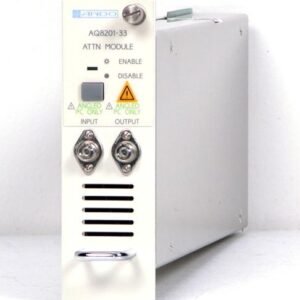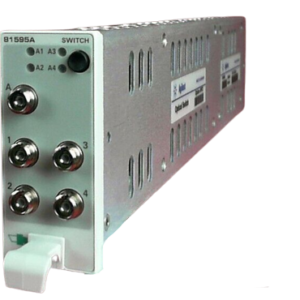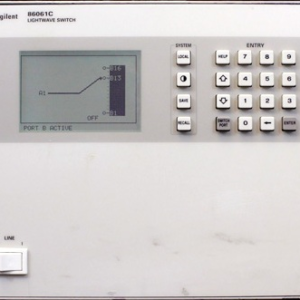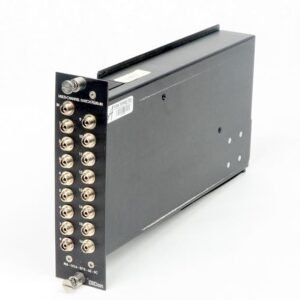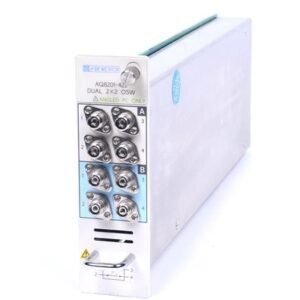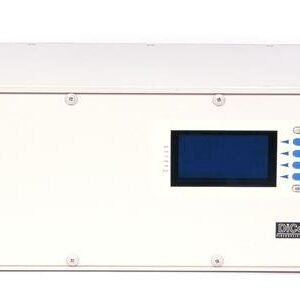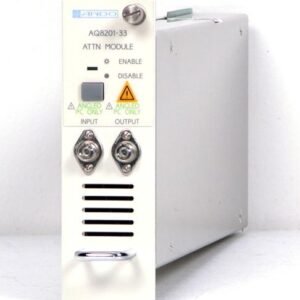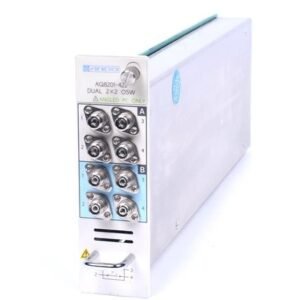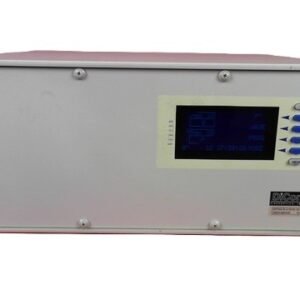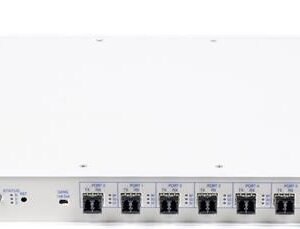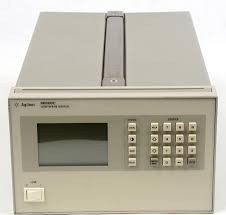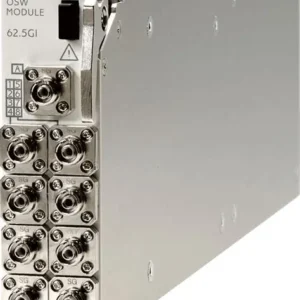
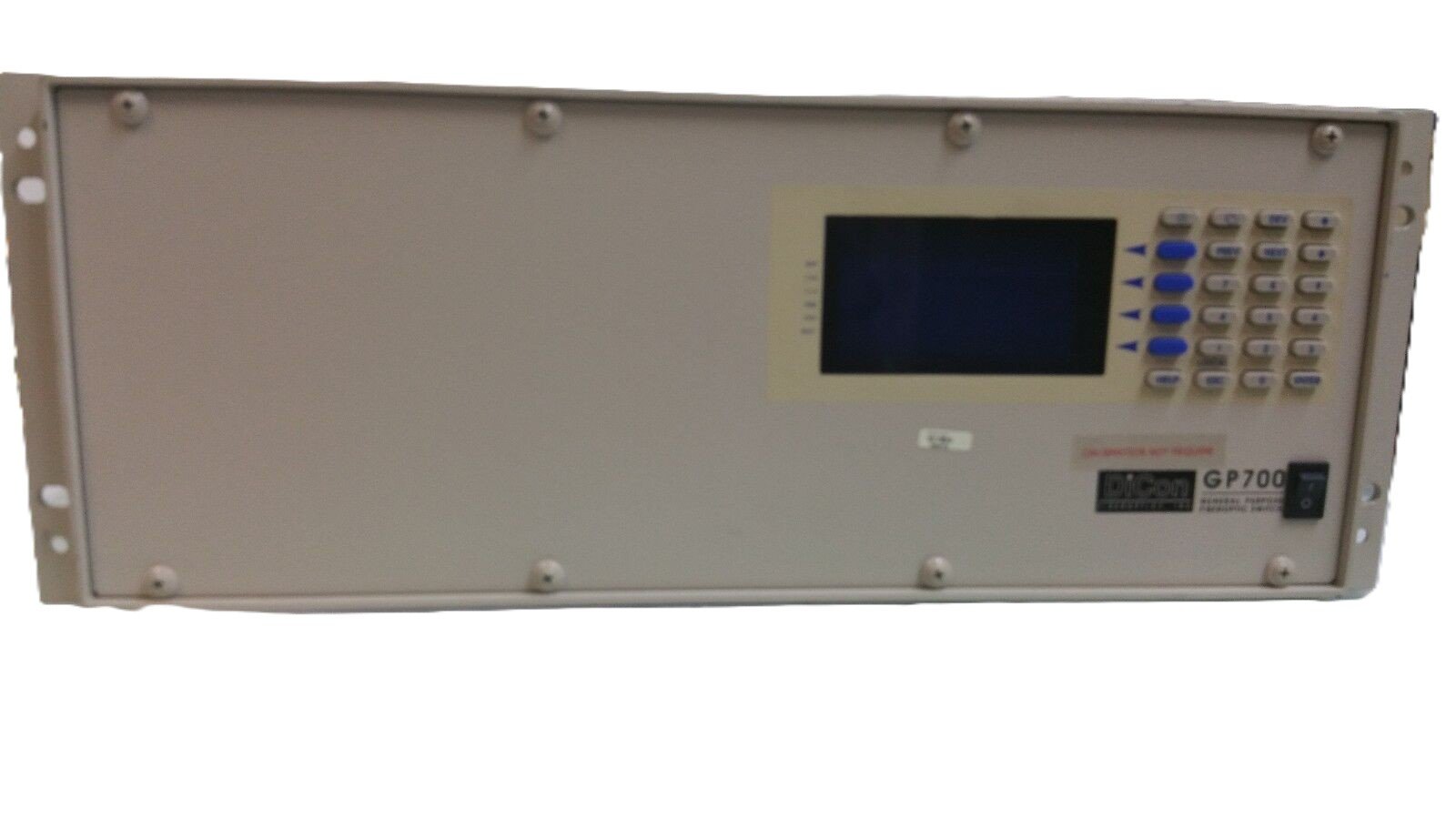

The DiCon GP700 Programmable Fiber Multi Switch is a modular optical signal routing platform for network configuration and testing applications. It accommodates a variety of optical switch modules, variable attenuators, tunable filters, and other components within a programmable interface. The system supports configurations ranging from simple single-switch setups to complex multi-module arrays across multiple housings, with field-installable modules in the GP700M variant.
Technical Specifications
Control and Switching Capacity:
• Controls up to 30 1xN switches, tunable filters, or variable attenuators
• Accommodates up to 64 2×2, 1×2, or On-Off switches
• Modular GP700M mainframe supports up to eight plug-in modules
• MxN Matrix Switches available in simplex or duplex configurations up to 15×15
Optical Performance:
• Insertion loss: 0.6 dB typical, 1.2 dB maximum (without connectors)
• Back-reflection: −55 dB maximum (singlemode); −20 dB typical (multimode)
• Crosstalk: −80 dB maximum
• Polarization Dependent Loss: 0.05 dB maximum (singlemode, 1550 nm)
• Sequential repeatability: ±0.02 dB maximum (100 cycles at constant temperature)
• Switch durability: 10 million cycles minimum
• Switching time: 425 ms + 16 ms per channel maximum; MxN matrix switches 500 ms typical, 750 ms maximum
Fiber Types:
Corning SMF-28, Flexcor 1060, or Polarization Maintaining (Panda) fiber. Supports 9/125 µm singlemode and 62.5/125 µm multimode configurations.
Wavelength Support:
780–1350 nm, 1290–1360 nm, 1530–1560 nm, 1530–1610 nm, plus dedicated 1310 nm and 1550 nm windows. Tunable filter modules operate across 1535–1565 nm.
Electrical:
• Input power: 150 W maximum
• Input voltage: 100 VAC to 240 VAC
• Fuse: 2 A typical (2.5 A recommended)
– Key Features
• MxN matrix routing via passive switch elements—wavelength-independent, operates across all data rates and formats
• 2×2 non-blocking switches for specific wavelength windows
• Variable attenuators calibrated for designated windows (e.g., 1310 nm)
• Field-installable modular architecture for custom configurations
• Multiple fiber types and connector options
– Typical Applications
Optical network testing, signal routing validation, equipment characterization, wavelength-selective switching, and attenuation control in laboratory and field environments.
– Compatibility & Integration
Scalable via multiple chassis for larger installations. Compatible with standard optical connectors and fiber types across the specified wavelength ranges.