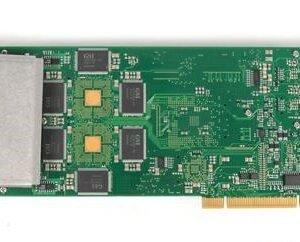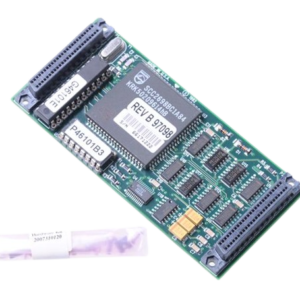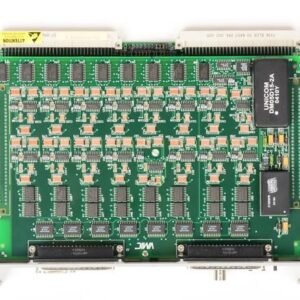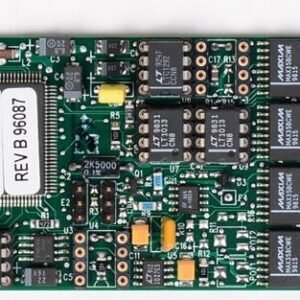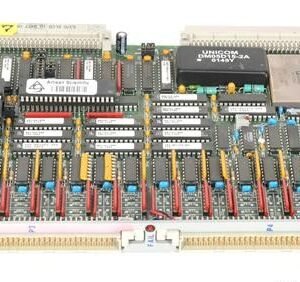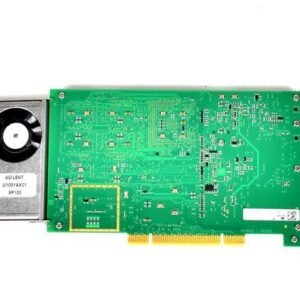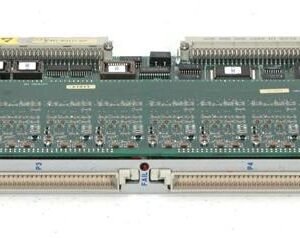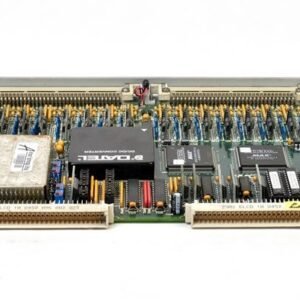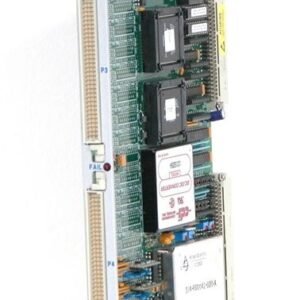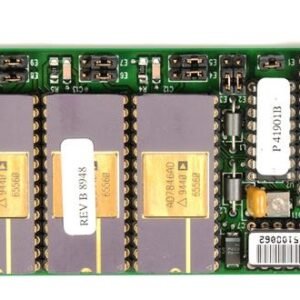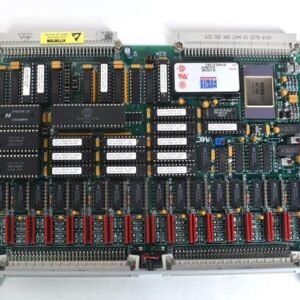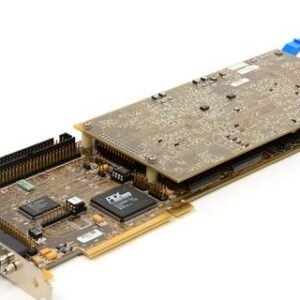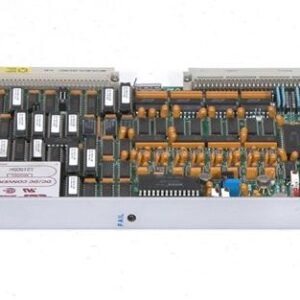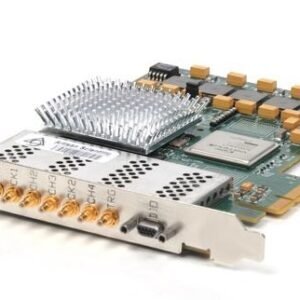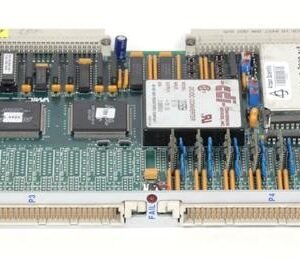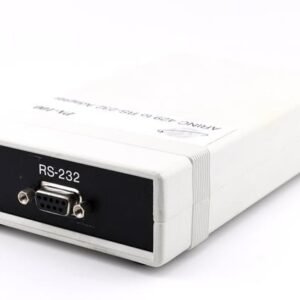
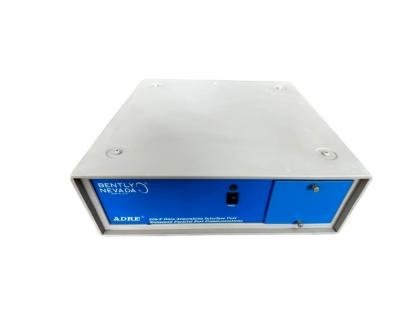

The GE / Bently Nevada ADRE-208 Data Acquisition Interface is a portable multi-channel system engineered for machinery condition monitoring and real-time vibration diagnostics. It captures dynamic transducer signals, static process variables, and speed inputs—consolidating the functionality of oscilloscopes, spectrum analyzers, filters, and recording instruments into a single portable unit. The ADRE-208 processes time-domain and frequency-domain data with high resolution sampling, eliminating the need for multiple specialized instruments on-site.
## Technical Specifications
• **Channels:** Up to 16 simultaneous acquisition channels
• **Input Signal Types:** Dynamic transducer signals (proximity probes, velocity transducers, accelerometers, dynamic pressure sensors); static signals (process variables); Keyphasor® or speed input signals
• **Data Acquisition:** Time-domain and frequency-domain capture; high-resolution sampling for dynamic vibration data
• **Signal Processing:** Real-time analysis with integrated oscilloscope, spectrum analyzer, filter, and recording capabilities
• **Analysis Tools:** Time waveform analysis, frequency spectrum analysis, orbit analysis, phase analysis
• **Data Storage:** Built-in storage for vibration data and analysis results
• **Operating Temperature:** 0°C to +50°C (+32°F to +122°F)
• **Power Supply:** AC or battery operation
• **Amplitude Accuracy (at +25°C):** ±0.77% of input signal and ±0.28% of full-scale range (100 to 60k rpm); ±0.49% of full-scale range across operating temperature range
## Key Features
• Portable design for field deployment
• Multi-format input compatibility eliminates adapter proliferation
• Real-time signal processing for immediate diagnostics
• Unified oscilloscope and spectrum analyzer functionality
## Connectivity
Two variants support different interface architectures: ADRE-208 connects to legacy Compaq notebook docking ports and desktop systems via ISA card; ADRE-208-P interfaces directly to enhanced parallel ports (EPP) found on modern notebooks and desktops. These two units cannot be daisy-chained together.
## Typical Applications
Rotating machinery health monitoring, bearing condition assessment, turbomachinery vibration analysis, and predictive maintenance programs across 100 to 60k rpm operational ranges.