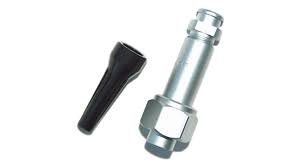
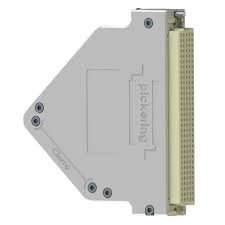

The Keysight/Agilent/HP 1252-6533A is a set of 160 DIN 41612 crimp connector pins engineered for rack-based electrical systems and Eurocard applications. These pins terminate directly to individual wires via crimp connection, eliminating soldering and press-fit assembly steps. Manufactured to the DIN 41612 standard (now superseded by IEC 60603-2 and EN 60603-2), they deliver the proven reliability demanded in VMEbus, NuBus, machinery automation, and railway installations.
## Technical Specifications
• **Standard:** DIN 41612 (IEC 60603-2 / EN 60603-2 equivalent)
• **Connector Type:** Crimp pins
• **Quantity:** 160 pins per set
• **Pitch:** 0.1 inch (2.54 mm) for signal connectors; 0.2 inch (5.08 mm) for power connectors
• **Current Rating:** 2 A per signal contact; 6 A to 15 A for power contacts
• **Working Voltage:** 500 V
• **Dielectric Withstanding Voltage:** 1000 V AC (one minute)
• **Contact Resistance:** Maximum 30 mΩ
• **Insulation Resistance:** Minimum 1000 MΩ
• **Operating Temperature Range:** -40°C to +105°C (or -25°C to +125°C depending on grade)
• **Contact Material:** Copper alloy
• **Insulator Material:** PBT with glass fiber reinforcement, UL 94V-0 rated
## Key Features
• Crimp termination accommodates field assembly and wire retermination
• Low contact resistance ensures signal integrity and minimal voltage drop
• High insulation resistance maintains isolation and reliability in dense connector arrays
• Glass-reinforced PBT insulation withstands thermal and mechanical stress
• Dual pitch design supports mixed signal and power distribution in single connector housings
## Typical Applications
• VMEbus and NuBus backplane systems
• Eurocard-based instrumentation and control equipment
• Industrial automation and machinery control panels
• Railway signaling and traction systems
• Telecommunications and data communications racks
## Compatibility & Integration
These pins intermate with any DIN 41612 connector housing manufactured to the standard, ensuring vendor independence and system flexibility across equipment generations.