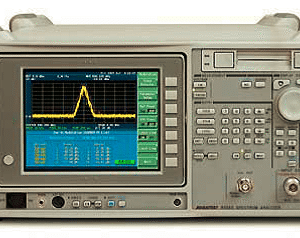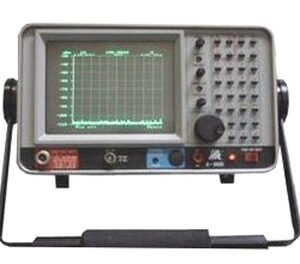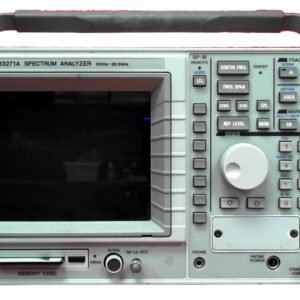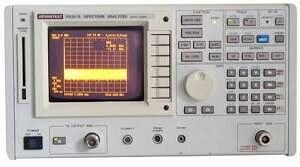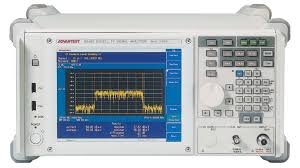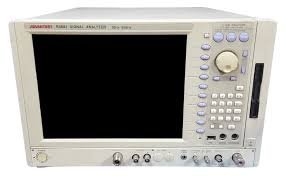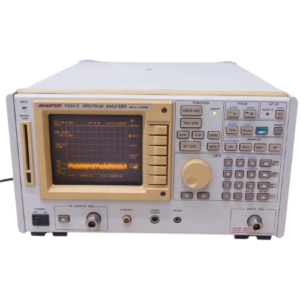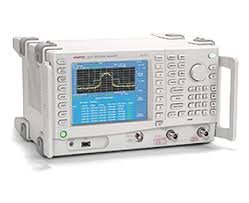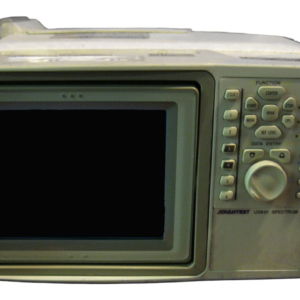

The Marconi IFR Aeroflex 3251 is a portable spectrum analyzer engineered for RF development, design analysis, and comprehensive wireless communication measurements from 1 kHz to 3 GHz. Built around a 7″ wide touch panel display and Windows XP operating system, it delivers laboratory-grade performance with -145 dBm/Hz DANL and -115 dBc/Hz phase noise, making it suitable for demanding field and bench applications.
Technical Specifications
• Frequency range: 1 kHz to 3 GHz
• Phase noise: -115 dBc/Hz
• Displayed average noise level (DANL): -145 dBm/Hz
• Frequency accuracy: ±1 LSB (X marker and counter resolution); optional ±0.1 ppm reference stability available
• Frequency readout resolution: 1 Hz minimum
• Resolution bandwidths: 1 Hz, 10 Hz, 100 Hz, 1 kHz
• I/Q demodulation bandwidth: 30 MHz (standard)
• Reference frequency drift: ±1 ppm (optional ±0.1 ppm)
– Key Features
• 7″ wide capacitive touch panel for direct instrument control
• Internal web server enabling remote operation via browser or tablet PC
• Multiple control interfaces: LAN, GPIB, RS-232C, USB, Ethernet
• Removable hard disk for data storage and portability
• Compact, lightweight design optimized for field deployment
• Optional tracking generator (3 GHz or 8 GHz configurations)
• Optional high-stability oscillator (Option 3)
• Optional external preselector (Option 5)
• Optional DC input and battery backup (battery option)
• Optional AC/DC power supply (Option 6)
– Typical Applications
• RF circuit development and characterization
• Wireless and mobile communication system testing
• Design validation for GSM/EDGE, UMTS, CDMA2000/1xEVDO, WLAN, WiMAX, and WiBRO networks
• EMI measurement (optional EMI Measurement Suite, Option 13)
• LTA (Long-Term Analysis) measurements (optional LTA Suite, Option 14)
– Compatibility & Integration
Measurement personalities are available as factory options to optimize the analyzer for specific wireless standards, including GSM/EDGE (Option 8), UMTS (Option 9), CDMA2000/1xEVDO (Option 10), wireless LAN (Option 11), WiMAX (Option 12), and WiBRO. Remote control is supported over LAN, GPIB, or RS-232C via dedicated connectors and the internal web server for real-time monitoring and automated test sequences.