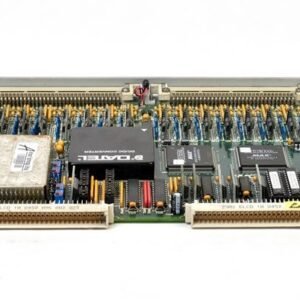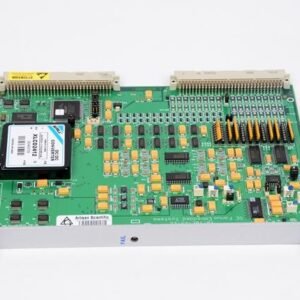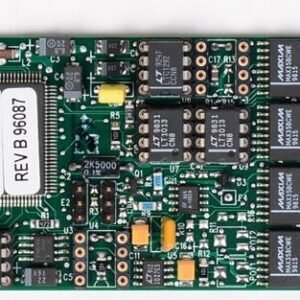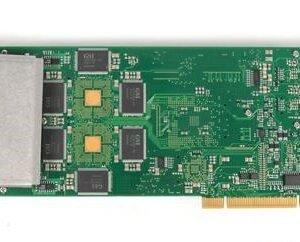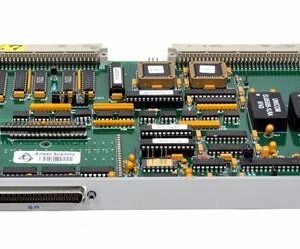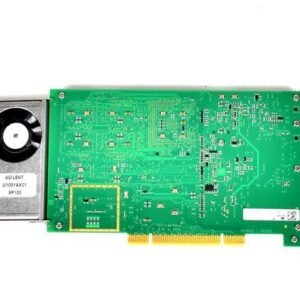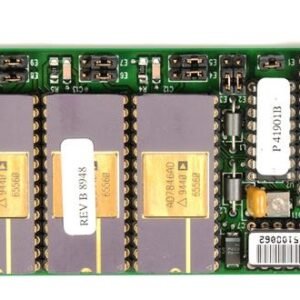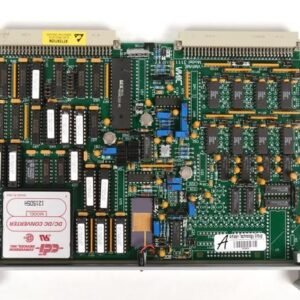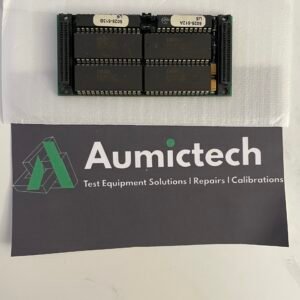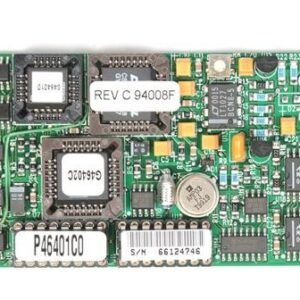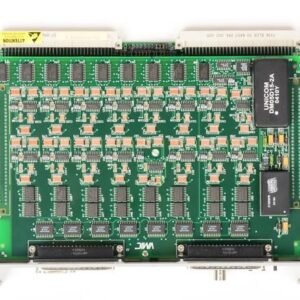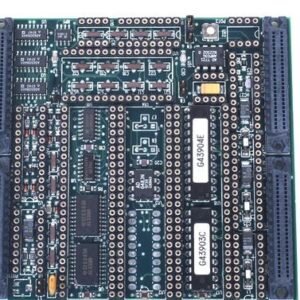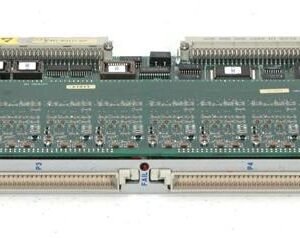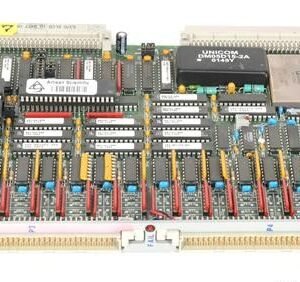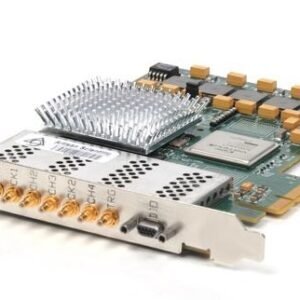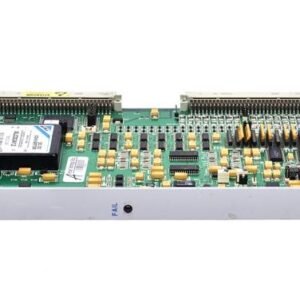

The Matrox 938-02 Genesis Acquisition Module is a PMC (PCI Mezzanine Card) engineered for high-performance data acquisition in machine vision systems. This module integrates with the Matrox Genesis Main Board to deliver simultaneous acquisition, processing, and display on a single platform. It combines a Texas Instruments TMS320C80 DSP, dedicated Neighborhood Operations Accelerator (NOA), and Matrox Video Interface ASIC (VIA) to handle demanding industrial, scientific, and medical imaging workflows.
Technical Specifications
Form Factor & Architecture
• PMC form factor for integration with Matrox Genesis Main Board
• Single processing node with TMS320C80 DSP and dedicated NOA
• 64 MB SDRAM memory
• 64-bit data bus operating at 400 MB/s
• Matrox Video Interface ASIC (VIA) for data management and I/O
Analog Acquisition
• Four A/D converters with software-programmable level, reference voltage, and clamping
• 4-channel/8-bit mode: up to 35 MHz
• 2-channel/8-bit mode: up to 70 MHz
• 1-channel/8-bit mode: up to 140 MHz
• Configurable for standard or non-standard monochrome video signals
• Supports standard and non-standard component RGB color video in 4-channel/8-bit mode
Digital Acquisition
• 32-bit digital video data acquisition up to 40 MHz
• Configurations: four 8-bit channels, two 16-bit channels, or one 32-bit channel
• RS-422/LVDS format acquisition requires optional companion board
Camera & Signal Support
• Progressive-scan and line-scan camera interfaces
• Monochrome and color line-scan support with extended line lengths (e.g., 64K lines)
• Variable line rate capability for continuous inspection
• Analog/digital video compatibility
• Interfaces with specialized equipment including scanning electron microscopes
– Key Features
• High-speed image processing via dedicated NOA hardware accelerator
• Offload data management from vision processors via VIA ASIC
• Software-programmable A/D converter settings for signal conditioning
• Multi-format analog and digital input on single module
• Efficient data flow between acquisition, processing, and display stages
– Typical Applications
• Industrial machine vision and inspection
• Semiconductor wafer inspection
• Biomedical and scientific imaging
• Long-format line-scan continuous monitoring