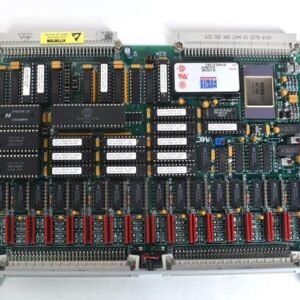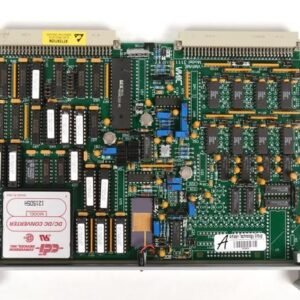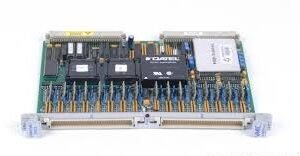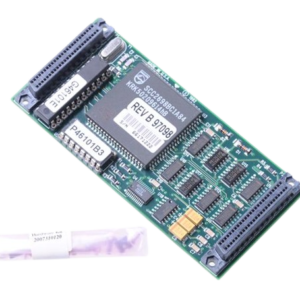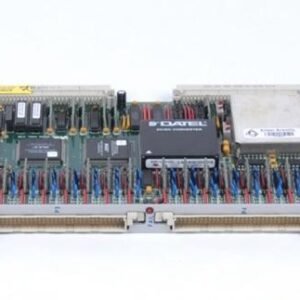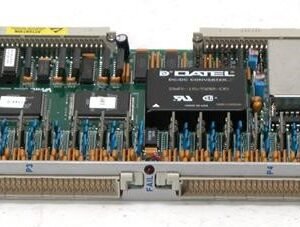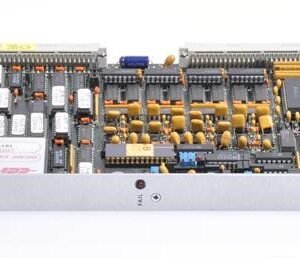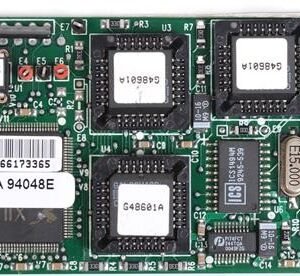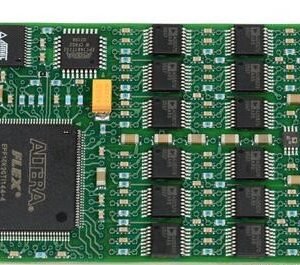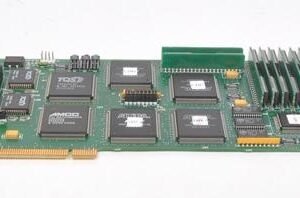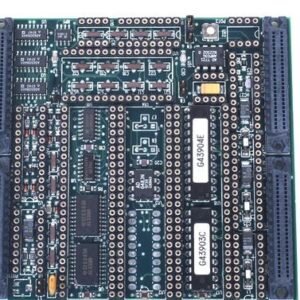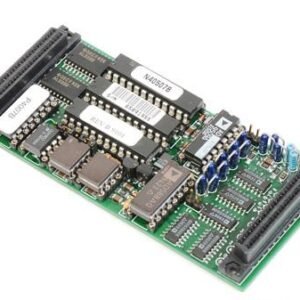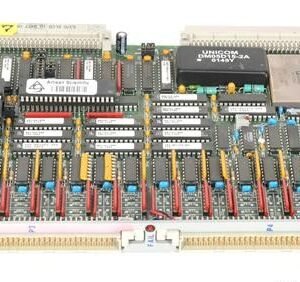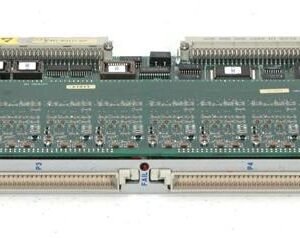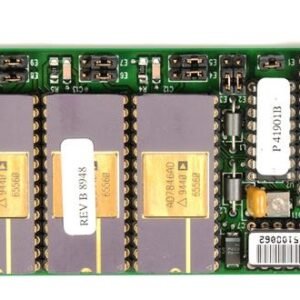
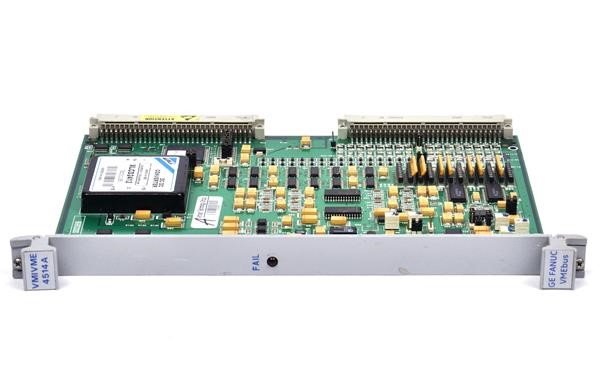

The Abaco Systems / VMIC VMIVME-4514A-000 is a 16-channel scanning analog I/O board for VMEbus systems, delivering simultaneous data acquisition and control with 12-bit resolution on both input and output channels. The board supports differential and single-ended input configurations with programmable voltage ranges, on-board multiplexing for channel scanning, and individual sample-and-hold amplifiers on each output. Throughput reaches 33 kHz with flexible ADC operating modes including random polling, scanning poll, and auto scanning.
Technical Specifications
Analog Inputs
• 16 channels, 12-bit resolution
• Differential or pseudo-differential input capability
• Programmable ranges: ±2.5 V, ±5 V, ±10 V (bipolar) or 0 to +5 V, 0 to +10 V (unipolar)
• Optional 36 Hz single-pole input filter
• On-board multiplexers for automated channel scanning
• Current-limiting input resistors provide overvoltage protection
• 16-word dual-port memory stores complete scan cycle data
• ADC operating modes: Random Polling, Scanning Poll, Auto Scanning
Analog Outputs
• 16 channels, 12-bit resolution
• Individual sample-and-hold amplifier per channel
• Output current: ±10 mA at ±10 V per channel
• Programmable ranges: ±2.5 V, ±5 V, ±10 V (bipolar) or 0 to +5 V, 0 to +10 V (unipolar)
• Off-line testing capability with output isolation from I/O connector
Performance
• Throughput: 33 kHz (1.7 mS per scan cycle)
• 16 MHz system clock drives microsecond timer for ADC control
• Short settling control mode available to increase throughput
– Key Features
• Dual-port memory architecture allows VME access to latest scan data without interrupting acquisition
• Programmable gain on input channels
• Built-in test functionality verifies active component operation
• P2 I/O connector interface
– Typical Applications
Data acquisition systems, real-time control platforms, and instrumentation requiring simultaneous multichannel analog monitoring and command output in VMEbus environments.
– Compatibility & Integration
Standard VMEbus interface for direct integration into VME-based architectures. Supports both bipolar and unipolar signal conditioning with field-configurable gain and range settings.