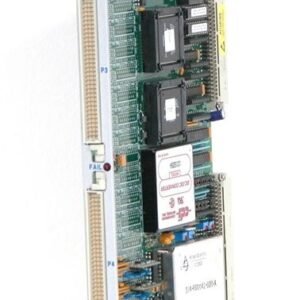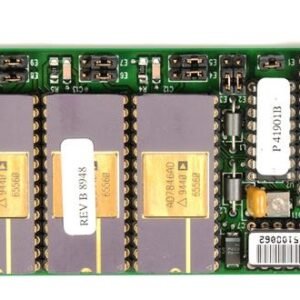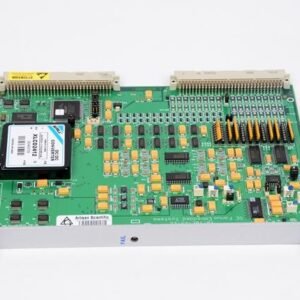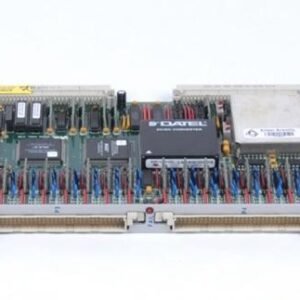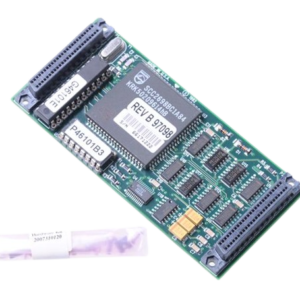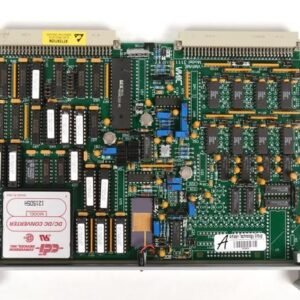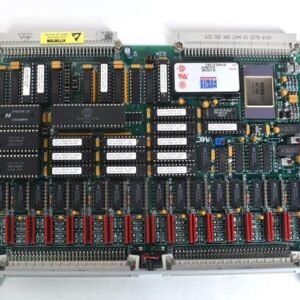

The NI USB-8452 is a bus-powered I2C and SPI interface for embedded systems development, testing, and automation. It connects to host systems via USB 2.0 High-Speed (480 Mb/s) and provides master/slave I2C operation up to 3.3 MHz, SPI master operation up to 50 MHz, and 8 general-purpose digital I/O lines. The device features an FPGA-based architecture for efficient serial protocol handling and operates from 4.5 V to 5.25 V input.
Technical Specifications
I2C Interface
• Master and slave operation supported
• Clock rate: up to 3.3 MHz
• Open-drain output drivers
• Onboard pull-up resistors (selectable)
• Compatible with I2C and SMBus devices
SPI Interface
• Master operation
• Clock rate: up to 50 MHz
• Transfer size: 4 to 64 bits (configurable)
• MSB-first bit ordering
• Push-pull output drivers
• Hardware-timed chip-select capability
Digital I/O
• 8 individually configurable lines (input or push-pull output)
• Input voltage range: –0.5 V to +5.5 V
• Output drive strength: up to ±12 mA at 3.3 V
• Power-on state: tri-state with 40 kΩ pull-down to GND
Power & Electrical
• Input voltage: 4.5 V to 5.25 V
• Maximum input current: 500 mA
• +5 V fixed output: ±5% tolerance, 20 mA maximum
• Vref output: 1.2 V to 3.3 V (user-programmable), 20 mA maximum
Physical
• Dimensions: 2.86 in. × 3.62 in. × 0.8 in. (7.26 cm × 9.19 cm × 2.03 cm)
• Weight: 2.8 oz (79 g)
• Connectors: USB Series B receptacle (right-angle), IDE cable receptacle (right-angle male)
• Operating temperature: 0 to 45 °C
• Storage temperature: –40 to 85 °C
• Operating humidity: 10 to 90% RH (non-condensing)
– Key Features
• Dual-protocol support (I2C and SPI) in single device
• Bus-powered operation via USB
• Configurable reference voltage output for mixed-signal applications
• Hardware-timed chip-select pins for SPI
• Compact, portable form factor
– Typical Applications
• Embedded systems development and debugging
• IC characterization and testing
• Consumer electronics interfacing
• Protocol prototyping and validation
– Compatibility & Integration
Supports Windows 7, Vista, XP, and 2000 operating systems.