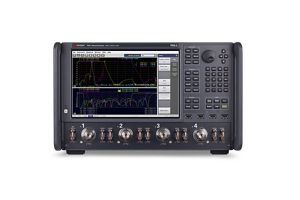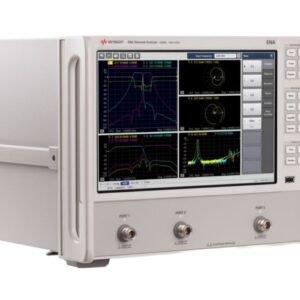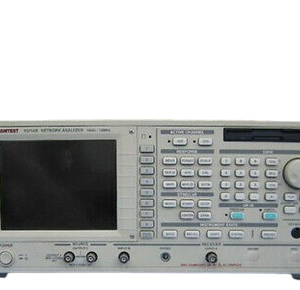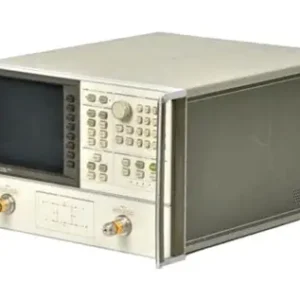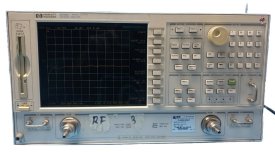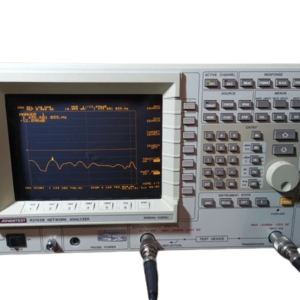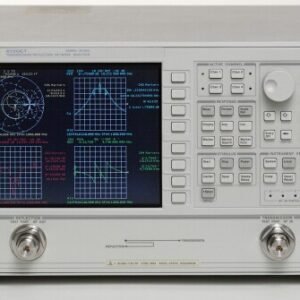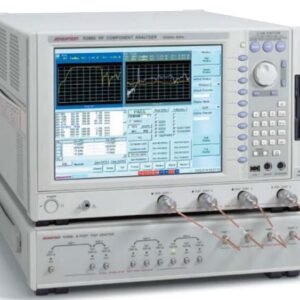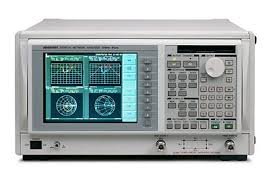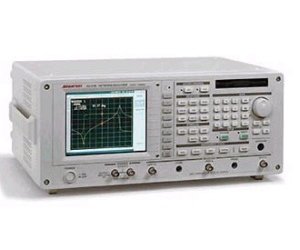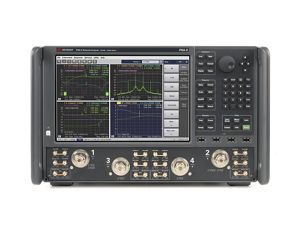

The Rohde & Schwarz ZVL3 is a dual-port vector network analyzer operating from 9 kHz to 3 GHz, delivering exceptional performance across development, production, and service environments. This compact instrument weighs less than 7 kg with a depth of 37 cm, enabling seamless deployment in space-constrained labs and field applications. The ZVL3 characterizes all four S-parameters and combines network analysis with optional spectrum analysis and power measurement capabilities into a single platform, optimizing capital efficiency without sacrificing measurement integrity.
Technical Specifications
• Frequency Range: 9 kHz to 3 GHz
• Ports: 2
• Output Power: +10 dBm (typical)
• Dynamic Range: >115 dB (10 Hz BW, typically 123 dB); >90 dB (300 kHz to 20 MHz, typically 100 dB); >110 dB (20 MHz to 3 GHz, typically 120 dB)
• Measurement Bandwidths: 10 Hz to 500 kHz in 1/2/5 steps
• Physical: <7 kg, 37 cm depth
– Key Features
• Full S-parameter characterization across the measurement band
• Linear, logarithmic, and segmented sweep modes with optimized point distribution
• Unlimited traces and channels with overlay display and coupled scaling
• Up to 10 definable stimulus ranges for parameter evaluation (max, min, RMS, mean, standard deviation, electrical length, phase delay)
• Bandpass filter evaluation including bandwidth, quality, attenuation, and center frequency
• Comprehensive marker and trace evaluation functions
• Unlimited limit line segments with trace-based limit definition
• Time domain analysis capability
• Optional battery operation for mobile measurement scenarios
– Integrated Measurement Options
• Spectrum Analysis (ZVL-K1): Channel and adjacent channel power, occupied bandwidth, CCDF measurement, 20 MHz I/Q demodulation bandwidth
• Power Measurement: Direct R&S NRP power sensor integration via USB interface
• Distance-to-Fault (ZVL-K2): Cable fault detection and localization
• 75 Ohm Configuration (ZVL3-75): Dedicated variant for TV and CATV applications
– Typical Applications
Component and subsystem characterization, RF filter and amplifier tuning, transmission line analysis, broadcast and cable television infrastructure diagnostics, mobile device antenna development, and production quality assurance across microwave and RF frequencies.