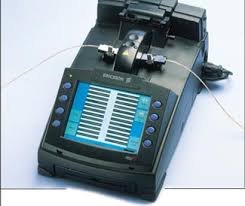

The Spirent TAS6600 is a channel emulator engineered to simulate real-world radio propagation conditions in controlled laboratory environments. It supports a broad spectrum of wireless technologies and channel models, enabling engineers to recreate complex fading environments, multipath scenarios, and propagation effects critical for validating device behavior and network resilience across diverse operational conditions.
Technical Specifications
Channel Emulation
• Supports dynamic Wi-Fi environments with accurate reproduction of real-world network conditions
• Channel models include Rayleigh, Rician, pure Doppler, frequency shift, and phase shift
• Doppler frequencies up to 12,000 Hz
• Supports standard and user-defined channel models with editing and save functionality
• Can emulate up to 8×8 independent channel models on a single instrument
• Supports up to an eight-node mesh network configuration
Wireless Technology Support
• Wi-Fi 6, 6E, and 7
• 802.11a/b/g/n/ac standards
• LTE (FDD+TDD with carrier aggregation)
• UMTS
• 5G NR
• 2G/3G cellular
• A-GPS location testing
MIMO & RF Configuration
• Butler matrix supporting up to 4×4 MIMO with 100 MHz bandwidth and up to 6 GHz support
• Up to four instruments can integrate to support 64 independent RF channels
Interfaces
• Ethernet communication
– Key Features
• Realistic simulation of complex fading and multipath propagation effects
• Repeatable test results for consistent device validation
• Flexible channel model configuration with user-defined options
• Multi-node mesh network capability
• Scalable architecture supporting single-instrument and multi-unit deployments
– Typical Applications
• Wi-Fi device performance optimization and validation
• Cellular and 5G protocol testing
• MIMO system characterization
• Network resilience and fading behavior assessment
• Location-based service testing
– Compatibility & Integration
The TAS6600 integrates within Spirent’s broader channel emulation portfolio and connects via Ethernet for instrument control and data exchange.