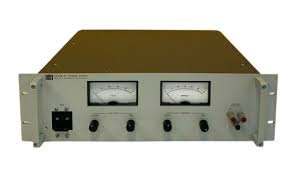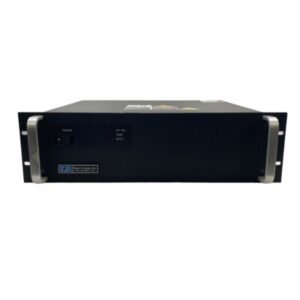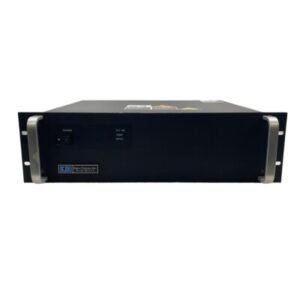
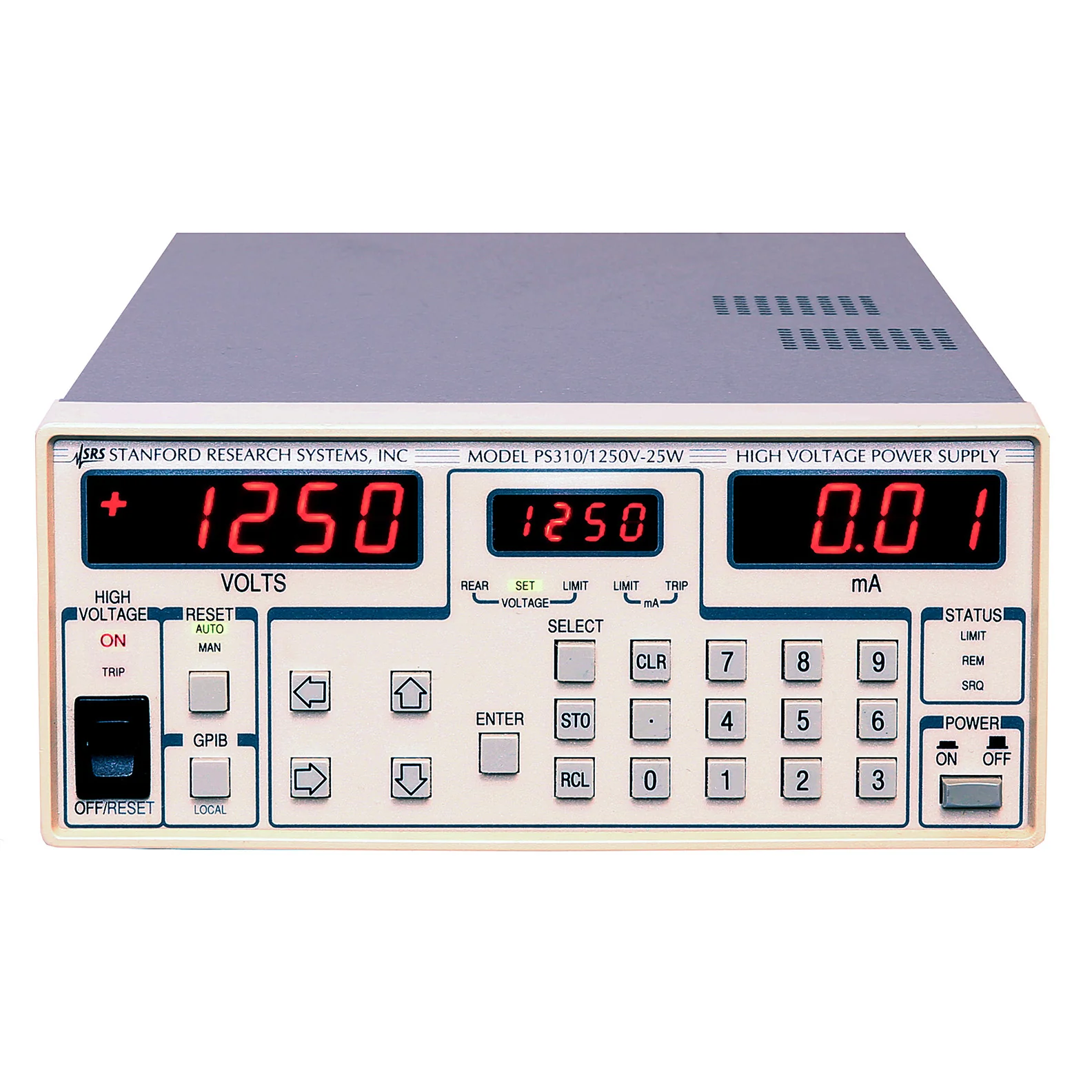

The Stanford Research Systems PS310 is a microprocessor-controlled switching high-voltage DC power supply engineered for laboratory and test applications requiring stable, precise output across an extended voltage range. Delivering 25 W of output power, the unit spans ±12 V to ±1.25 kV with dual polarity capability and supports both constant voltage and constant current operation modes.
Technical Specifications
Output Performance
• Voltage range: ±12 V to ±1.25 kV
• Maximum output current: 20 mA
• Output power: 25 W
• Voltage regulation: 0.001% line regulation (±10% line change), 0.04% load regulation (100% load change)
• Voltage set accuracy: ±0.01% + 0.05% of full scale (typical)
• Voltage display accuracy: ±1 V typical, ±2 V maximum
• Voltage resolution: 1 V
• Output ripple: <0.01% of full scale (300 Hz to 300 kHz)
• Current limit range: 0 to 105% of full scale
• Current trip range: 10 µA to 105% of full scale
• Current set accuracy: 0.5% of full scale
• Stability: 0.01% per hour, <0.03% per 8 hours
• Temperature drift: 50 ppm/°C (10 to 40 °C)
Protection & Response
Arc and short circuit protection with programmable voltage limit, current limit, and current trip functions. Trip response time <10 ms. Load recovery time 12 ms for 40% step change. Discharge time <6 s to <1% of full-scale voltage with no load.
Input Power
100, 120/220, or 240 VAC; 50 or 60 Hz operation.
– Key Features
• Dual-polarity output with independent voltage and current controls
• Front-panel LED displays for voltage and current monitoring
• Programmable via 0–10 VDC analog input (rear panel)
• Dual analog outputs for voltage and current monitoring (1 Ω output impedance, 10 mA drive capability)
• Optional GPIB interface (Option 01)
– Typical Applications
High-voltage characterization, detector bias, vacuum tube testing, and applications requiring precise current limiting with arc protection.
– Compatibility & Integration
Analog input and output provisions enable integration with automated test systems. GPIB option supports remote command and monitoring in networked laboratory environments.