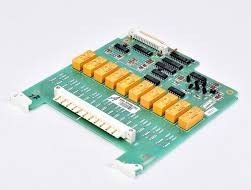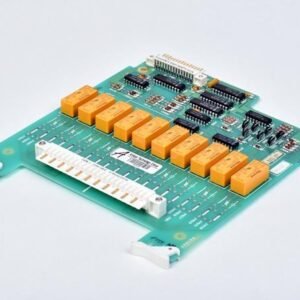
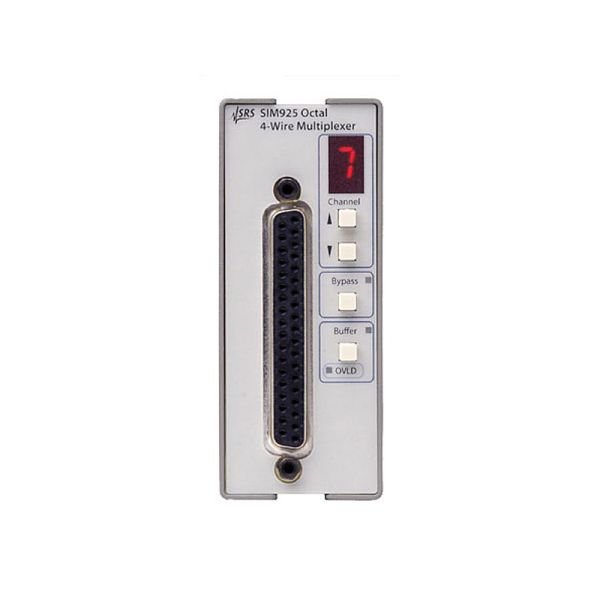

The SRS SIM925 Octal Four-Wire Multiplexer is an eight-channel switching module designed for low-level signal applications requiring precise Kelvin-lead measurements. It routes signals across eight input channels with four-wire per-channel architecture, accommodating optional sense-lead buffering or functioning as a standard 4-pole/8-throw switch. The module integrates into the SIM900 Mainframe or operates standalone with user-supplied ±15 V and +5 V power. A clock-stopping architecture minimizes digital noise during switching, preserving signal integrity for sensitive analog measurements.
Technical Specifications
• Input channels: 8 plus 1 bypass channel
• Series resistance: 2.0 Ω maximum
• Isolation resistance: >10 GΩ typical
• Input capacitance: <60 pF on selected channel; <25 pF between selected and unselected channels; <25 pF on unselected channels
• Maximum switching capacity: 10 mA @ 10 VDC
• Thermal EMF: <10 µV typical
• Bias current: 5 pA typical
• Switching speed: 50 ms maximum
• Bandwidth: 1 MHz typical
• Switching logic: Break-before-make (default); Make-before-break available via remote interface
• Maximum voltage to earth: ±15 V per terminal
– Key Features
• Break-before-make switching minimizes transient artifacts and cross-talk
• Four-wire Kelvin configuration supports precision resistance and impedance measurements
• Clock-stopping eliminates switching-induced noise on sensitive channels
• Cascadable architecture enables expansion to larger switching matrices
• Front-panel and remote control for manual and automated operation
• DB-37 front-panel connector; DB-9 rear connectors for bypass and common output
– Typical Applications
• Multi-channel resistance and RTD measurements
• Automated temperature sensor characterization
• Low-level analog signal routing and switching
• Integration with lock-in amplifiers for signal recovery
• Kelvin-lead switching in precision test systems
– Compatibility & Integration
Designed for the SIM900 Mainframe ecosystem, the SIM925 pairs with the SIM921 AC Resistance Bridge, SIM922A Diode Monitor, and SIM923A RTD Monitor. Communication routes through the mainframe's RS-232 or optional GPIB interface. Multiple SIM925 modules cascade for expanded switching networks.