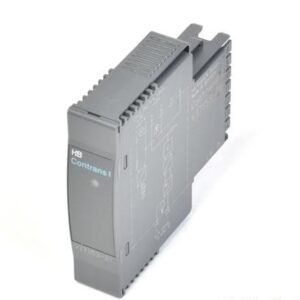
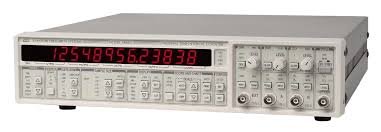

The Stanford Research Systems SR235 Analog Math Processor is a modular signal processing instrument that performs real-time mathematical operations on one or two analog input signals. Built around 36 distinct functions, the SR235 executes complex computations—addition, subtraction, multiplication, division, squaring, square root, and logarithmic conversion—without requiring a computer interface. This makes it ideal for laboratory tune-up operations and automated systems where immediate analog computation is essential.
Technical Specifications
• Functions: 36 mathematical and signal processing operations
• Inputs: Dual analog inputs (A and B)
– Input impedance: 1 MΩ
– Input range: ±10 V
– Overvoltage protection: 100 V
– Input offset: < 2 mV
• Argument Formation: Selectable from A, B, √(A² + B²), A – B, A × B / 10, or 10A / |B|
• Output Functions: Selectable mapping including x, x², –x, ln|x|, –dx/dt, –(dx/dt)/100
• Argument Filtering: Variable time constants from 0.3 ms to 30 s (1-3-10 sequence); bypass available
• Basic Accuracy: 2% of full scale
• Post-Gain Adjustment: Available
– Key Features
• Standalone operation without computer dependency
• Dual-input argument formation with multiple selectable configurations
• Flexible output function selection for diverse signal transformations
• Adjustable filtering with millisecond to multi-second time constants
• Post-processing gain control for output scaling
– Typical Applications
The SR235 serves analog signal processing tasks in research, instrumentation, and automated measurement systems where real-time computation replaces digital processing. Its architecture supports integration into larger signal chains without computer overhead.
– Compatibility & Integration
Designed as a module within the Stanford Research Systems SR200 Series, the SR235 integrates into the SR280 Mainframe and Display module. It operates independently for manual signal manipulation or connects into automated systems via interfaces like the SR245 for sequenced measurements.