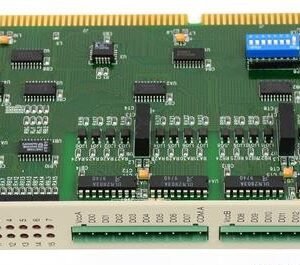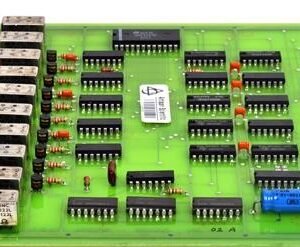

The Stanford Research Systems SR650 is a dual-channel programmable filter that delivers precise signal conditioning through independent high-pass and low-pass filter sections. Each channel operates as an 8-pole, 6-zero elliptic-type filter with 115 dB per octave rolloff and 80 dB typical stopband attenuation. The instrument spans 1 Hz to 100 kHz with 3-digit frequency resolution, enabling rapid cutoff frequency adjustment in under 100 ms via GPIB or RS-232 control.
Designed for low-noise signal processing, the SR650 achieves 6 nV/√Hz input noise and maintains ±0.75° phase match across the passband. Passband ripple measures 0.1 dB peak-to-peak typical, with harmonic distortion below –80 dB below full scale at 100 Hz and channel crosstalk below –110 dB below full scale. The instrument provides up to 80 dB overall gain through selectable preamplifier (0–60 dB in 10 dB steps) and output amplifier stages (0, 10, 20 dB ±0.5 dB).
Both channels accept AC or DC coupled signals into 1 MΩ floating differential input impedance. Full-scale output reaches 10 Vpp into >300 Ω loads, with 50 Ω output capability available via Option 01. Each channel can operate as a standalone amplifier by bypassing the filter, or channels can be cascaded for band-pass filtering. The phase invert function provides 180° phase shift capability.
Technical Specifications
• Filter topology: 8-pole, 6-zero elliptic type
• Frequency range: 1 Hz to 100 kHz with 3-digit resolution
• Rolloff: 115 dB per octave; stopband attenuation 80 dB typical
• Passband ripple: 0.1 dB peak-to-peak typical
• Input noise: 6 nV/√Hz
• Input impedance: 1 MΩ, floating differential
• Overall gain: Up to 80 dB (preamplifier 0–60 dB; output amplifier 0, 10, 20 dB ±0.5 dB)
• Harmonic distortion: <–80 dB below full scale at 100 Hz; <–50 dB below full scale at 1 kHz
• Phase match: ±0.75° DC to fc; ±0.25° below 10 kHz
• Channel crosstalk: 300 Ω; 10 Vpp into 50 Ω (Option 01)
• Power: 100/120/220/240 VAC, 50/60 Hz
– Key Features
• Two independent filter channels with AC/DC input coupling
• Cascadable high-pass/low-pass sections for band-pass operation
• Non-volatile memory stores up to nine instrument configurations
• Filter bypass mode enables amplifier-only operation
• 180° phase invert capability on each channel
• DC offset adjustment to 0 V
• GPIB and RS-232 remote control with <100 ms frequency switching
– Typical Applications
• Precision signal conditioning in scientific instrumentation
• Audio analysis and acoustic measurements
• Noise reduction in low-level signal detection
• Analog signal isolation and bandwidth limiting
– Compatibility & Integration
• Digital control: GPIB, RS-232
• Analog ground reference available at rear-panel BNC
• Dimensions: 22 × 18 × 16 in; Weight: 15 lbs