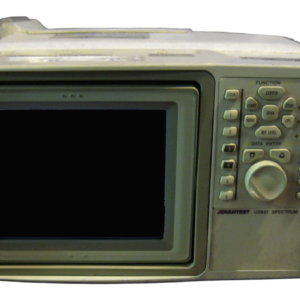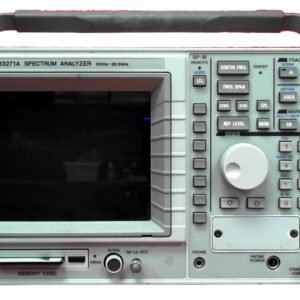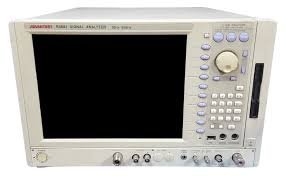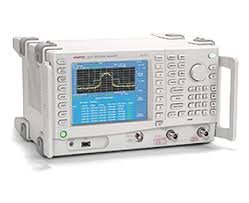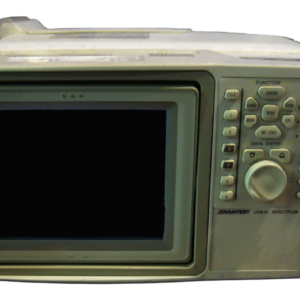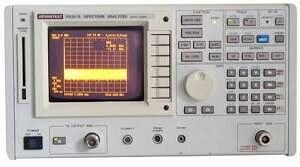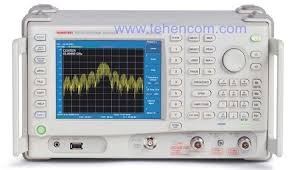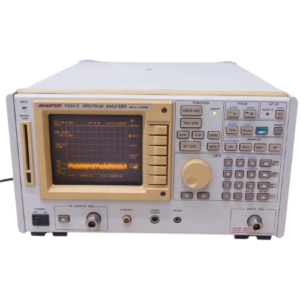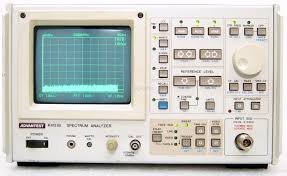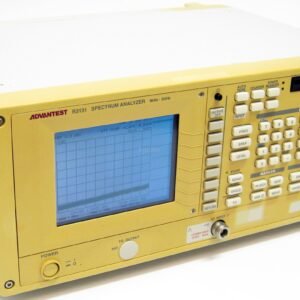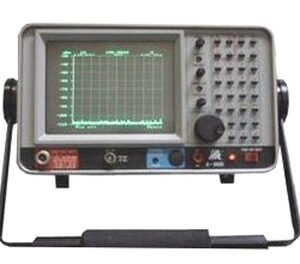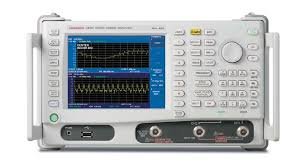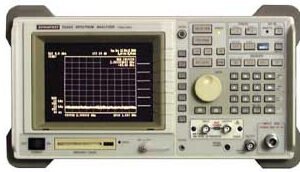

The Tektronix 495P is a portable spectrum analyzer delivering high-resolution frequency-domain signal analysis from 100 Hz to 1.8 GHz. Built for field and lab environments, it combines exceptional sensitivity (−131 dBm), wide dynamic range (−117 dBm to +30 dBm), and precision marker functions for interference identification, component validation, and wideband signal characterization across baseband through UHF applications.
Technical Specifications
Frequency Performance
• Frequency range: 100 Hz to 1.8 GHz
• Center and marker frequency accuracy: 10⁻⁵ with external reference; 10⁻⁹/day with internal high-stability reference (model dependent)
• Minimum span/div: 1 Hz
• Residual FM: <10 Hz peak-to-peak (20 msec, span/div <200 kHz, phase locked); 200 kHz, unlocked)
• External reference: 1, 2, 5, or 10 MHz inputs; ±5 ppm stability; −15 dBm to +15 dBm; accepts sinewave, ECL, TTL; 50 Ω AC/DC input impedance
Amplitude & Detection
• Sensitivity: −131 dBm
• Amplitude range: −117 dBm to +30 dBm; +6 dBm to +15 dBm (2nd LO output)
• Amplitude accuracy: ±1.0 dB across frequency range
• Reference level: up to +147 dBuV (+137 dBuV maximum)
• Maximum safe input: +30 dBm (1 W) continuous; 75 W peak (1 µsec pulse, 0.001 duty cycle); 0 Vdc
• VSWR: 1.3:1 max typical with ≥10 dB RF attenuation; 2.0:1 max typical at 0 dB attenuation
• IF filter bandwidth: 1 Hz to 100 MHz in decade steps
• Resolution bandwidth: 10 Hz minimum to 3 MHz maximum; 1 Hz available with select span/div settings
Signal Processing & Storage
• Intelligent marker functions with advanced signal processing
• Built-in signal counter for precise frequency determination and delta frequency measurements
• Occupied bandwidth measurement function
• Noise normalization function
• Digital storage with nonvolatile memory: nine waveforms and nine front-panel settings; 8K NVRAM for macro programming
• Signal modes: CW Mode and SPUR Mode with user-defined or automatic thresholds
• Digital averaging: Peak/Average
– Key Features
• Synthesizer-grade frequency accuracy with selectable external reference
• Dual-mode signal identification for CW and spurious signal detection
• Precision counter eliminates manual frequency reading uncertainty
• Pushbutton occupied bandwidth and noise floor normalization streamline compliance and EMI testing
• Nonvolatile configuration memory enables rapid instrument setup repeatability
– Typical Applications
• EMI/RFI characterization and interference source isolation
• Component and subsystem RF validation
• Signal monitoring in communications and instrumentation systems
• Occupied bandwidth and spectral compliance verification
• Frequency counter and signal identification in service and alignment
– Compatibility & Integration
External frequency reference input accepts standard 1/2/5/10 MHz signals via rear-panel 50 Ω BNC connector, supporting integration with master clock systems and precision timing references.