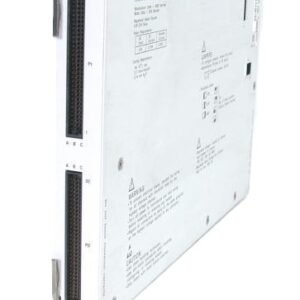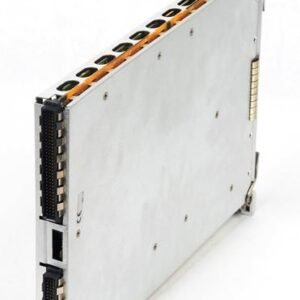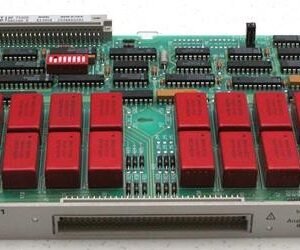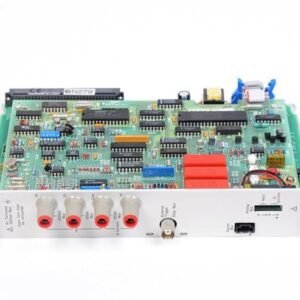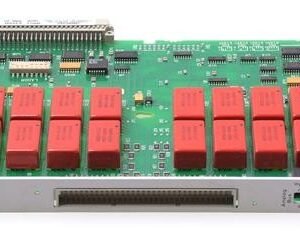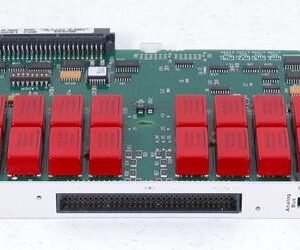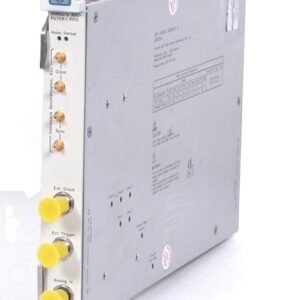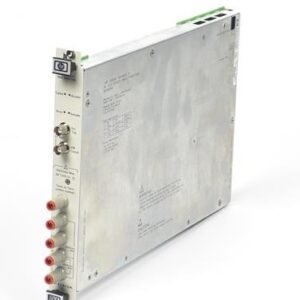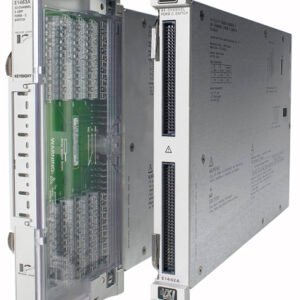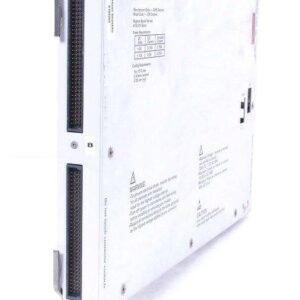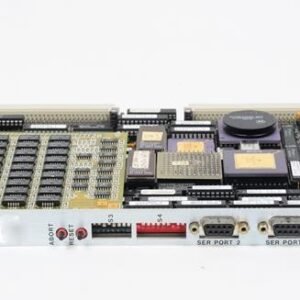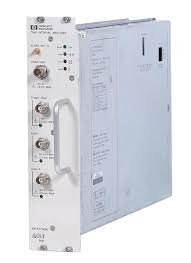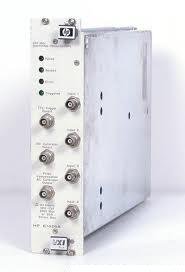

The Tektronix VX4342 is a VXIbus-compliant dual resistance programming module designed for automated test and calibration systems. This two-channel PCB assembly delivers independent programmable resistance control across 4096 steps per channel, enabling precise simulation of sensors, loads, and resistive elements. Each channel’s minimum step size is individually calibrated between 10 ohms and 100 ohms, with maximum output resistance reaching 4096 times the configured step size. Programming accepts direct resistance values or integer multiples of the minimum step size. Hardware offset controls and built-in self-test capabilities enhance system flexibility and diagnostics.
Technical Specifications
• Channels: 2 independent (Channel A and Channel B)
• Resistance Steps: 4096 per channel
• Minimum Step Size: 10 ohms to 100 ohms, individually settable per channel during calibration
• Maximum Resistance Output: 4096 × minimum step size per channel
• Programming Method: Direct resistance values or integer multiples of minimum step size
• Form Factor: VXIbus C-size mainframe PCB assembly
– Key Features
• Dual independent channels for simultaneous multi-component simulation
• Configurable step resolution optimized for specific resistance ranges
• Hardware offset resistance control for output adjustment
• Built-in test equipment (BITE) for self-diagnostics and maintenance support
• DIN 41612 VXIbus backplane connectivity (P1 mandatory; P2/P3 optional)
– Typical Applications
• Electronic component simulation and testing
• Sensor load emulation in automated test environments
• Calibration setups requiring precise resistance control
• Multi-module synchronized resistance switching
– Compatibility & Integration
Operates within VXIbus mainframes including the Tektronix VX1400 C-size mainframe. Connects via standard VXIbus backplane connectors supporting high-speed synchronized operations across multi-module systems. P1 connector provides mandatory data transfer, interrupt, and power; optional P2 and P3 connectors expand data transfer and add local bus resources.