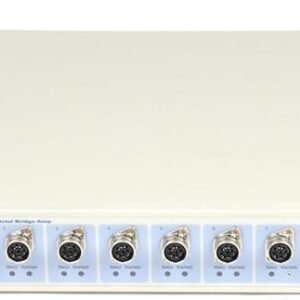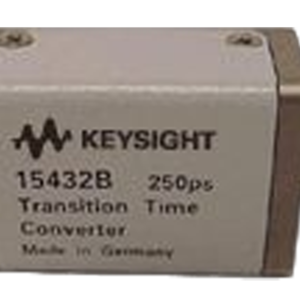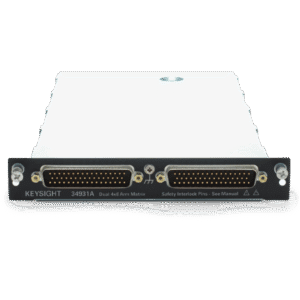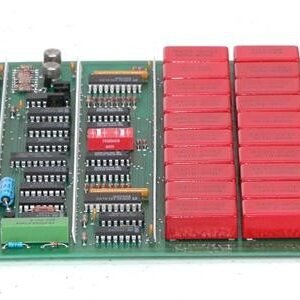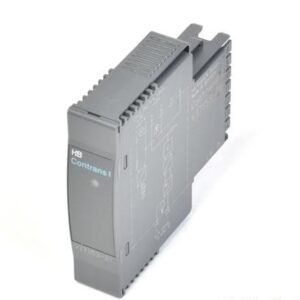

Four-channel transimpedance amplifiers convert current signals into voltage signals with precision and low noise for current-output devices including photodiodes and sensors. These devices deliver accurate signal measurement across diverse technical applications, from optical power monitoring to radiation detection and industrial sensing.
Technical Specifications
Three distinct architectures address different performance requirements:
Analog Devices LTC6561 operates at 220 MHz bandwidth with 74 kΩ transimpedance gain and linear input current range of 0 µA to 30 µA. Input current noise density measures 4.5 pA/√Hz at 200 MHz. Single 5 V supply operation consumes 200 mW across all channels. Input capacitance is 2 pF. Output swings 2 V peak-to-peak into 100 Ω load. Overload recovery completes in 12 ns at 1 mA; channel switchover occurs in <50 ns. Integrated 4-to-1 output multiplexer enables cascading for 8, 12, 16, 24, or 32 channels. AEC-Q100 qualified. Package: 4 mm × 4 mm QFN-24.
Koheron TIA400 delivers 2 MHz bandwidth with input-referred current noise of 5 pA/√Hz. Supports photodiodes up to 200 pF input capacitance. Input current range reaches ±4 mA. Selectable transimpedance gains: 2 kV/A or 10 kV/A. Output impedance is 50 Ω with voltage range –2 V to 2 V on 50 Ω load. Dual supply: +11.5 V to +13 V and –13 V to –11.5 V. Supply current per rail: 320 mA. Dimensions: 79 mm × 66 mm × 13 mm; weight 36 g. Operating temperature: 0°C to 50°C.
MAZeT MTI04CS/CQ provides programmable gains from 25 kΩ to 20 MΩ transimpedance across eight selectable levels, with current ranges 25 nA to 20 µA. Frequency response spans 6 Hz to 300 kHz. Digital compensation adapts to input capacitance at 5 pF and 80 pF stages. Simultaneous gain programming across all channels. Power-down mode available.
– Key Features
• Multi-gain architectures for low-noise nanoampere measurement through high-current applications
• Fast transient recovery and channel switching for real-time multiplexed readout
• Cascadable designs enable extended channel counts
• Input capacitance compensation for diverse sensor types
– Typical Applications
• Optical power monitoring and photodiode readout
• Radiation detection
• UV, visible, NIR, and IR spectroscopy arrays
• Industrial sensor interfaces
• Surface analysis instrumentation
– Compatibility & Integration
Cascading multiple devices supports modular system expansion. Automotive-grade options available. Compact packages enable dense board-level integration.