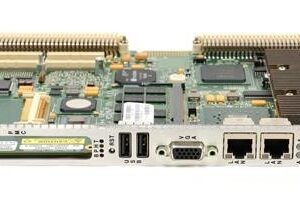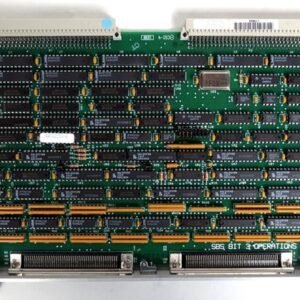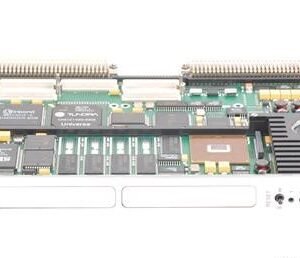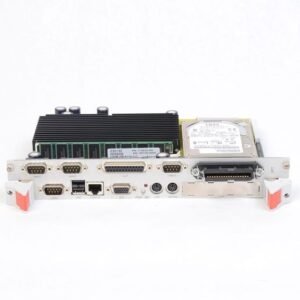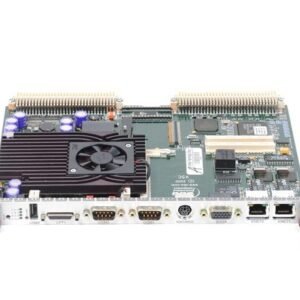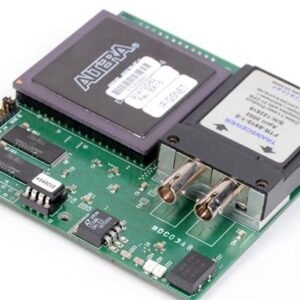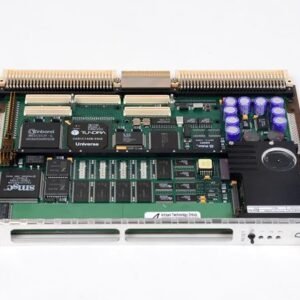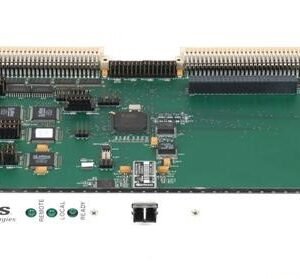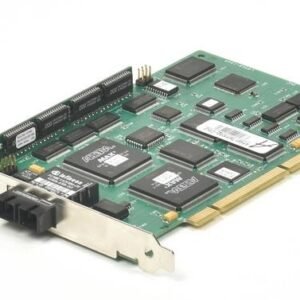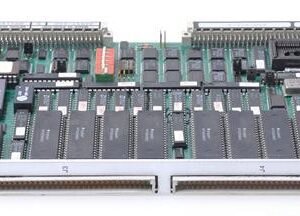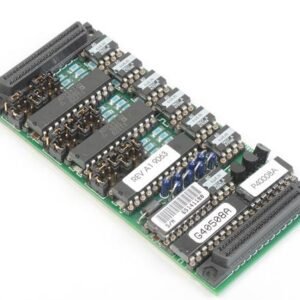
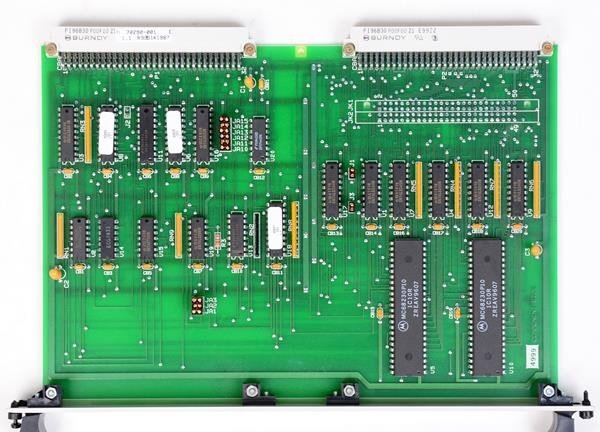

The XVME-290 is a 32-channel TTL I/O module for VMEbus systems, delivering digital signal interfacing across four independently configurable 8-bit ports. Built on two 68230 Parallel Interface/Timer devices, this 6U double-height board routes all I/O through the VMEbus P2 connector and includes buffered inputs/outputs, VMEbus interrupt capability, and dual 24-bit timers for precise timing control in industrial automation, data acquisition, and process control applications.
Technical Specifications
Digital I/O Architecture
• 32 TTL-level channels across four software-selectable 8-bit ports
• Two 68230 PI/T interface devices with buffered I/O
• Two 24-bit timer devices
• VMEbus interrupt capable with configurable interrupt levels
• Handshaking support
Electrical Characteristics
• Input logic thresholds: 0.8 V (maximum), 2.0 V (minimum)
• Output: 0.4 V @ 12 mA (maximum), 2.4 V @ -3 mA (minimum)
• Supply: +5 V
• Power consumption: 1.3 A typical, 1.5 A maximum
Physical & Environmental
• 6U double-height form factor: 160 mm × 233.4 mm
• I/O via VMEbus P2 connector
• Operating temperature: 0 °C to 32 °C
• Storage temperature: -40 °C to 85 °C
• Humidity: 5% to 95% RH (non-condensing)
• Operating altitude: 0 to 10,000 ft
• Vibration: 5–2,000 Hz, 0.015 in peak-to-peak, 2.5 g peak acceleration
• Shock: 30 g operating
– Key Features
• Four independent 8-bit ports with software-selectable directionality
• Dual 24-bit timers for timing and counting operations
• Hot-swappable module design
• Configurable base address, address modifier, and interrupt settings via jumpers
• VMEbus-compliant architecture
– Typical Applications
Industrial automation control, real-time data acquisition systems, process control interfaces, and distributed I/O subsystems requiring reliable TTL-level digital signal routing in VME-based platforms.
– Compatibility & Integration
Fully VMEbus-compliant for integration with mainstream VME systems. Pin-compatible with OPTO 22-style signal conditioning equipment. Multiple jumper configurations support flexible system integration and addressing schemes.