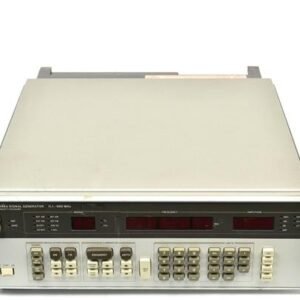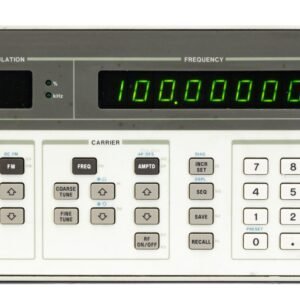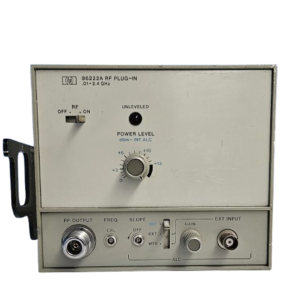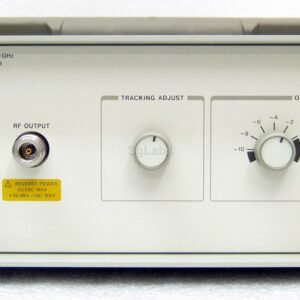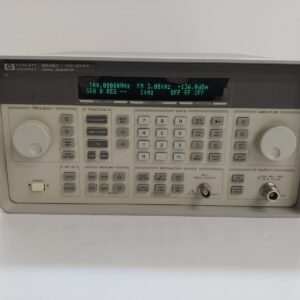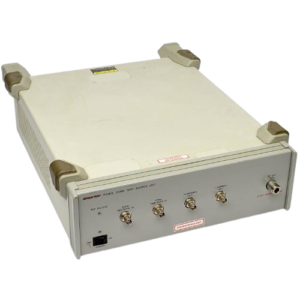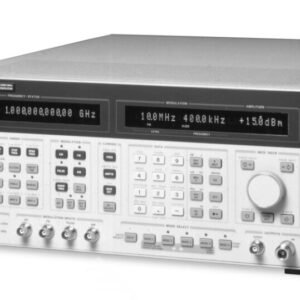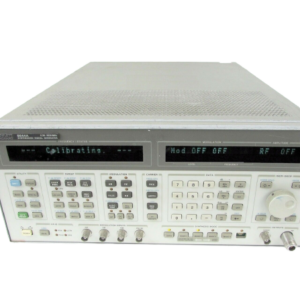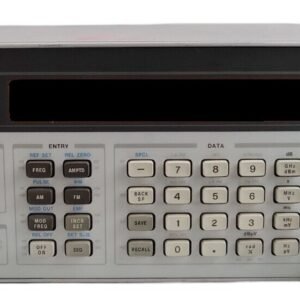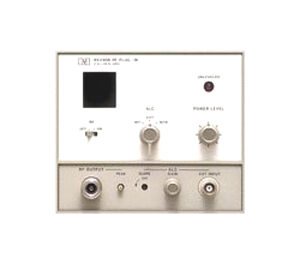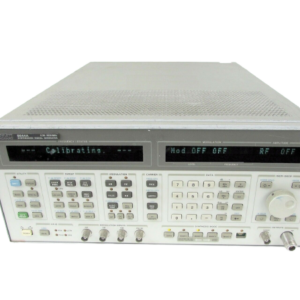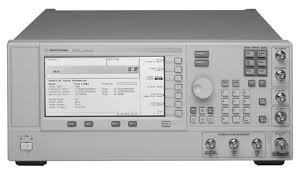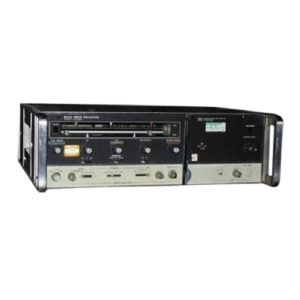
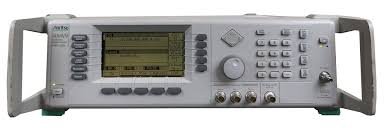

The Anritsu 69265A Synthesized Signal Generator delivers precise RF signal generation across 0.5 GHz to 40.0 GHz, engineered for demanding lab testing, satellite payload verification, and system-level performance evaluation. Its synthesized architecture provides 1 kHz frequency resolution with exceptional stability: < 2 × 10⁻⁸/day aging and < 2 × 10⁻⁸/°C temperature drift (0°C to 55°C). Optional upgrades enable ultra-tight stability to < 5 × 10⁻¹⁰/day and < 2 × 10⁻¹⁰/°C. Frequency switching reaches < 40 ms to within 1 kHz of final frequency, with step sweep times as fast as < 15 ms + 1 ms/GHz or < 40 ms maximum.
Technical Specifications
• Frequency Range: 0.5 GHz to 40.0 GHz
• Frequency Stability (Standard): < 2 × 10⁻⁸/day aging; < 2 × 10⁻⁸/°C temperature (0°C to 55°C)
• Frequency Stability (Option 16): < 5 × 10⁻¹⁰/day aging; < 2 × 10⁻¹⁰/°C temperature
• Frequency Resolution: 1 kHz (0.1 Hz with Option 11)
• Frequency Switching: < 40 ms typical to within 1 kHz of final frequency
• Step Sweep Time: < 15 ms + 1 ms/GHz step size or < 40 ms, whichever is less
• 10 MHz Reference Output: 0.5 V p-p into 50 Ω, AC coupled, rear panel BNC
• External 10 MHz Reference Input: Supported
– Key Features
• Sweep width independently selectable from 1 MHz to full range continuous sweep
• Variable dwell time per step: 1 ms to 99 seconds
• Manual sweep mode with user-selectable stepped, phase-locked frequency adjustment
• Alternate sweep mode: sweeps between two ranges with independent power level assignment
• Phase-locked step sweep operation
• Modulation support: AM, FM/FM, PM, external/internal, or analog sweep
• Internal and external low frequency and pulse generator capability
– Typical Applications
• RF laboratory testing and characterization
• Satellite payload verification
• System-level performance evaluation
• Multi-function measurement configurations
– Compatibility & Integration
The 69265A accepts external 10 MHz reference inputs and provides 10 MHz reference output via rear panel BNC connector, enabling synchronization with external timing standards and test system architectures.