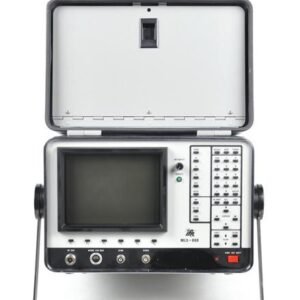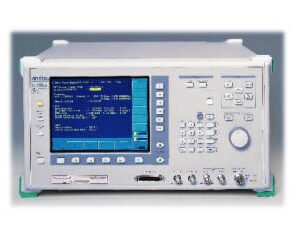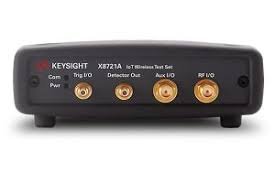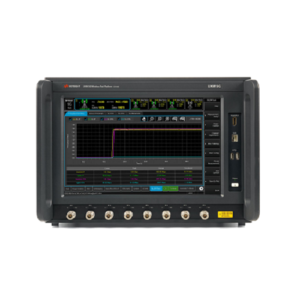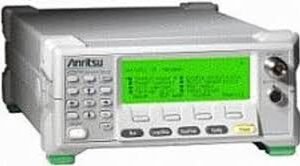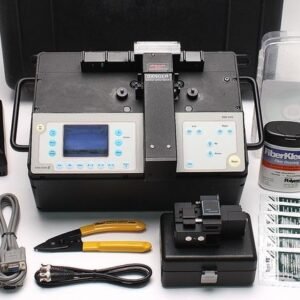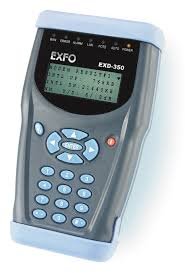

Data Communication encompasses the technologies, protocols, hardware, and methods required for transmitting data between devices and networks. It forms the backbone of internet, telecommunications, and industrial/scientific systems, enabling fast, reliable, and secure information exchange across diverse infrastructures.
Technical Specifications
Data transmission operates across five fundamental components: message content, sender device, receiver device, transmission medium, and governing protocols. Systems are categorized by direction of flow, medium type, and synchronization method.
Transmission Modes by Direction
• Simplex: Unidirectional data flow from sender to receiver only. Used in broadcast applications where return communication is unnecessary.
• Half-Duplex: Bidirectional transmission with temporal exclusivity—devices alternate between send and receive states. Common in radio communication systems.
• Full-Duplex: Simultaneous bidirectional data flow. Standard for modern high-speed networks including optical fiber and telephone systems.
Transmission Media
Wired systems employ twisted pair cables (Ethernet LANs), coaxial cable (cable TV, security systems), and fiber optic cable (long-distance, high-speed internet backbone). Wireless transmission uses radio waves (Wi-Fi, Bluetooth), microwaves (satellite and cellular networks), and infrared (short-range devices).
Synchronization Methods
Asynchronous transmission exchanges data at variable intervals with start/stop markers per data unit (USB, RS-232). Synchronous transmission delivers continuous data flow with precise timing synchronization between endpoints (Ethernet, SDH), eliminating overhead bits for improved efficiency.
Bit Transfer Methods
Serial transmission sends bits sequentially over single channels—cost-effective for long distances, though slower than parallel methods for short runs. USB employs serial communication architecture.
– Key Features
• Directional flexibility: simplex, half-duplex, and full-duplex modes
• Wired and wireless media options
• Synchronous and asynchronous transmission support
• Serial and parallel bit transfer capabilities
– Typical Applications
Internet infrastructure, telecommunications networks, broadcast systems, industrial control, scientific data acquisition, LAN/WAN installations, satellite communications, cellular networks, and short-range device interfaces.
– Compatibility & Integration
Systems integrate across USB, RS-232, Ethernet, SDH, Wi-Fi, Bluetooth, and infrared protocols. Wired implementations support twisted pair, coaxial, and fiber optic media. Wireless implementations operate across radio frequency, microwave, and infrared bands.