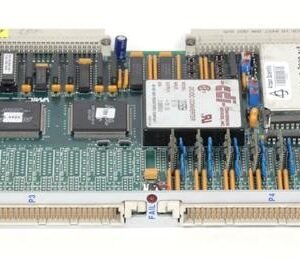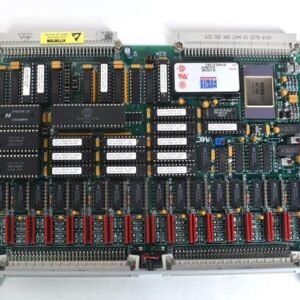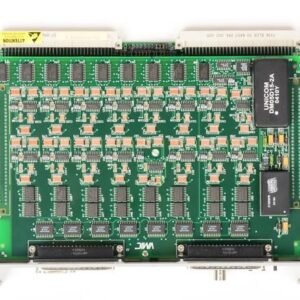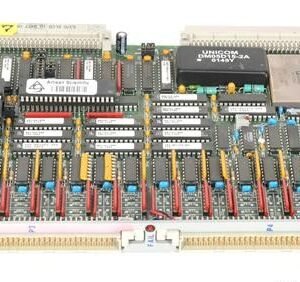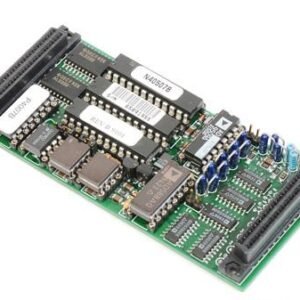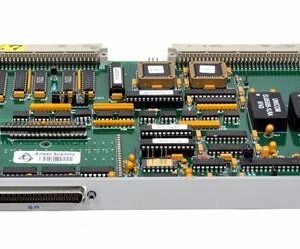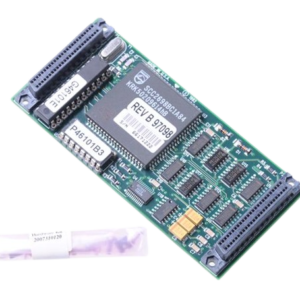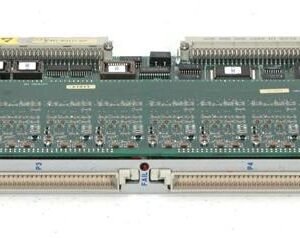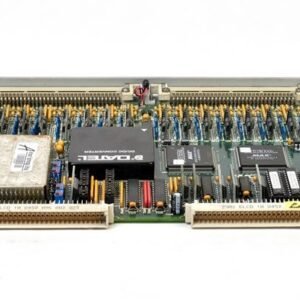
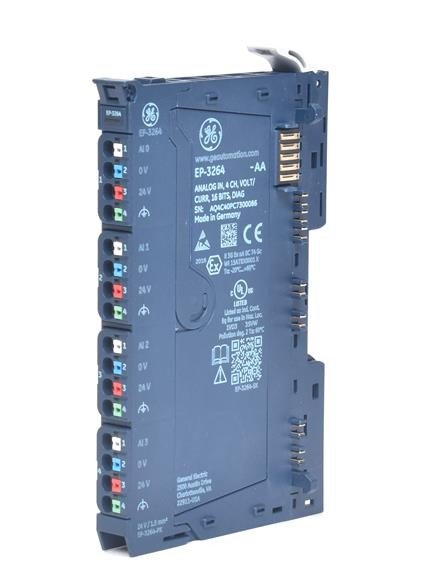

The Emerson Motion Control EP-3264-AA is a 4-channel analog input module for the PACSystems™ RSTi-EP I/O system, delivering precision data acquisition from industrial sensors and instruments. Built for high-density applications, this module combines configurable measurement ranges, integrated diagnostics, and a compact 11.5 mm footprint to support demanding automation environments.
## Technical Specifications
**Analog Input Channels**
• 4 channels with 16-bit resolution per channel
• Voltage ranges: 0–5 V, ±5 V, 0–10 V, ±10 V, 1–5 V, 2–10 V
• Current ranges: 0–20 mA, 4–20 mA
• Accuracy: 0.1% FSR
• Conversion time: 1 ms per channel
• Frequency suppression: disabled, 50 Hz, 60 Hz, or 16-value averaging
• Warm-up time: 30 minutes for rated accuracy
**Electrical & Power**
• Supply voltage: 20.4 VDC to 28.8 VDC via system bus
• System current: 8 mA
• Input current: 25 mA + sensor supply current
• Sensor supply: up to 0.5 A per plug
**Sensor Connectivity**
• 2-wire, 3-wire, and 3-wire + FE (Functional Earth) configurations
**Diagnostics & Protection**
• Module and individual channel diagnostics
• Reverse polarity protection
• Short-circuit protection for inputs with response time < 50 ms
**Physical & Environmental**
• DIN rail mounted in 11.5 mm I/O slices
• Operating temperature: −20 °C to +60 °C
• Communication: PROFINET RT, PROFIBUS, Modbus TCP, EtherCAT
• System bus: high-speed bus for up to 256 DI/DOs in 20 ms
## Key Features
• compact footprint at 11.5 mm width
• Field-configurable input ranges eliminate module variants
• Simultaneous multi-protocol support via PACSystems™ architecture
• Per-channel and module-level fault diagnostics
• 64-module capacity per drop with 1024 I/O points maximum
## Typical Applications
Analog signal conditioning for process control, sensor integration in manufacturing systems, and distributed I/O in remote automation architectures.
## Compatibility & Integration
The EP-3264-AA integrates into the PACSystems™ RSTi-EP remote I/O system and operates over PROFINET RT, PROFIBUS, Modbus TCP, and EtherCAT networks, supporting centralized and distributed control topologies.