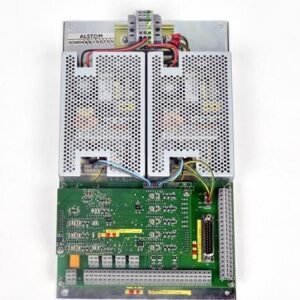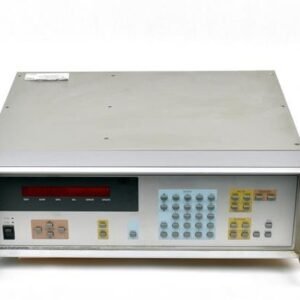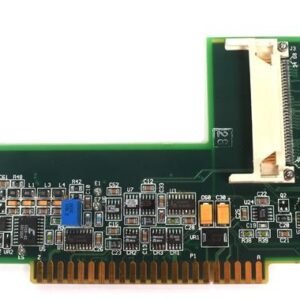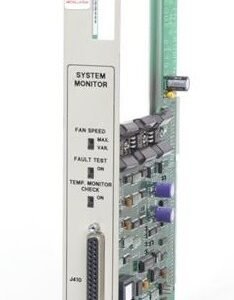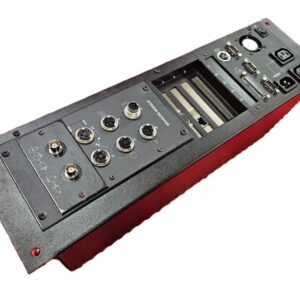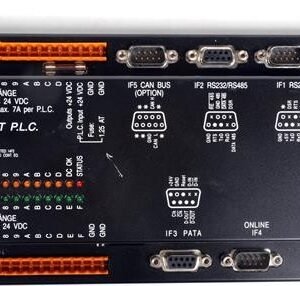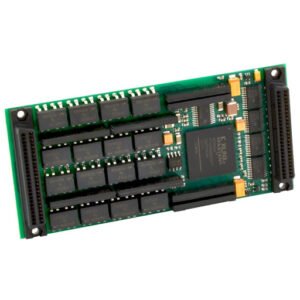
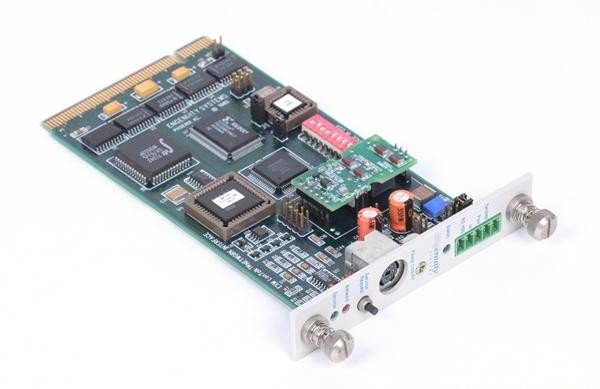

The Engenuity Systems EXM-LTNI is a network interface module that bridges EXM systems with LonTalk networks, enabling bidirectional communication and device interoperability in building automation and control applications. Built around the Neuron® 3150® Chip, the module facilitates seamless data exchange between diverse control platforms operating on the LonTalk protocol.
## Technical Specifications
• **Processor Core:** Neuron® 3150® Chip
• **Memory:** 32 KB re-programmable flash memory; 32 KB RAM
• **Clock Speed:** 10 MHz crystal oscillator
• **Firmware:** Standard Neuron Chip firmware with extensions for automatic transceiver parameter configuration, packet transmission signal output, and manual device recovery
• **Microprocessor Interface (MIP):** Supports memory-mapped I/O or 8-bit parallel data bus with three control lines and optional up-link interrupt; enables asynchronous updates from up to 4,096 network variable connections
• **Transceiver Support:** Compatible with standard LONWORKS transceivers; transceiver type selection via five ID pins
• **Network Activity Output:** Packet send output pin asserts low for approximately 40 ms when a packet is transmitted from network to MAC processor
• **Additional Outputs:** Two supplementary bit outputs—one dedicated to packet send indication, one configurable as general-purpose output or up-link data interrupt request
## Key Features
• Miniature circuit card form factor for compact integration
• Manual device recovery capability via service and reset input sequencing for reloading defective application software
• LNS (LONWORKS Network Services) architecture compatibility for integration with compliant management tools
• Flexible host processor interface supporting legacy and memory-mapped architectures
## Typical Applications
Building automation systems requiring interoperability between EXM control platforms and LonTalk-based field devices and sensors.
## Compatibility & Integration
The module connects directly to EXM systems and LonTalk networks via dedicated connectors for host interface, network interface, power input, application I/O, and transceiver connection. MIP functionality enables operation as either a standalone applications processor or as a network interface for external host processors.