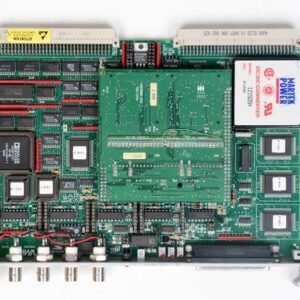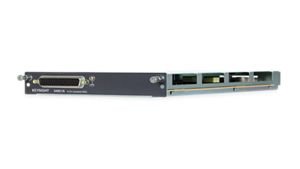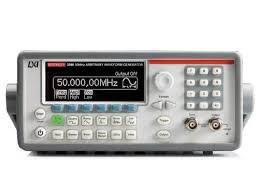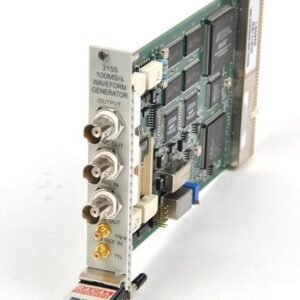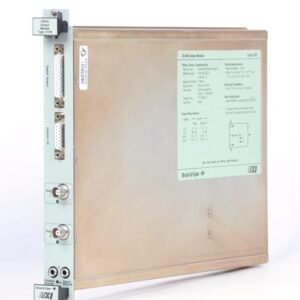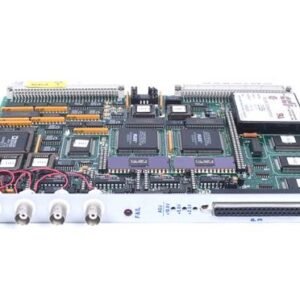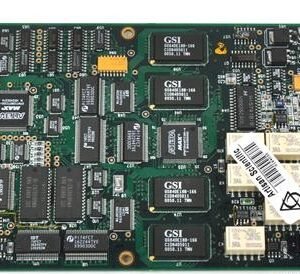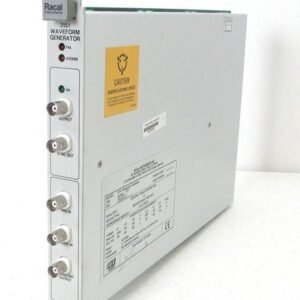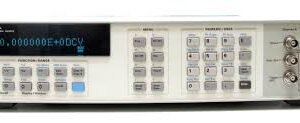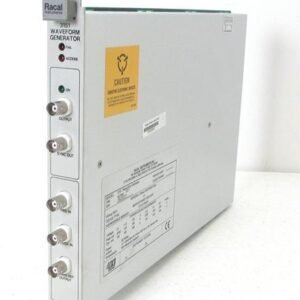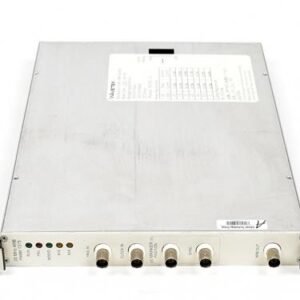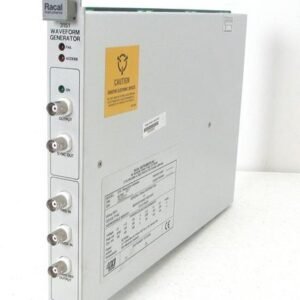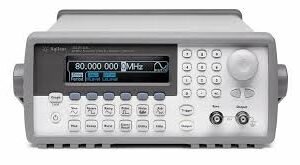
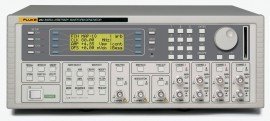

The Fluke 294-U is a 12-bit, 4-channel arbitrary waveform generator operating at 100 MS/s with a true variable clock architecture that minimizes jitter and enables advanced waveform linking, looping, and sequencing. It generates arbitrary waveforms, standard functions, pulse trains, swept signals, DTMF tones, and modulated signals for electronic testing and design applications.
Technical Specifications
Arbitrary Waveform Generation
• Sampling frequency: 100 MS/s
• Vertical resolution: 12 bits
• Maximum waveform length: 1 M points per channel
• Waveform memory: Removable Compact Flash Card with effectively unlimited storage
• Waveform sequencing: Up to 1024 segments
• Loop counts: Up to 32,768 repetitions
• Definition methods: Front panel, RS-232, USB, GPIB, or direct PC memory card write
• Editing tools: Waveform insert, point edit, line draw, amplitude adjust, and invert functions
Function Generation
• Standard waveforms: Sine, square, triangle, haversine, ramp, pulse, sin(x)/x, cosine, havercosine
• Maximum sine frequency: 40 MHz
• Maximum square frequency: 50 MHz
• Frequency accuracy: 10 ppm
• Implementation: Direct Digital Synthesis (DDS)
Pulse Generation
• Maximum pulse frequency: 10 MHz
• Pulse trains: Up to 10 independent pulses per train
• Minimum pulse width: 10 ns
• Per-pulse control: Independent width, delay, and level definition
Modulation and Signal Capabilities
• Amplitude modulation (AM): Supported
• Sweep generation: Wide range sweep capability
• Tone generation: Precision DTMF generation with triggered switching between up to 16 frequencies
• Trigger generation: Built-in gated and triggered burst modes
• Signal summing: Inter-channel summing supported
Output Specifications
• Channels: 4 independent or linked outputs
• Maximum amplitude (50 Ω): 10 Vpp
• Amplitude notation: Vpk-pk, Vrms, or dBm selectable for open circuit (Hi Z) or 50 Ω/60 Ω loads
– Key Features
• True variable clock minimizes DDS-related jitter
• Up to 1 M-point waveform memory per channel
• Waveform Manager Plus software for Windows-based creation and editing
• Compact Flash Card storage for portable waveform libraries
• Four fully independent channels with optional linking
– Typical Applications
Electronic component testing, signal simulation, design validation, DTMF generation, pulse train characterization, and frequency sweep testing.
– Compatibility & Integration
Waveforms defined via RS-232, USB, or GPIB interfaces, or written directly to removable memory cards for offline creation and loading.